


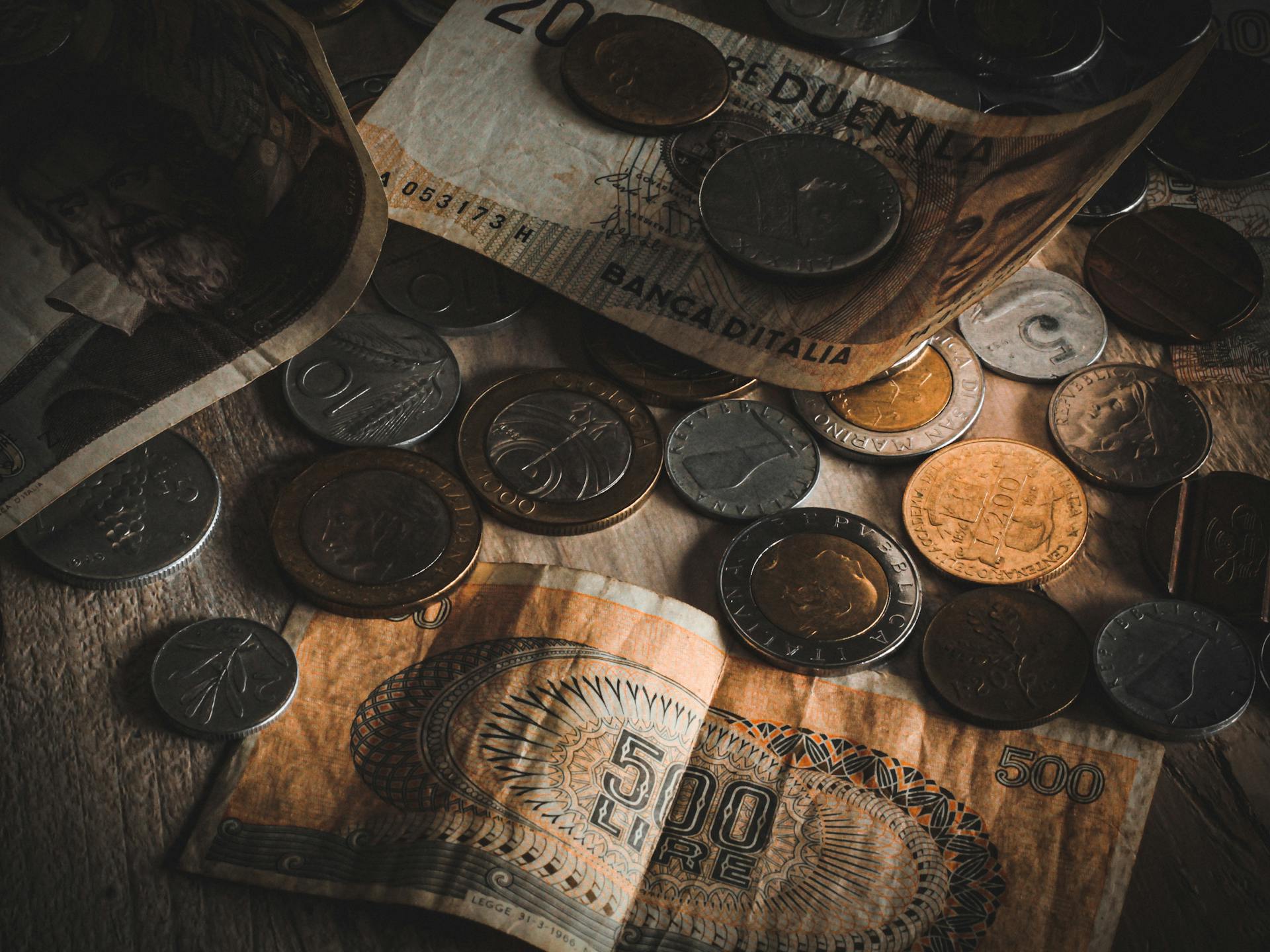
The dollar in your wallet has never been the only legal currency in American history. Most people assume it has. They’re wrong.
Between the 1830s and the Civil War era, people used non-federal currency, which they obtained from various banking institutions throughout the country. The banking system issued banknotes,y which people used as actual money during the Free Banking era. The Free Banking era produced banknote currency,cy which people used as actual money during that time period.
The system operated as a main method through which Americans managed their finances during its active period, which lasted for twenty years.
How a Country Ends Up With Thousands of Currencies

The roots go back to a fundamental disagreement about what money is and who gets to make it. In the early decades of the republic, the federal government’s authority over currency was contested and, in practice, limited. States chartered banks.
Those banks issued their own paper notes, each redeemable, in theory, for gold or silver at the issuing institution. A merchant in one city might accept a note from a bank three states away at face value, or at a discount, or not at all, depending on how much he trusted the issuer.
The result was a monetary landscape that modern Americans would find almost incomprehensible. A single wallet might contain notes from a dozen different institutions, each with its own design, its own redemption terms, its own risk profile. Businesses published guides, called “banknote reporters”, that listed current discount rates for notes from banks across the country. Knowing which paper to accept, and at what price, was a basic commercial skill.
Not chaos, exactly. But not stability either.
The Problem No One Could Quite Solve

The vulnerability of the system was obvious from the start. A bank note was only as good as the bank behind it, and banks failed. When they did, the notes they’d issued became worthless, or nearly so. Holders of those notes lost real money. And because banking regulation varied wildly by state, the quality of the currency in circulation at any given moment was genuinely unknowable to the average person holding it.
Some banks were well-capitalized and conservatively run. Others issued notes far in excess of their actual reserves, betting that not everyone would demand redemption at once. That bet failed, periodically and spectacularly, during the financial panics that punctuated the era. Each panic wiped out savings held in the form of notes from failed institutions. Each one renewed the argument that the country needed a unified, federally controlled currency.
And here’s what most economic history courses still don’t fully reckon with: the argument took decades to actually win. The inertia of the old system was enormous. Local banks had political power. States resisted federal encroachment. The decentralized currency system wasn’t abolished so much as slowly starved out.
The Quiet Execution

The Civil War changed the calculus. The federal government needed to finance an unprecedented military effort, and it needed to do so fast. The National Banking Acts created a new framework: nationally chartered banks could issue notes, but only against holdings of federal bonds, and those notes would be standardized and federally supervised. To push the old state banknotes out of circulation, Congress imposed a ten percent tax on state-issued banknotes. That tax made them uneconomical to issue almost overnight.
It wasn’t a ban. It was a price. And it worked.
Within a few years, the bewildering variety of locally issued currency had largely vanished from everyday commerce. Americans went from carrying dozens of different papers to carrying a standardized national currency, and most of them probably didn’t notice the transition happening beneath their feet.
The dollar, as a singular national instrument, is younger than it feels.
What Was Actually Lost
The conventional story frames this as pure progress, rationalization of a chaotic system, the triumph of federal coherence over local disorder. There’s real truth in that. Wildcat banking did cause genuine harm. The discounting of foreign banknotes was a real friction cost on commerce.
But something else was true at the same time. The old system, for all its messiness, embedded credit creation close to local economies. A bank in a small town issued notes because it knew its borrowers. The nationalization of currency was also, gradually, a centralization of financial power, away from Main Street banks and toward larger, better-capitalized institutions that could meet federal bonding requirements.
Whether that tradeoff was worth it is a question economists still debate. The concentration of financial power that followed the Civil War banking reforms is widely seen by historians as contributing to the concentration of banking capital that characterized the Gilded Ageded Age. The small local bank issuing its own currency was, in a real sense, a casualty of the same legislation that gave America a stable dollar.
The math worked. Which was the problem, depending on where you stood.
What It’s Worth Now
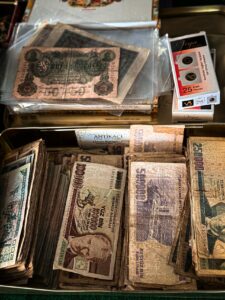
Here’s where the story takes a turn that nobody in the nineteenth century could have predicted. The notes that once circulated as ordinary money, discounted, distrusted, and ultimately taxed out of existence, are now collector’s items commanding serious premiums. Rare or well-preserved examples from defunct antebellum banks can fetch multiples of their face value from currency collectors and historians. The more obscure the issuing institution, in many cases, the more valuable the surviving note.
A currency that was killed because it was unreliable has become valuable precisely because so little of it survived.
Most people will read this and still picture the dollar as the obvious, inevitable form American money was always going to take. But the system we have wasn’t inevitable. It was chosen, under pressure, in the middle of a war, and the alternative circulated in American pockets for longer than most people realize.
This article was created with AI assistance and reviewed by the author. The review included fact-checking, clarity edits, references, and sourcing of images