

The search for these animals on the list continued until they became extinct because they disappeared from all available evidence. The field teams returned without any results, which led to population declines and their species being classified as extinct in conservation databases.
Then, sometimes after a period of two decades or longer than one hundred years,s someone finally saw one. The person was still living. The person was present in their natural environment. The announcement reached people only through a silent delivery, which happened only when it was necessary to inform them.
The second part of this content makes it more than an emotional uplifting compilation, and I was so surprised after reading that.
The Science Has a Name for It
Biologists call them “Lazarus species”, animals that reappear after being classified as extinct, named after the biblical figure raised from the dead. The term encompasses three distinct situations, ns which include, species that actually survived in remote areas, species that existed throughout a region but their presence remained undetected, and species that scientists declared extinct because one population vanished while another unit continued to exist in an unknown location.
The list contains more entries than most people believe. Researchers have documented more than 30 rediscovered species that they tracked throughout the last 100 years. Some rediscoveries made global headlines. Others were published in narrow academic journals and never crossed into public awareness. A few appeared in government wildlife bulletins, which received about the same public attention as a parking regulation.
The unusual aspect of this situation shows that people create silence for their specific purposes. The conservation biologists choose to postpone their announcements about rediscovered species because they want to avoid drawing public attention,n which will prove detrimental to these species. The three groups that pose threats to wildlife include poachers, collectors,s and curious hikers who destroy nesting areas. When a species has survived against all odds in a single hidden population, a press release becomes more dangerous than another decade of obscurity.
What “Extinct” Actually Means (and Doesn’t)
The word “extinct” carries more certainty than the science behind it. The IUCN, which maintains the worldwide red list of endangered species, determines that a species becomes extinct when there exists “no reasonable doubt” about the death of its final member. Proving something does not exist presents genuine difficulty. Surveys miss things. Dense forest areas fail to detect everything. The deep ocean environment definitely fails to detect everything.
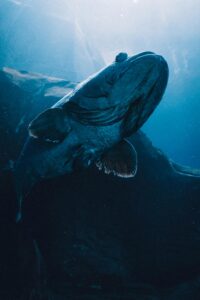
The coelacanth is probably the most famous example of this problem. A fish believed extinct for roughly 65 million years turned up in a South African fish market in 1938. The scientists who examined it described the moment as equivalent to finding a living dinosaur. The statement represents reality without any exaggeration. The coelacanth is a lobe-finned fish from a lineage that predates the dinosaurs, and it had been swimming in deep Indian Ocean waters the entire time humanity was declaring it gone.

The Lord Howe Island stick insect, which stands as one of the largest insects in existence, faced extinction when rats invaded its native island during the early 20th century. For decades, it existed only in museum drawers. A small population emerged at Ball’s Pyramid, which stands as a volcanic sea stack off the coast of the Tasman Sea. The entire surviving population numbered fewer than 30 individuals. Scientists established a secret breeding program for research before they released information to the public.
The Bermuda petrel, which people in Bermuda refer to as the cahow, disappeared for about three hundred years until researchers discovered nesting pairs on isolated rocky islands during the 1950s. The period of three hundred years does not qualify as a fractional measurement. The time period exceeds the duration that the United States has functioned as an independent nation.
The Animals That Came Back, and What It Cost Them

The process of rediscovery fails to produce positive results in every attempt. The existence of a living species shows that scientists must verify its proper survival status. The animals on this list experienced rediscovery, which brought them temporary recognition before they entered a new phase of extinction because the same factors that endangered them before their initial decline returned to threaten them again. Habitat destruction continues without interruption despite positive news reports.
The black-footed ferret vanished from existence during the late 1970s until a Wyoming ranch dog discovered a dead specimen, which proved that a hidden population continued to exist. The existing breeding program at that location now produces the highest number of North American black-footed ferrets through its breeding efforts. The ferret exists today because people must assist its survival through their ongoing work. The problem remained unsolved after the rediscovery. The clock continued to run after that event.
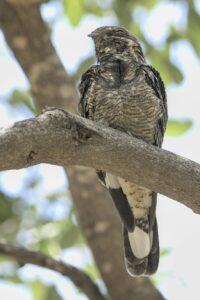
The New Caledonian owlet-nightjar is a different story and a darker one. The 1990s rediscovery of one specimen remains the only documentation of this species existence. Some ornithologists believe that the birds exist in such limited numbers that the population cannot survive. The official record shows it as “rediscovered.” The thing exists, but its operational functions have become inactive.
The takeaway from these cases isn’t simply that nature is resilient, though sometimes it is. The more precise lesson shows that extinction assessment requires greater evidence than people believe, whereas recovery efforts prove more difficult than media reports indicate. A species can survive in a crack in a volcanic cliff, in a pocket of old-growth forest no survey team reached, in water too deep for nets.
What we write off as lost sometimes turns out to be hiding. The honest question, and the uncomfortable one, is how many species we’ve declared extinct that are still out there right now, surviving in some fragment of habitat I become so curious to see them we haven’t looked at carefully enough. The IUCN list has categories for that uncertainty. Most news cycles don’t.
This article was created with AI assistance and reviewed by the author. The review included fact-checking, clarity edits, references, and sourcing of images.