

Most people walk into a restaurant thinking they know the social contract. You order politely, you don’t snap your fingers, you leave a decent tip. The process ends there. Most people remain unaware of the complete set of restaurant etiquette rules that exist beyond the visible dining area. The diner practices that most people consider polite prove to be neutral conduct that restaurants interpret as offensive.
Server’s notice. That’s the part most people miss. The person refilling your water has watched hundreds of tables cycle through, and after a while, certain behaviors start to mean things. Servers gain knowledge through ongoing customer interaction,s which reveals behavior patterns that emerge during their work experience. Your seat position shows you politeness, ss while their seat position shows them warning signs about your behavior.
Here are eleven of the most common ones.
Stacking your plates before the server clears them

It feels helpful. You’re consolidating the mess, making their job easier. But when a diner pre-stacks dishes, it often puts the server in an awkward spot: the stack isn’t balanced the way they’d carry it, utensils end up buried, and leftover food can transfer onto plates that weren’t finished. It also signals, unintentionally, that you’re in a hurry to leave. If you want to help, leaving dishes as they are is actually the more considerate move.
Handing the menu back the moment you’ve decided

This one surprises people. Returning the menu immediately after choosing feels efficient. What it actually does is pressure the server to come take your order before they’re ready to, sometimes mid-transaction with another table. The menu sitting open on the table is a signal, not clutter. Closing it is the recognized cue that you’re ready. Thrusting it back toward them skips that step and often creates a small, invisible scramble.
Saying “no rush” and then flagging them down two minutes later
This combination happens constantly, and servers say it’s one of the more confusing mixed signals in the job. “No rush” is meant to be gracious. It often is. But when the same diner waves them over shortly after, it tends to read as either impatience wearing politeness as a disguise or a test they weren’t told they were taking. If you genuinely mean no rush, the flag-down can wait.
Ordering for the whole table yourself
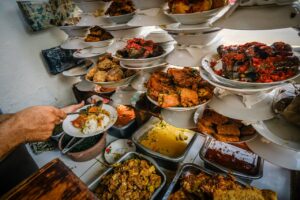
In some formal dining contexts, this is appropriate. In a standard restaurant, it can put the server in an uncomfortable position, especially if someone at the table has an allergy, a dietary restriction, or a preference the self-appointed spokesperson didn’t account for. Servers often can’t ask follow-up questions when one person is speaking for five minutes. It’s not rude exactly, but it creates gaps that end up becoming problems later in the meal.
Moving to a different table without telling anyone
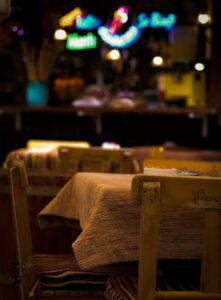
And here’s the one that actually causes real behind-the-scenes confusion. A couple sits down, decides they’d prefer the booth, and quietly migrates. From the host stand, their original table now looks empty. From the kitchen, their order, if it’s already been entered, is heading to the wrong place. Servers get written up for “losing” tables they didn’t lose. A ten-second heads-up to anyone on staff costs nothing.
“Can I get the dressing on the side?” Sure. “Oh, and no croutons.” Noted. “Actually, can we do the grilled chicken instead of the fried?” This pattern, the rolling modification, is one of the more quietly exhausting things servers deal with. It’s not that substitutions are a problem.
Most restaurants expect them. It’s the drip-feed delivery, each one landing after the server has already started walking away or entered something into the system. Collecting your changes before they arrive saves everyone time.
Tipping on the pre-tax total deliberately

This is a known thing. It’s not a secret. Servers can see the math on a receipt as well as anyone, and tipping on the pre-tax total instead of the full bill is a recognizable choice. In states or countries where servers earn a living wage, regardless, it’s less loaded. But in places where tips constitute the majority of server income, the gap between a pre-tax and post-tax tip on a large table bill isn’t trivial. Whether or not you think the tipping system is broken, and many people do, reasonably, the person who brought your food isn’t the one who designed it.
Letting children rearrange or make a mess without any acknowledgment
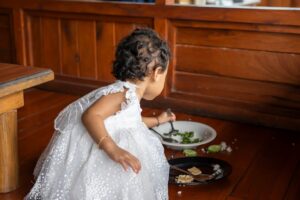
Nobody expects a toddler to behave like a business lunch guest. Servers aren’t expecting it either. What does register, though, is whether the adults at the table acknowledge what’s happened. A quick “sorry about the mess” and a reasonable effort to consolidate the chaos before leaving go a long way. Saying nothing and walking away from a table that looks like a minor disaster tends to stick with the person who has to reset it.
Telling the server the food was fine when it wasn’t
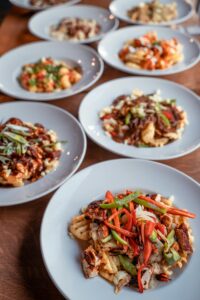
This one cuts the other direction. Servers genuinely want to know if something is wrong, not because they enjoy complaints, but because a problem they don’t know about becomes a review they can’t respond to, or a customer who doesn’t come back. “Fine” is the word people use when they don’t want to cause trouble. In a restaurant context, it quietly prevents anyone from fixing the thing that was actually wrong. Most servers would rather hear the real answer.
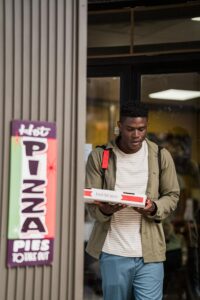
Leaving without making eye contact on the way out
Source: Pexels
The establishment operates on a small scale, which makes its existence difficult to detect. People in the business world should treat others with respect because they build their social connections through recognition, yet they treat servers like furniture, which results in negative consequences. The diners show appreciation through a nod and a “thanks” because they deliver a brief moment of actual human recognition,n which costs nothing yet brings greater value than most diners probably understand.
All eleven cases demonstrate the same pattern because they do not represent traditional bad manners. Most of them come from good intentions, efficiency, or simple unawareness of how things look from the other side. The information provides essential value because it helps you recognize their importance. The gap between what you intend and what you communicate is where most restaurant friction actually lives.
Most people have already experienced these activities, which means that they should not serve as our main focus. The main question revolves around whether knowledge brings about any transformation.
This article was created with AI assistance and reviewed by the author. The review included fact-checking, clarity edits, references, and sourcing of images