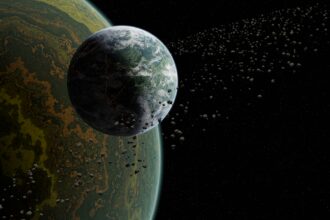


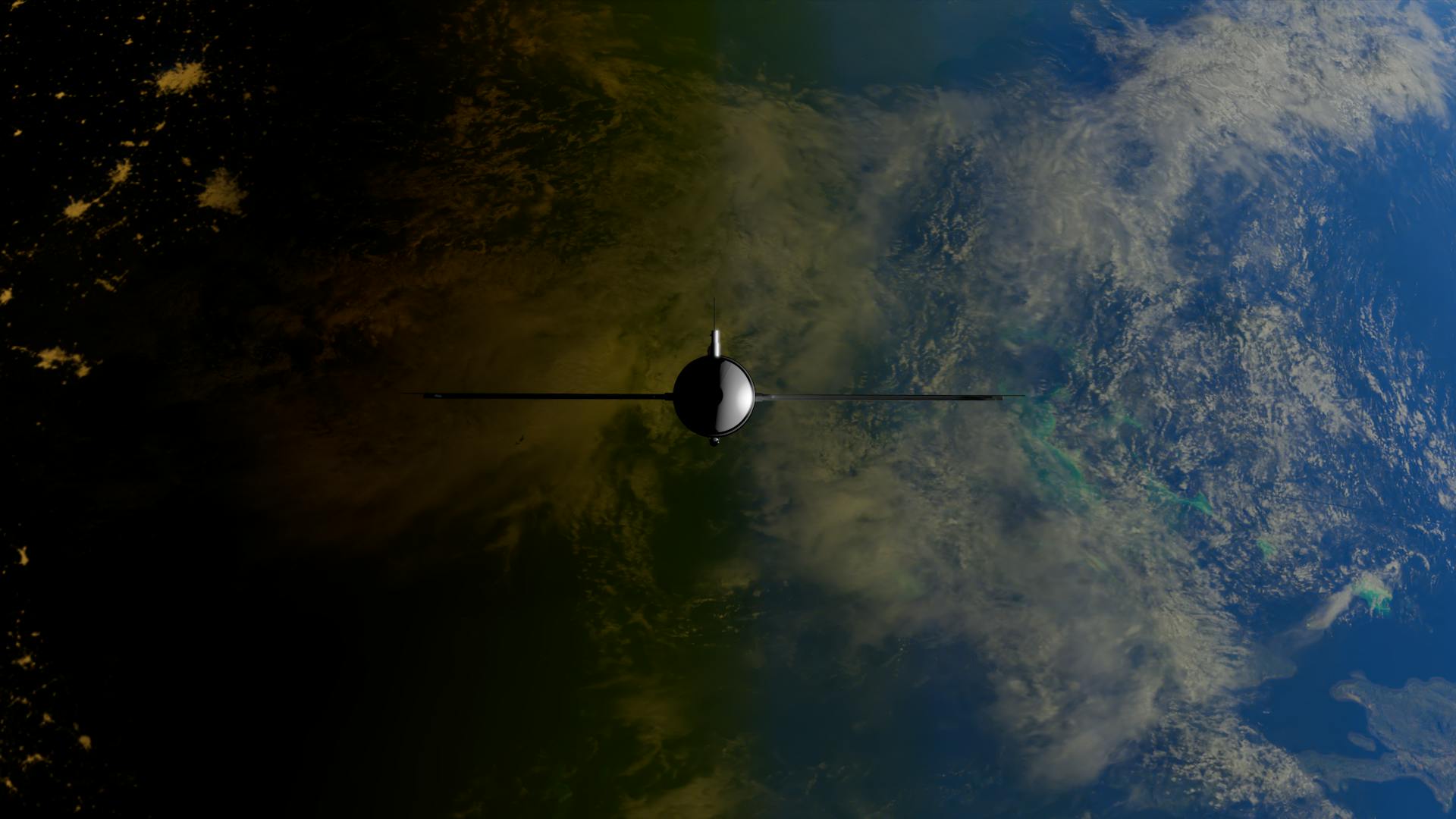
The Sun has an object with Earth like dimensions which moves through space beyond human observation for a time period exceeding the average human lifespan. The object does not belong to the category of planets. The object does not belong to the category of comets. Astronomers differ in their assessment of the object’s status as a moon because the term is too lengthy for accurate description yet it contains some truth.
What astronomers call a “quasi-moon” is a body that orbits the Sun in a path so similar to Earth’s that, from our perspective, it appears to loop around our planet. The object does not orbit Earth like the Moon because its gravitational connection to our planet lacks permanent and continuous binding. Nevertheless the object maintains a position which remains nearby to Earth. The object maintains an unyielding presence that resembles a companion. The object exhibits this particular behavior which creates its unusual appearance.
The present discovery contains information which exists beyond its current time frame. Astronomers have known about objects in this class for decades, and at least one Earth-sized candidate has been studied, tracked, and quietly discussed in scientific literature for years without ever really breaking into public conversation.
The scientific community did not receive any formal announcements through a press conference or an exciting news release. The scientific community did not receive any formal announcements through a press conference or an exciting news release. The scientific community only accessed knowledge through orbital mechanics papers which remained unread by most people.
The Orbit That Shouldn’t Exist (But Does)
The solar system diagram that you learned in school needs to be abandoned for you to comprehend the importance of quasi moons. The Sun provides planets with an elliptical path that they use for their orbital movements. Moons follow their orbits around the planets which they orbit. Everything in its lane. However space exists with greater complexity than that.
A group of objects enters into specific gravitational patterns which scientists designate as co-orbital configurations. These are regions where a smaller body can shadow a planet’s path around the Sun, not captured by the planet’s gravity, but close enough to be tugged and nudged into a synchronized dance.
The object itself is thought to be a few hundred meters to perhaps a kilometer across. The term Earth-sized does not match the meaningused by geologists. The size of the object reaches significant dimensions for near-Earth object research. The size of the object enables scientific research. The size of the object creates research value.
Why Nobody Told You About This
And here’s the strange part. The relative silence around these objects isn’t a cover-up or a case of scientists hedging before they’re sure. It’s more mundane than that, and in some ways more revealing.
Quasi-moons don’t fit neatly into any category the public is trained to care about. They’re not a threat. They’re not planets. They’re not moons in the way that word lands emotionally. So they get filed into orbital mechanics research, cited in papers on near-Earth object populations, and largely left there.
But interest is growing. Some researchers have begun floating quasi-moons as potential targets for future missions. The reasoning is practical: an object already loosely synchronized with Earth’s orbit is, by some measures, easier to reach than the Moon. Less delta-v required. A natural stepping stone.
Which sounds like science fiction until you remember that every mission to Mars, every probe we’ve launched past the edge of the solar system, started as a paper nobody read at a conference nobody covered.
What It Changes About the Neighborhood
The existence of quasi-moons doesn’t overturn planetary science. But it does complicate the story we tell about Earth’s place in the solar system. We tend to think of our planet as a solitary traveler with one companion, the Moon, loyal and permanent. The reality is more crowded. More dynamic.
Earth almost certainly has multiple quasi-satellites in various configurations at any given time. Some are temporary, they drift into the co-orbital zone, circle for a few orbits or a few centuries, then drift away. Others may persist far longer. The one currently under study has been in its present configuration for a geologically significant stretch of time.
We didn’t know that until we looked. And we only looked because someone thought it was worth asking whether Earth was truly alone out there on its annual circuit. It wasn’t.
If Earth has been quietly sharing its orbit all along, you have to wonder what else is out there in our own solar neighborhood that we’ve simply filed away and moved on from.
This article was created with AI assistance and reviewed by author. The review included fact-checking, clarity edits, references and sourcing of images