



The money you carry with you today has no gold backing. The GPS signal, which tracks your current location, needs more than basic geometric principles for its functioning. Both systems require an unknown force that enables their operation, while most people remain unaware of this crucial correction.
The moment you request your location information from your phone, your device remains inactive. The satellites complete all necessary functions.
A GPS satellite maintains its orbit at a distance of 12,550 miles from Earth. The object travels at an extremely high velocity. It moves at a speed of approximately 8,700 miles per hour. The timekeeping device operates with such accuracy that it only loses one second after 300 million years. The clock serves as the main purpose. The satellites maintain ongoing transmissions that declare their location and current time information.
Your phone receives those signals from multiple satellites simultaneously, measures the tiny differences in when each signal arrives, and triangulates your position from those gaps. The system uses beautiful mathematics, but nobody understands its physical foundations.
The satellites maintain a different timekeeping system, which causes their clocks to function at another speed than terrestrial timepieces. The clocks on satellites experience different time rates because of a scientific principle established by Einstein.
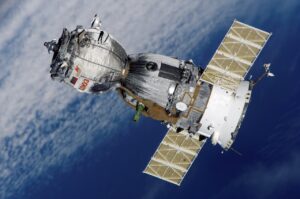
The situation contains two distinct effects that operate independently of each other. First, special relativity: because the satellites are moving so fast relative to us, time on board passes slightly slower than it does for someone standing still, a phenomenon called time dilation.
The satellite clocks would lose about seven microseconds of time for every single day because of that time dilation effect alone. The first surprising fact about general relativity shows that it functions because of its opposite relationship to existing facts.
The satellites operate beyond the limits of Earth, which results in them experiencing less gravitational pull, creating weaker spacetime curvature. Clocks advance at a faster rate when they exist within environments that possess lower gravitational pull. The effect produces a daily increase of about 45 microseconds. The process of combining both effects results in a daily relativistic correction that equals approximately 38 microseconds.
GPS systems would experience position errors, which would increase at a rate of several miles because the system lacked the necessary corrections. The system would become completely nonfunctional for navigation purposes within a few weeks.
The 1970s GPS engineers designed the system with this knowledge. The engineers installed the relativistic correction system into the satellite clock,s which they launched into space. The engineers set the clocks to tick at a different speed on Earth because they wanted the clocks to show accurate time when the satellites reached their orbital positions.

Which sounds insane until you realize it’s exactly what we’re still doing.
The correction exists as a fundamental element that goes beyond its role as a mere annotation. The system collapses within a single day when you remove this element because it serves as the vital link between all components.
Your current location depends on an Einstein prediction from more than 100 years ago, which scientists tested by tracking atomic clocks that orbit at high altitudes. The satellites locate your position while they demonstrate the validity of a scientific theory through their continuous operation throughout every moment of existence.
People need to grasp one additional aspect of this situation. Your phone doesn’t store any of this complexity. The device detects four signals, which it uses to calculate the position through triangulation while it processes satellite signals to create a blue dot.

The system completes processing within a time frame of milliseconds. The system design already includes relativity as a fixed element. Users never observe the system’s components, which maintain the entire system operation according to the equations’ prediction.
People believe that GPS represents a major achievement in engineering. People believe that GPS represents a major achievement in engineering. The system requires scientific principles as its foundation because engineering needs physics principles to function effectively.
This article was created with AI assistance and reviewed by the author. The review included fact-checking, clarity edits, references, and sourcing of images