


Several armies return to their home base after completing military operations. The recorded events that led to their defeat resulted in their eventual death, which scholars later studied. The historical record suddenly loses track of certain groups, which vanish without evidence of their last battle, official dissolution, or memorialization. The historical record shows that certain groups vanished from existence without any trace. The Roman Empire maintained detailed records about its legions,s which reached an excessive level of control through its obsession with military operations.
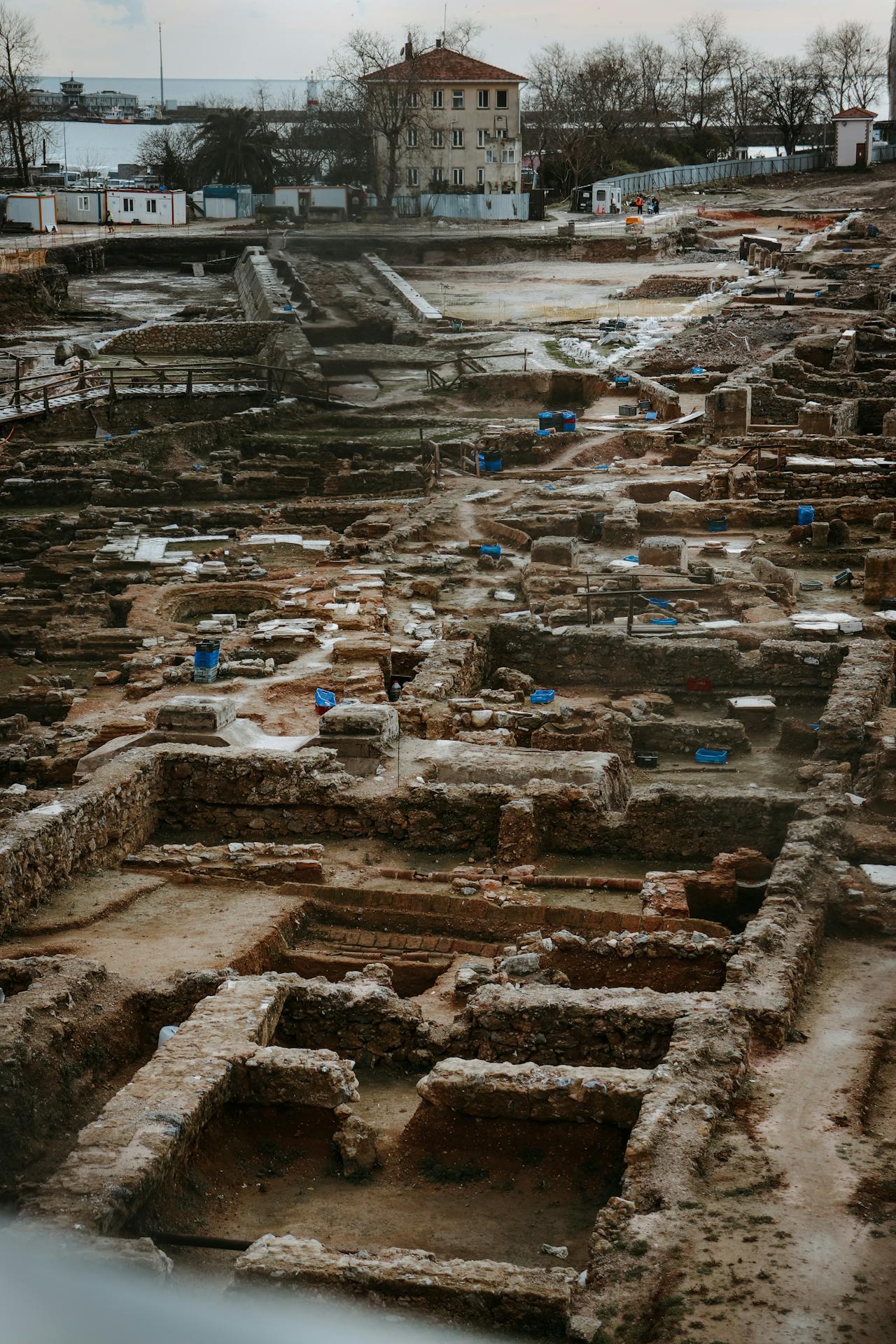
Archaeologists working in the northern frontier area, which the empire once controlled, believe they have discovered the missing link.
The Roman military machine did not allow its lost items to disappear without notice. Rome maintained a system to track legion losses, which included recording the incidents and conducting revenge operations. The disaster at Teutoburg Forest in 9 AD, where three full legions were annihilated by Germanic tribes under the chieftain Arminius, became one of the most documented catastrophes in Roman military history. The emperor Augustus spent months walking through his palace because he wanted his general to return his legions. The people told that story. The people publicly mourned the losses that empires mourn when they seek to maintain control during their time of defeat.
The legion at the center of this new discovery didn’t get that treatment. And here’s the strange part: the silence itself is what first drew researchers to the site.
When a Roman unit vanishes from administrative records without a disbandment notice, without a reassignment order, without a single subsequent inscription naming the legion or its veterans, the absence becomes its own kind of evidence. Roman bureaucracy was relentless. Soldiers were tracked. Pay records existed. Veterans received land grants that were documented. A unit of several thousand men, trained, equipped, and stationed somewhere along Rome’s northern frontier, doesn’t simply evaporate from the paperwork unless someone decided not to write it down. That decision, when it happened, was rarely accidental.
The archaeological team, working across a region that sits beyond the Rhine boundary Rome formally maintained after the Teutoburg disaster, began turning up what field researchers describe as unmistakably Roman in origin: military-grade metalwork, the remnants of marching camp fortifications built in the standardized Roman pattern, and personal effects consistent with Roman legionary equipment.
What makes the site unusual is its location. It sits deep inside territory that Roman commanders were, by most historical accounts, actively trying to avoid after the Teutoburg catastrophe. The conventional wisdom held that Rome pulled back, hardened the Rhine as a border, and stopped sending large formations east into the forests.
Conventional wisdom, apparently, was wrong.
The working theory among the excavation team is that this wasn’t a patrol or a scouting party. The scale of what they’re finding suggests a full formation, thousands of men, not hundreds, operating in a region Rome’s own historians treated as effectively off-limits. Which raises the obvious question: what were they doing there? The answers being floated range from a punitive expedition that went further than planned, to a deliberate campaign that the senate or the emperor quietly preferred to forget once it failed, to something more unsettling, the possibility that this legion wasn’t lost to battle at all, but was sent out and simply never called back.
Rome had precedent for that kind of institutional forgetting. Units that mutinied, or that backed the wrong claimant during a period of civil conflict, sometimes disappeared from official records not because they were destroyed but because acknowledging them had become politically inconvenient. The erasure of a legion from the administrative record was, in the right circumstances, easier than the alternative.
The physical evidence doesn’t yet resolve the question of what happened to the men. But it confirms, with a specificity that the written record cannot offer, that a Roman military presence of significant size existed in this location, and that whoever was there didn’t leave in any organized way. The artifacts aren’t arranged the way a marching camp is when it’s deliberately abandoned. Equipment isn’t cached or destroyed to deny it to an enemy, the way Roman doctrine prescribed. It’s scattered. The picture the site paints is less of an orderly withdrawal and more of something that simply stopped.

What the discovery changes, more than anything, is the map of what Rome actually did versus what it officially said it did. The frontier was always presented as a line, held, defended, and maintained. But archaeology keeps finding Romans on the wrong side of that line, doing things the historical record declines to describe. This legion may be the most dramatic example yet of the gap between Rome’s self-image as a power that controlled its own story and the messier reality of an empire that sometimes lost formations in the dark and found it easier to pretend they’d never existed.
The excavation is ongoing, and the team has indicated that additional seasons of fieldwork and analysis will be required before the team’s findings can be formally published. The identity of the specific legion, its number, its origin, and its commander remain unconfirmed. But the bones of the mystery, so to speak, are finally visible.
Rome erased this legion from its own memory. The ground kept the record anyway.
If an empire as document-obsessed as Rome could make an entire legion disappear from the official history, it’s worth asking what else got quietly left out, and how much of what we think we know about the ancient world was written by the people who had the most to gain from a particular version of events.
This article was created with AI assistance and reviewed by the author. The review included fact-checking, clarity edits, references, and sourcing of images