



















The Black Death didn’t start in medieval Europe. Most people know that much. But the conventional story that the bacterium responsible emerged somewhere in Central Asia and swept westward in the 14th century turns out to be only part of the picture. A much older and stranger one is now coming into view.
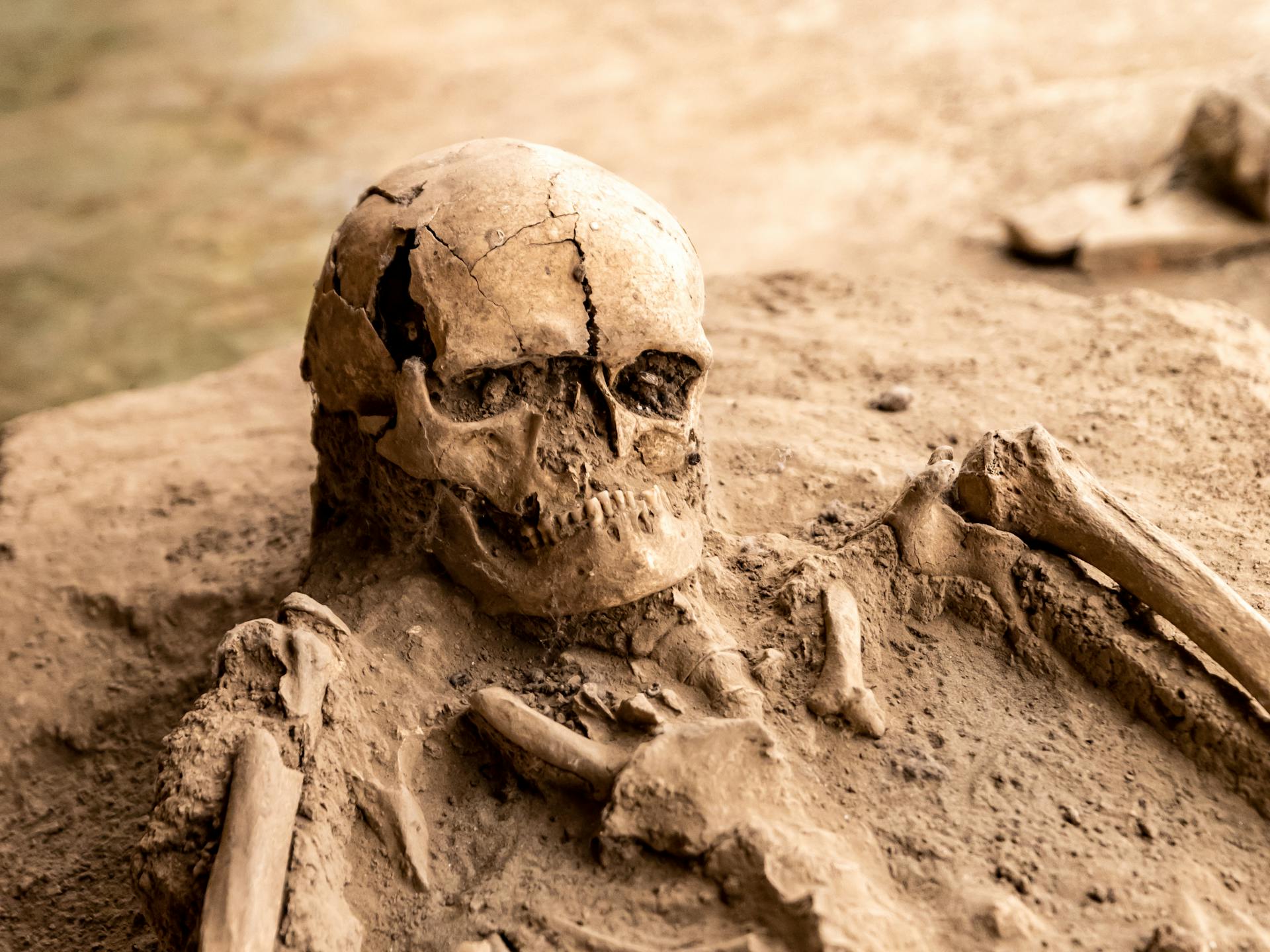
Researchers working with ancient DNA extracted from burial sites in Central Asia and Eastern Europe have sequenced genetic material from Yersinia pestis, the pathogen behind bubonic plague, in human remains dating back roughly 5,000 years. What they found wasn’t a primitive, barely recognizable ancestor. It was something far more unsettling: a version of the same bacterium, already capable of causing serious disease, moving through human populations millennia before anyone built a cathedral or coined a word for epidemic.
And here’s the strange part. The earliest known strains lacked a specific genetic mutation that makes modern plague so devastatingly transmissible through fleas. That mutation appears to have developed later. Which means the plague we know, the one that killed somewhere between a third and half of Europe’s population in the 1300s, wasn’t the original version. There was an older version first. And it was already killing people.
How Bones Become Evidence
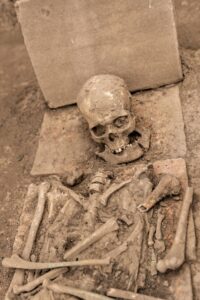
Ancient DNA research is a field built on luck and patience. Genetic material degrades fast. Extreme cold, dry environments, or unusual burial conditions can preserve enough fragments to work with, but only barely. What scientists are doing when they sequence a 5,000-year-old pathogen is essentially reconstructing a shredded document from dust. The fact that it’s possible at all is recent. Advances in sequencing technology over the past two decades have made it feasible to pull signal from noise in ways that simply weren’t achievable before.
Ten years ago, the oldest confirmed plague DNA anyone had pulled from a burial came from remains several thousand years old, a finding that felt, at the time, like it settled the question. It didn’t. Every new site that yields viable genetic material shoves the timeline back a little further, and the picture that’s emerging isn’t simpler. It’s messier, and considerably more interesting.
The Bacterium That Learned New Tricks

The evolution of Yersinia pestis tells a story that most infectious disease textbooks still don’t quite capture. The earliest strains, based on current genomic evidence, appear to have spread differently from the plague we associate with the medieval pandemic. Flea-borne transmission, the rat-flea-human chain that made the Black Death so explosive, seems to have required specific genetic adaptations that weren’t present in the oldest known strains.
Here’s the thing. The implication isn’t just that plague is older than we thought, it’s that the pathogen spent thousands of years getting worse. It refined itself against human and animal hosts across dozens of generations of contact, acquiring the molecular tools that would eventually make it catastrophic. Bacteria don’t strategize. But natural selection doesn’t need to.
The math worked. Which was the problem.
By the time plague reached medieval Europe, it had thousands of years of evolutionary refinement behind it. The version that arrived in 1347 wasn’t new. It was old and experienced, in whatever sense a bacterium can be called that.
What This Changes, and What It Doesn’t
Rewriting plague’s origin story doesn’t change what happened in the 14th century. Those deaths were real. The economic and demographic collapse was real. But it does change how scientists think about the conditions that allow a pathogen to become catastrophic.
If plague was circulating in human populations for thousands of years before the Black Death, then the 14th-century pandemic wasn’t a bolt from the blue. It was the culmination of a very long evolutionary process, one that required specific historical conditions to detonate. Population density. Trade routes. Climate shifts that pushed rodent populations into new territories. The bacterium didn’t cause the Black Death alone. It needed the right moment.
That framing matters now more than it might seem. Understanding how a pathogen can persist in low-level circulation for millennia before causing a catastrophic outbreak is directly relevant to how researchers model pandemic risk today. The question isn’t just where did this come from, it’s how long has it been waiting.
Most people think of the Black Death as a medieval problem. Ancient DNA is suggesting it was a Bronze Age problem that finally ran out of luck in the 14th century. That’s a different story, and if you follow the logic of it, there may be others like it still in the ground, in burial sites not yet excavated, waiting to be sequenced.
This article was created with AI assistance and reviewed by author. The review included fact-checking, clarity edits, references and sourcing of images