

Pompeii has been excavating surprises for nearly three centuries. And just when researchers believed they had a working map of who lived there, who mattered, and who was simply passing through, the ruins handed them something that quietly dismantled the picture: the fossilized remains of what appears to be a Roman soldier’s last meal, found preserved in the volcanic debris that buried the city in 79 AD.
The meal itself wasn’t extravagant. That’s exactly the point.
What the Ash Preserved That Time Could Not
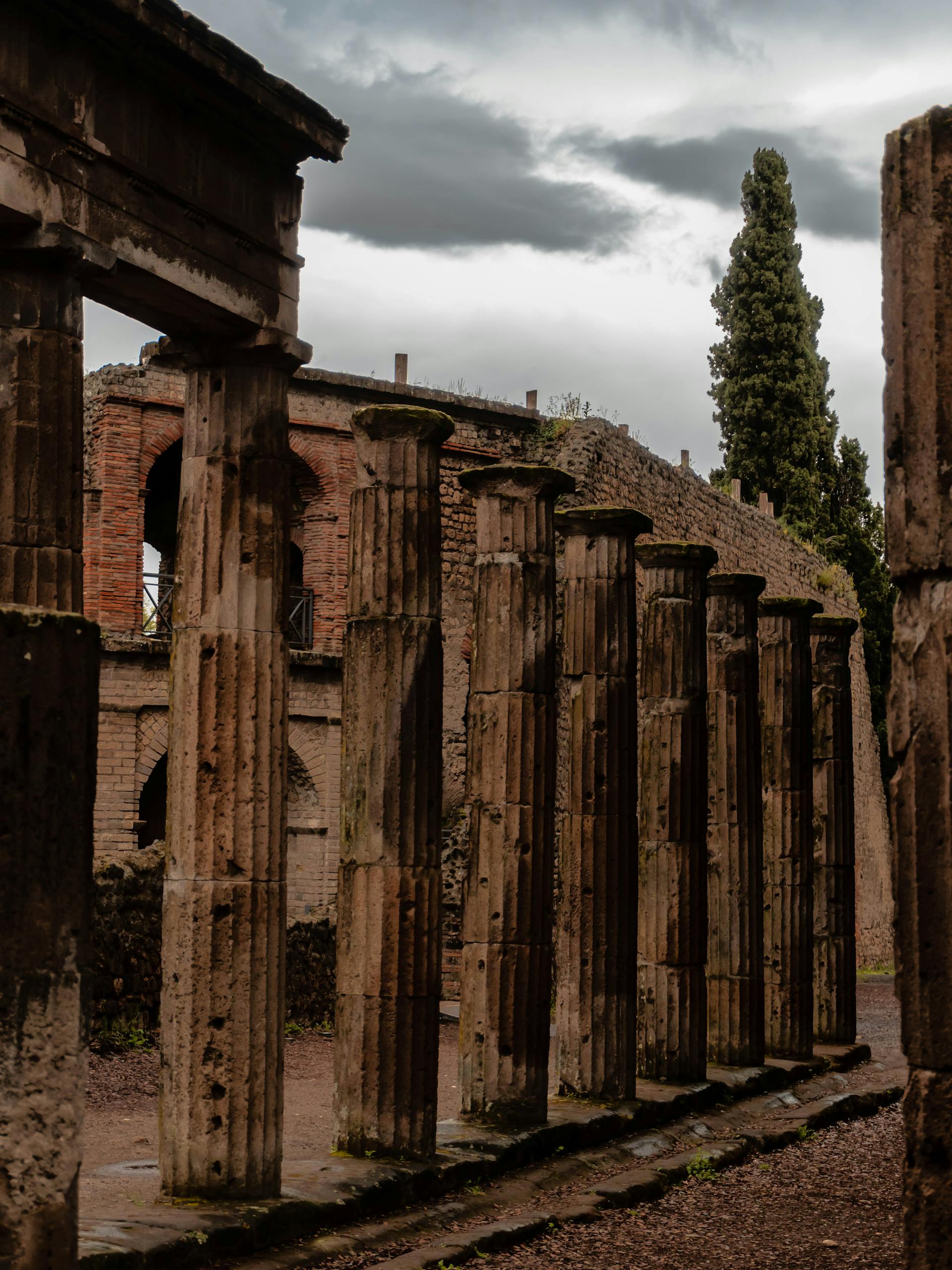
Pompeii’s preservation is one of archaeology’s strangest gifts. The eruption of Mount Vesuvius didn’t just bury the city. It sealed it. Organic materials that would have rotted to nothing over two millennia survived inside the volcanic matrix, carbonized or encased in ways that left their structure legible to modern analysis. Food, fabric, wooden furniture, things that disappear from most ancient sites, occasionally survive here in forms archaeologists can still read.
What the team recovered wasn’t a banquet. The contents pointed to a modest, working meal consistent with the kind of provisions associated with military rations rather than the elaborate spreads depicted in Roman mosaics., the kind of provisions associated with military rations rather than the elaborate spreads depicted in Roman mosaics. Simple. Functional. The food of someone who ate to work, not to be seen eating.
And here’s the strange part: simplicity is what made it significant.
The Question Nobody Thought to Ask
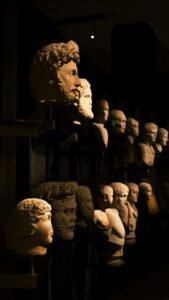
For generations, the standard picture of Pompeii cast it as a city of merchants, craftspeople, wealthy Romans with seaside villas and elaborate triclinia. Soldiers were an afterthought, stationed somewhere nearby, passing through on one of the major Roman roads serving the region, not really residents. Graffiti, property records, architectural footprints, all of it read civilian.
But Roman military life in the first century AD was not cleanly separated from civilian life the way modern armies are. Soldiers lived among populations. They had families, ran businesses, and owned property. The boundary was blurrier than the textbooks suggested.
What this preserved meal does, quietly, without fanfare, is add a data point to a growing argument that Pompeii’s population was more militarized, more socially mixed, and frankly more complicated than the villa-and-forum narrative implied. A soldier eating a working meal in a room in Pompeii isn’t just a curiosity. He’s evidence of a life that wasn’t supposed to be there.
What Pompeii Is Still Teaching Us
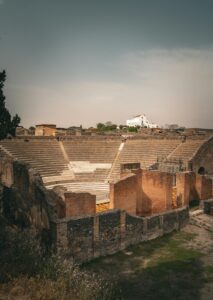
The Pompeii archaeological site authority has been in the middle of a major ongoing excavation project for several years now, and the pace of discovery has been, by any measure, remarkable. New frescoes. New skeletons. New rooms in houses that were thought to be fully excavated in the 19th century. Each find tends to complicate the previous consensus rather than confirm it.
The soldier’s meal fits that pattern. It doesn’t overturn Pompeii’s history so much as it adds a layer that was always probably there, just invisible to earlier methods.
Modern archaeologists working the site now use techniques, such as isotope analysis, proteomics, and high-resolution scanning, that would have been science fiction to the excavators who first opened these rooms. Those tools let researchers pull social information out of physical remains in ways that weren’t possible even twenty years ago. The result is that Pompeii, a site that has been studied longer than almost any other in the ancient world, keeps yielding genuinely new information.
Which sounds almost absurd. It’s a city that’s been dug up since the 1700s. Scholars have written about it in every language. And it still has rooms nobody has opened yet.
The Bigger Picture Nobody Mentions
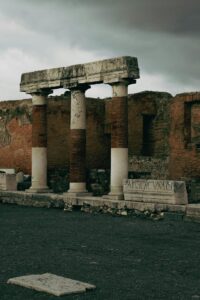
Here’s what tends to get lost in the coverage of individual Pompeii discoveries: the city was not a representative Roman town. It was a specific, prosperous, cosmopolitan community in a coastal region with active trade networks in a region of Italy that had its own complicated relationship with Rome for centuries before the eruption. The people who lived there were not a cross-section of the empire. They were a particular slice of it, shaped by trade, by migration, by the specific social pressures of a city that had been conquered, absorbed, and thoroughly Romanized within the living memory of its own distinct culture.
When a soldier’s meal turns up in the ash, the real question isn’t “who was this person?” It’s sharper than that. Was Pompeii a garrison town nobody catalogued as one? A transit node where military and civilian life had fused so completely that later scholars simply stopped seeing the seams? The historical record, tidy as it looks from a distance, may have been hiding the answer in plain sight for two hundred years.
Archaeology doesn’t always answer those questions cleanly. Sometimes it just makes them sharper.
Pompeii has been frozen in the moment of its destruction for nearly two thousand years. Every time excavators open a new room, they’re not just finding objects; they’re finding people who had no idea they were about to become history. A soldier eating a simple meal. Not expecting to be remembered. Not expecting anything, probably, except tomorrow.
If that doesn’t change how you think about what’s still buried under the ash, nothing will.
This article was researched, written, and edited by our human editorial team. AI tools were used in a limited research-assistant capacity. All claims were independently verified.