

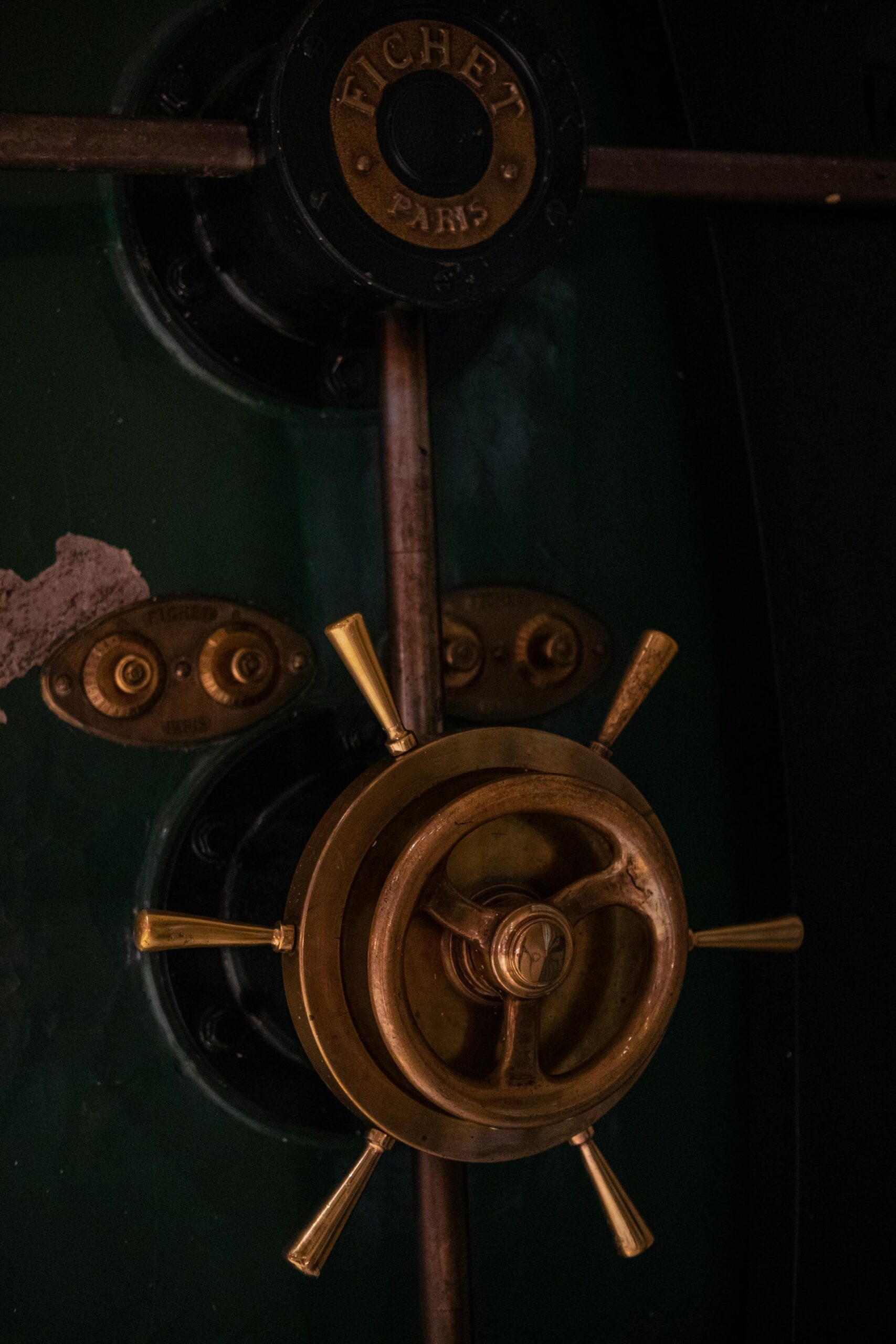
The Bank of England’s vaults were not emptied by thieves. No invasion force broke through. What happened was stranger and, in some ways, more desperate: the British government quietly decided to send its entire gold reserve, the financial foundation of an empire, across a submarine-infested ocean, in wooden crates, on warships, in the dark. And it worked. Most people alive at the time had no idea it had happened.
This was not a minor transfer of funds. It was the movement of what was then one of the largest concentrations of monetary wealth on Earth, shipped in secret to Canada to keep it out of Nazi hands. The logic was brutal and simple: if Germany invaded Britain, the gold could not fall into enemy control.
The empire’s ability to wage war, to buy weapons, pay allies, and fund operations depended on keeping that reserve intact and out of reach. And here’s the part that still doesn’t quite feel real: they nearly pulled it off without history noticing at all. The operation began in earnest in 1940, as the fall of France made the threat of a British invasion feel less theoretical and more imminent. The gold had sat in the Bank of England for generations, a physical symbol of British financial power. Moving it meant admitting, at least internally, that Britain might lose.
That was not the kind of admission anyone wanted to make publicly. So they didn’t make it publicly. The operation was classified at the highest levels. Dock workers who loaded crates onto ships did not know what was inside. Naval crews were told as little as possible. The scale of secrecy was, by the standards of wartime Britain, remarkable. Multiple convoys, sources vary on the precise count, threaded the North Atlantic to empty the vaults, each one sailing while German U-boat commanders were racking up kills at a rate that made Admiralty planners visibly ill., each one threading the North Atlantic while German U-boat commanders were racking up kills at a rate that made Admiralty planners visibly ill. The ships weren’t invulnerable; nothing crossing that ocean in 1940 was.
But the British government had run the numbers and landed on a cold conclusion: the odds of losing the gold at sea were still better than the certainty of handing it to an occupation force that would be in London by Christmas. That is the kind of math that doesn’t show up in the official minutes. When the gold arrived in Canada, much of it ended up beneath the Sun Life Building in Montreal, a corporate skyscraper that became, for the duration of the war, the most financially significant basement on the planet. Canadian officials knew. A small number of bank employees knew. Almost nobody else did. The sheer volume required careful logistics, significant security, and the kind of institutional silence that governments can only maintain when the people involved genuinely understand what’s at stake.
What makes this story genuinely strange is not that it happened. Governments have moved money in wartime before. What makes it strange is that it was successfully concealed from the public for so long afterward. The secrecy didn’t end with the war. Decades passed before a full accounting of what had occurred gradually emerged in public records and historical investigations in the decades following the war, as archival restrictions were lifted. The British public, and, frankly, most of the world, had no idea that the vaults had been emptied, that the empire had essentially bet its financial survival on a convoy of ships making it across the Atlantic without being sunk.
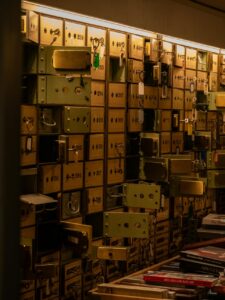
Here’s the thing. The concealment wasn’t purely about keeping U-boat commanders in the dark; it was about keeping British civilians in the dark too. If Germany knew the gold was at sea, yes, it would prioritize hunting those ships. But if ordinary people in Birmingham or Bristol learned the reserve had been evacuated, they would draw the obvious conclusion: that the men running the country didn’t actually believe Britain was going to survive. In the summer of 1940, that conclusion might have been accurate. Letting it circulate freely was not an option anyone in Whitehall was willing to consider. So they said nothing.
The ships sailed. The vaults sat empty, or nearly so. And the war continued with the British public largely unaware that the financial architecture of the nation had been quietly relocated to another continent. There is something almost vertiginous about that when you sit with it. The ordinary life of a country, rationing, air raid drills, factory shifts, fundraising drives, continued around a secret of that magnitude. People deposited money in banks, paid taxes, bought war bonds, and went about their business while the physical reserve underpinning all of it was sitting in a vault in Canada. Whether or not that ranking holds up, the basic facts are hard to argue with.
Britain moved an almost incomprehensible amount of gold across the most dangerous stretch of ocean in the world, in wartime, without losing it, without the enemy finding out, and without the public finding out for decades afterward. Most nations have secrets. Very few manage to keep the ones this size. This article was researched, written, and edited by our human editorial team. AI tools were used in a limited research-assistant capacity. All claims were independently verified.