


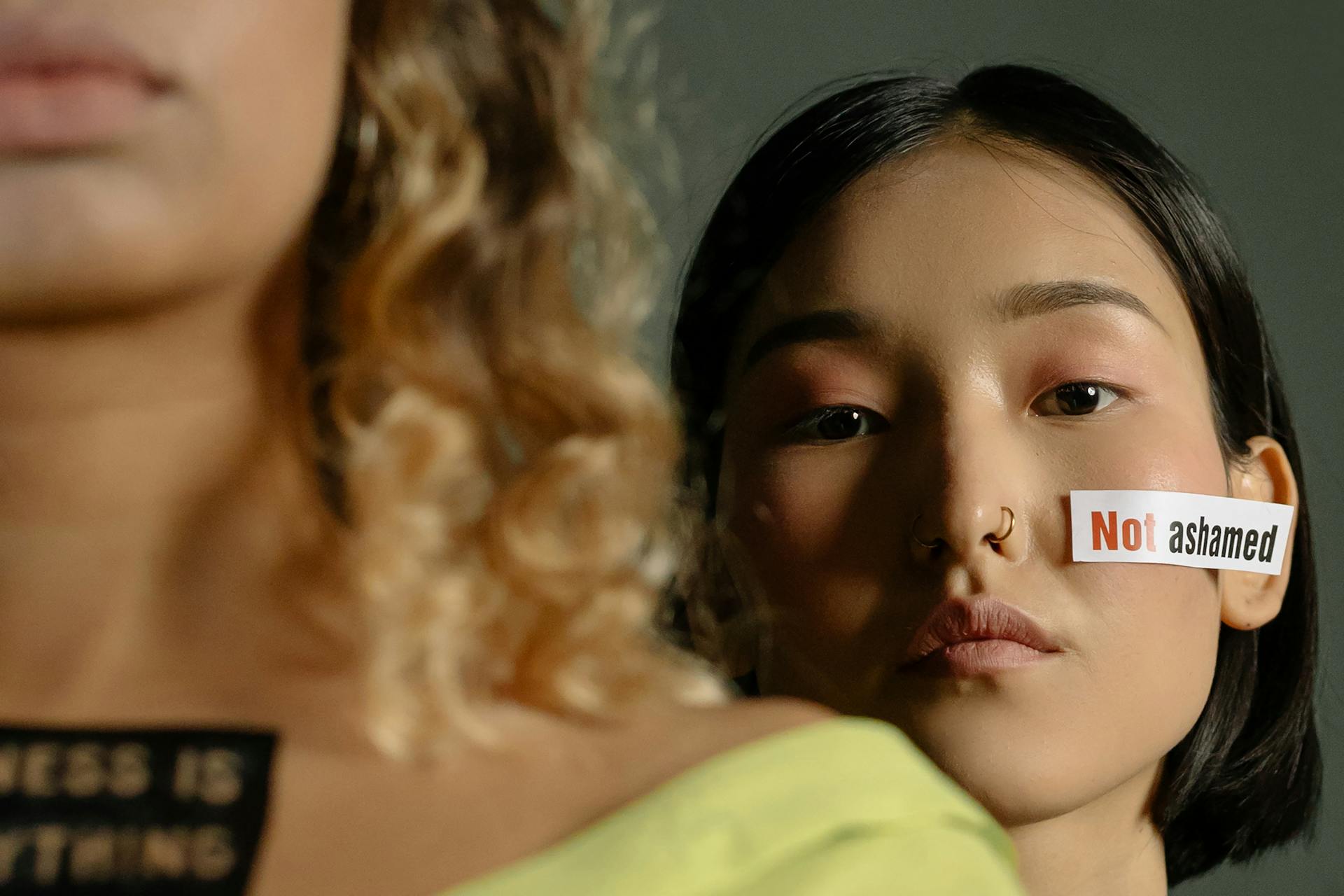
Sixty years ago, your neighbors knew your business. And your business, if it included any of the things on this list, could ruin you.
Not ruin-your-career ruin. Ruin your life. The kind where your family stopped inviting you to Thanksgiving, your minister gave a pointed sermon, and the town simply decided you no longer existed in polite company. America in the early 1960s ran on a tight social ledger of shame, and the debts were collected publicly.
What’s strange is how completely that ledger has been erased. Behaviors that once marked someone as morally broken are now television plotlines, brunch topics, and things you mention casually on a first date. The transformation happened faster than almost any other cultural shift in recorded American history. Here’s what used to cost people everything.
Divorce

In the early 1960s, divorce carried a social stain that touched everyone in the household. Divorced women were viewed with suspicion, either pitied or quietly blamed. Divorced men were considered unstable. Children of divorced parents sometimes faced whispered treatment at school.
The legal process itself was adversarial by design in most states, requiring one party to prove fault: adultery, abandonment, or cruelty. No-fault divorce laws didn’t begin spreading through state legislatures until the late 1960s and into the 1970s. Today, roughly half of American marriages end in divorce, and the social conversation has shifted almost entirely toward the logistics of co-parenting rather than the morality of the decision.
Living Together Before Marriage

Cohabitation before marriage had a blunter name in 1964, and landlords used it as grounds for eviction. Couples who lived together without a marriage certificate risked losing jobs, housing, and family relationships. Some municipalities had laws on the books specifically targeting “lewd cohabitation”. Today, a majority of couples live together before marrying, and the arrangement is so standard that the phrase “living in sin” has become either a joke or a vintage curio.
Tattoos

Walk into any hospital ward today, a nd you’ll find nurses with sleeve tattoos starting IVs. That was unthinkable in 1962. Back then, a visible tattoo on a woman was scandalous; on a professional man, professionally fatal. Employers didn’t need written policies because the social consensus did the enforcing for them.
Now surveys in recent years suggest a substantial and growing share of American adults, commonly estimated between a quarter and four in ten, carry at least one tattoo, and the industry, which generates substantial revenue annually, has quietly become one of the more recession-resistant corners of American retail. Nobody held a vote. It just happened.
Interracial Marriage

And here’s the part that stops people cold: interracial marriage was not just socially stigmatized sixty years ago, it was illegal in a significant number of states. The Supreme Court’s ruling in Loving v. Virginia struck down those laws, but the social hostility outlasted the legal prohibition by decades in many communities. Today, interracial marriages make up a growing share of all new marriages annually, and polls consistently show majority approval across every age group.
Therapy and Mental Health Treatment

Seeking psychiatric help in the early 1960s was considered evidence of weakness at best, and instability at worst. People hid it. Employers could and did use it against employees. The stigma was so severe that many people in genuine crisis avoided treatment entirely rather than risk having it known.
The cultural reversal here is nearly total. Therapy is now openly discussed, recommended by celebrities and physicians alike, and treated as a basic wellness practice embraced by a notably higher share of younger Americans than previous generations, according to mental health surveys.
Having a Child Outside of Marriage

The phrase used was “illegitimate child”, a legal and social designation that followed both mother and child. The mother faced severe judgment; in many communities, she was expected to either marry quickly, give the child up for adoption, or disappear from public life. Today, roughly four in ten American births occur outside of marriage, a figure that has risen steadily across every income and educational level for decades.
Women Working After Marriage

Here’s the thing: it wasn’t just frowned upon. Many employers in the early 1960s had written policies, actual HR paperwork, requiring women to resign the moment they married. The assumption underneath it was that a working wife meant either a husband who couldn’t provide or a home nobody was watching.
Both were shameful. Both were his fault as much as hers. Today, the question isn’t whether a married woman works. It’s whether the family can survive on one income if she doesn’t. The shame didn’t just disappear; it inverted.
Sodomy Laws. The One That’s Still on the Books

The Supreme Court’s ruling in Lawrence v. Texas struck down anti-sodomy laws as unconstitutional, effectively nullifying them nationwide. But here’s the thing: several states have never formally repealed their sodomy statutes from state legal codes. They’re unenforceable, legally dead, but technically still sitting in the law books. Not because anyone is defending them. Just because no legislature has bothered to take out the trash.
What that tells you about American social change is maybe the most honest summary of this whole list: the attitudes shifted faster than the paperwork. In sixty years, America went from enforcing moral codes through law, employment, and community exile to treating most of them as personal choices not worth a second glance.
The question worth sitting with is which things we consider obvious and normal today that the next sixty years will look back on the same way we now look at “illegitimate child” stamps on birth certificates.
This article was created with AI assistance and reviewed by the author. The review included fact-checking, clarity edits, references, and sourcing of images