


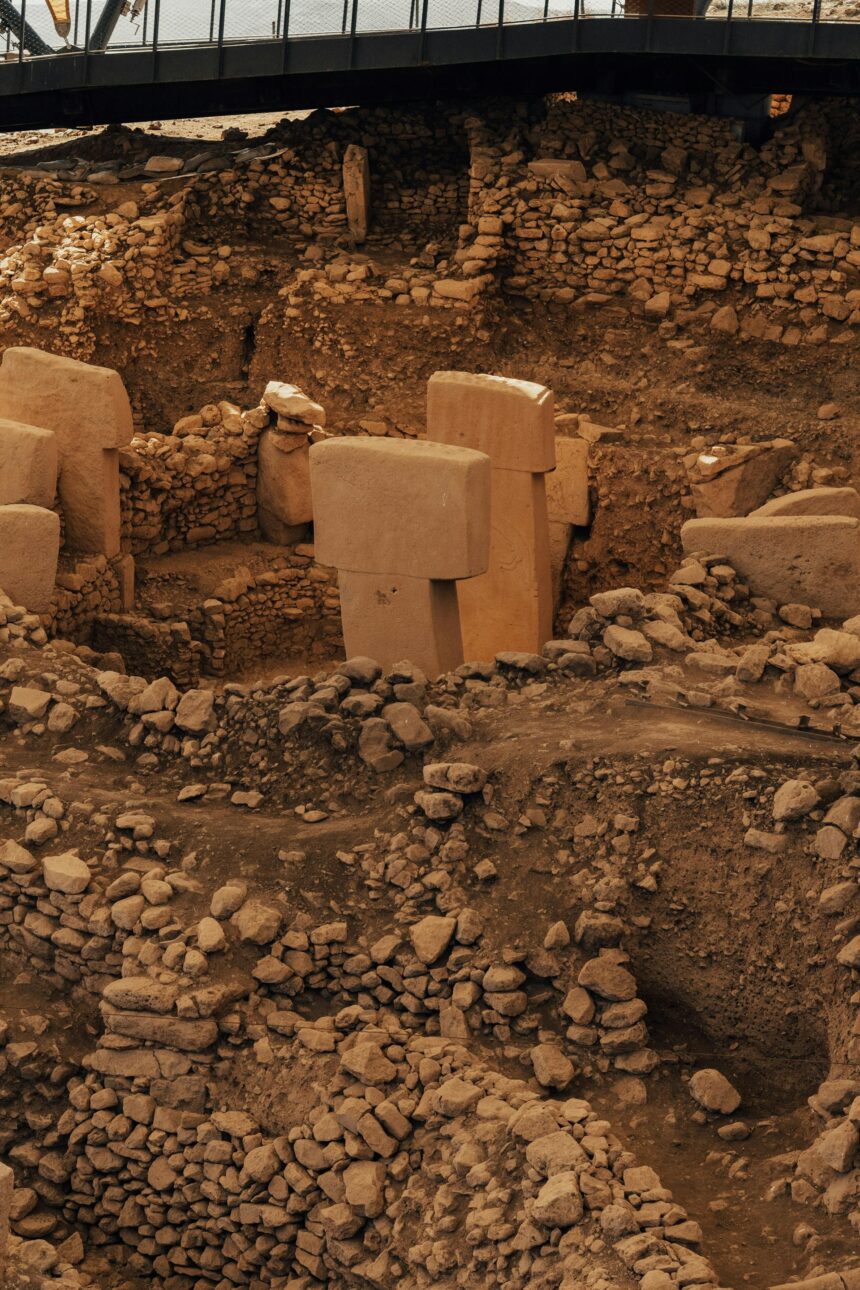
Three years before the great Bronze Age cities drew all the attention, a quieter revolution was already underway. Copper smelted, traded, and shaped into tools that changed how people farmed and fought — was moving across ancient Europe and the Near East in quantities that required organization. Somewhere, there had to be a center. Archaeologists have spent generations looking for it. The answer, it now appears, was sitting in the ground the whole time.
Researchers working at a site in the Balkans believe they have identified what may be the administrative and production hub of the Copper Age world, a settlement large enough, old enough, and structurally complex enough to qualify as a genuine capital. The site dates to roughly 4500 to 3500 BCE, a window when copper metallurgy was not yet routine but was already reshaping social hierarchies across the continent.
And here’s the strange part: the site wasn’t buried under meters of sediment in some remote valley. It was hiding inside a landscape that archaeologists had surveyed before, visible in aerial photographs, documented in regional catalogs, and essentially unread for what it was.
What “Capital” Actually Means at 4,500 BCE
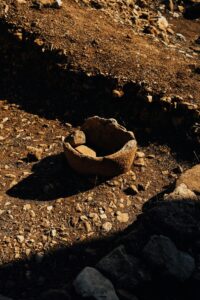
The word “capital” carries modern baggage. Roads. Monuments. A palace. The Copper Age doesn’t offer any of that in the familiar sense, and that’s precisely why the identification took so long. Researchers weren’t looking for a city. They were looking for a city that looked like a city, and the Copper Age didn’t build those.
What it built instead was density. Workshops clustered together. Evidence of long-distance trade goods arriving from hundreds of miles away. Copper ore is processed in volumes that a single village couldn’t sustain or justify. Prestige objects, some of the oldest gold artifacts ever recovered in Europe, concentrated in burial contexts that suggest a ruling class organized around metalworking wealth rather than agricultural surplus.
The site under current investigation appears to show all of these markers at a scale that dwarfs neighboring settlements of the same period. That scale is the argument. No one is claiming a throne room. The claim is subtler and, in some ways, more interesting: that this was the place where the logic of the Copper Age was organized, where the supply chains converged, and where the social structures that would eventually produce Bronze Age civilization were first rehearsed.
The Reason It Stayed Hidden
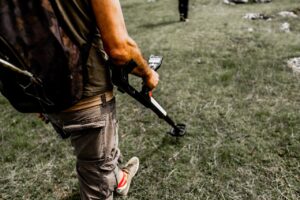
Part of the answer is technological. Ground-penetrating radar, LiDAR survey, and isotopic analysis of metal artifacts are relatively recent tools. Earlier archaeologists working in the same region had neither the instruments to detect subsurface structures at scale nor the interpretive framework to recognize what diffuse surface scatters of copper slag and ceramic fragments actually implied.
But there is another reason, less flattering to the field. The Copper Age got buried twice, once in the actual ground and once under a century of academic indifference. Scholars chasing the Bronze Age’s harder metals and bigger ruins treated the Chalcolithic as a waiting room. The sites were catalogued. The significance was never assigned. You can’t fault the earlier researchers entirely; they were working with shovels and intuition, not satellite arrays, but the interpretive blind spot held for a surprisingly long time.
That gap is now closing fast. A generation of archaeologists trained specifically in Chalcolithic cultures has been going back through the old evidence with new tools and a sharper question: what if the Copper Age wasn’t a prelude? What if it was the main event? What they’re finding suggests copper didn’t just make better axes. It made industrial specialization thinkable for the first time.
What the Excavation Is Actually Showing

The physical evidence at the site is layered. At the lowest and oldest levels, researchers found hearths and basic copper-working debris consistent with a small, skilled community. Moving upward through the stratigraphy, the scale changes. Workshop areas expand. Storage structures appear. The variety of ceramic styles suggests people arriving from distinct cultural traditions, the material signature of a place that was drawing in outsiders rather than simply growing from within.
That pattern of attraction is important. A market town, even a prehistoric one, looks different from an ordinary village in the archaeological record. Goods move through it. People move through it. The artifact assemblages become heterogeneous in ways that purely local communities are not. The current site shows exactly this kind of evidence of varied occupation across multiple stratigraphic layers.
Copper artifacts recovered from the site and from related burial contexts in the surrounding region show metal compositions that trace back to ore sources well outside the immediate area. That’s not unusual for the Bronze Age. At this scale, for the Copper Age, it is unusual. It implies a supply network sophisticated enough to reach distant mines and reliable enough to sustain production over generations.
Why the Location Makes Sense in Hindsight

The Balkans sit at the intersection of three geographic corridors that mattered enormously in prehistory: the Danube river system running west to east, the Adriatic coast running north to south, and the overland routes connecting Anatolia to central Europe. Any settlement positioned to control or service even two of those corridors would have had structural advantages that no amount of agricultural productivity could match.
The site’s location, once flagged as a potential hub, makes the geography look almost obvious in hindsight. Ore from the Carpathian mountains could arrive by river. Finished goods could fan out in four directions. Populations from the Aegean coast to the Hungarian plain were reachable, provided someone was organized enough to run the routes.
The math worked. Which was the problem, in a way, because it worked so quietly that no one noticed for five thousand years.
What Changes Now
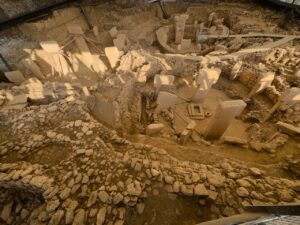
The identification, if it holds under further excavation and peer review, would reframe a significant chapter of European prehistory. The Copper Age would move from footnote to foundation. The settlement would become the earliest known example in Europe of a site functioning as an economic capital, not a religious center, not a fortress, but a place defined by production and exchange.
Here’s the thing. The story of how civilization first organized complex economies has almost always been told through writing. Mesopotamia had cuneiform. Egypt had hieroglyphs. Before writing, the working assumption was that economies were local and simple. The Copper Age evidence has been quietly dismantling that assumption for decades, one slag heap and isotope ratio at a time.
A lost capital hidden in the Balkans, trading metal across half a continent five thousand years before Rome, is simply the most concrete version of an argument the artifacts were already making.
Whether the site survives further scrutiny at this scale of interpretation is a question for the next several field seasons. But the fact that it took this long to recognize what was there says something worth sitting with: the most important discoveries are sometimes not discoveries at all. They are re-readings of evidence that was always present, waiting for someone to ask the right question.
This article was researched, written, and edited by our human editorial team. AI tools were used in a limited research-assistant capacity. All claims were independently verified.