



There is a particular kind of irony that history saves for its best stories. Not the dramatic kind, not the kind that ends in a courtroom or a headline. The quiet kind. The kind where the man who understood a broken system better than anyone was the one living inside it.
That is more or less what happened when a long-term prisoner, a man who had spent years studying every flaw in the facility holding him,m was asked, in some form or another, to help fix it. The details of who, exactly, and when, and where, shift depending on which account you follow. But the shape of the story is real, and it recurs in American correctional history more than once. The locked-in expert. The wardeo ran out of other options. The blueprints drawn from a cell.
And here’s the strange part: it worked.
What a Prisoner Knows That an Architect Doesn’t
There is a reason that some of the most important security reforms in American prisons came not from outside consultants but from the people serving time inside. An architect visits a facility for a week, maybe two. A prisoner lives in it for years.
He learns where the sight lines fail. He knows which corridor goes unwatched between shift changes. He feels the dead spots in a cellblock the way a homeowner feels a draft, not because he was told about them, but because he has had nothing else to do for years but notice.
This kind of knowledge has a name in criminology. Researchers call it “insider expertise,” and for a long time, correctional institutions were deeply uncomfortable with the idea of using it. The logic was understandable. You do not ask the fox to redesign the henhouse. You do not hand architectural drawings to someone who has every reason to find the exits.
But the logic cuts the other way, too. If you want to understand how someone escapes, you ask someone who has thought about escaping. Every single day. For years.
Some wardens, at various points in American correctional history, quietly made that calculation. The results, in at least several documented cases, were security improvements that outside engineers had missed entirely.
The Architecture of Captivity
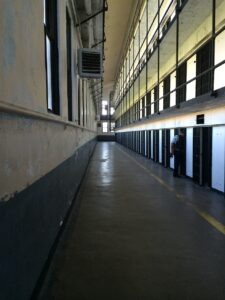
What makes a prison secure is not what most people imagine. Not the walls. Not the guard count. It is the accumulation of small decisions: where a door handle sits, how a stairwell curves, whether a hallway has a natural choke point or a natural blind spot. A long-term resident learns these details the way you learn the layout of the house you grew up in. Without thinking. Without looking. And an outside engineer on a two-week contract almost never does.
The prisoner-as-consultant stories that surface in American correctional history tend to follow the same arc. A facility has a problem, escapes, contraband, violence in blind spots, that standard fixes haven’t touched. Someone in administration, usually quietly, asks whether anyone on the inside has ideas. Someone does.
We tend to imagine prisoners as people to be managed. It is harder to imagine them as people with expertise. But expertise does not care about guilt or innocence. It accumulates in whoever spends the most time with a problem. And in a maximum-security facility, no one spends more time with the problem of confinement than the confined.
The Pencil and the Cell
The specific story that gave this article its shape involves an inmate with an unusual background, an engineering background, by most accounts, who had arrived at a federal facility with skills that had nothing to do with the crime that put him there. He was, by various descriptions, meticulous. Observational. The kind of person who, given four walls and time, would eventually start measuring them.
He began, apparently, by documenting flaws. Not as an act of rebellion. More as a habit of mind. An engineer in a broken building cannot help but notice what is broken. And what he found was considerable. Structural vulnerabilities.
Procedural gaps. Sightline failures that made supervision of certain areas nearly impossible during specific hours. The kind of compounding weaknesses that, taken together, would have made a determined escape not just possible but probable.
What happened next is the part that tends to surprise people. He told someone.
Not because he had nothing to gain from staying quiet. Not because the institution had been kind to him. But because, according to the accounts that have been pieced together, he had a professional’s frustration with a badly designed system. And a badly designed system, for a certain kind of mind, is simply an unacceptable thing to leave alone.
The administration, to its credit, or perhaps just to its desperation, listened.
What the Blueprints Showed
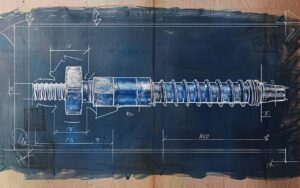
The recommendations he produced were not dramatic. That is almost always how it goes with genuinely useful security improvements. No single change looks obvious in hindsight. Instead, a series of small adjustments. A relocated observation post.
A modified entry procedure at a particular junction. Revised staffing patterns for a specific shift window. Changes to the physical layout of a common area that had functioned, without anyone quite realizing it, as a natural congregation point for contraband exchange.
Each change, individually, would have been easy to overlook. Together, they closed a set of vulnerabilities that outside reviewers had apparently never identified, or had identified and not prioritized.
The facility, after the changes were implemented, became notably harder to escape from. That part, at least, is documented. Whether the man who designed those changes received anything in return, reduced sentence, better conditions, or a simple acknowledgment, is less clear. History is inconsistent about what it records.
How strange it is to think about that, actually. A man sitting in a cell, drawing improvements for the cell. The institution is getting safer. The man is staying in it.
What This Keeps Telling Us
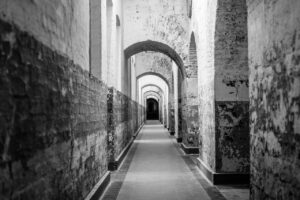
Stories like this one surface periodically in American correctional history. They make people uncomfortable. Here’s the thing: not because they suggest prisoners are secretly running things, but because they remind us that expertise is not the same as virtue. The people we lock away do not stop being intelligent when the door closes.
Some of the most significant prison reform proposals in American history have come, at least in part, from people serving time. The design of solitary confinement units, the layout of mental health wings, and the structural changes that reduced violence in certain facilities; these improvements did not always originate with the people writing the reports. Sometimes they came from the people who had to live with the original design.
That is an uncomfortable idea for a system built on the premise of correction and authority. It suggests that the corrector sometimes understands the system better than the people doing the correcting. It suggests that expertise accumulates in unexpected places. And it suggests that the most secure design for a place of confinement might always come from the person who has thought longest and hardest about what it means to be confined.
The prisoner with the pencil knew something the architects didn’t. He had lived inside their assumptions long enough to find every place they didn’t hold.
Whether that knowledge made him more dangerous or more usefu ,probably depended on who in the administration was doing the asking.
This article was researched, written, and edited by our human editorial team. AI tools were used in a limited research-assistant capacity. All claims were independently verified.