


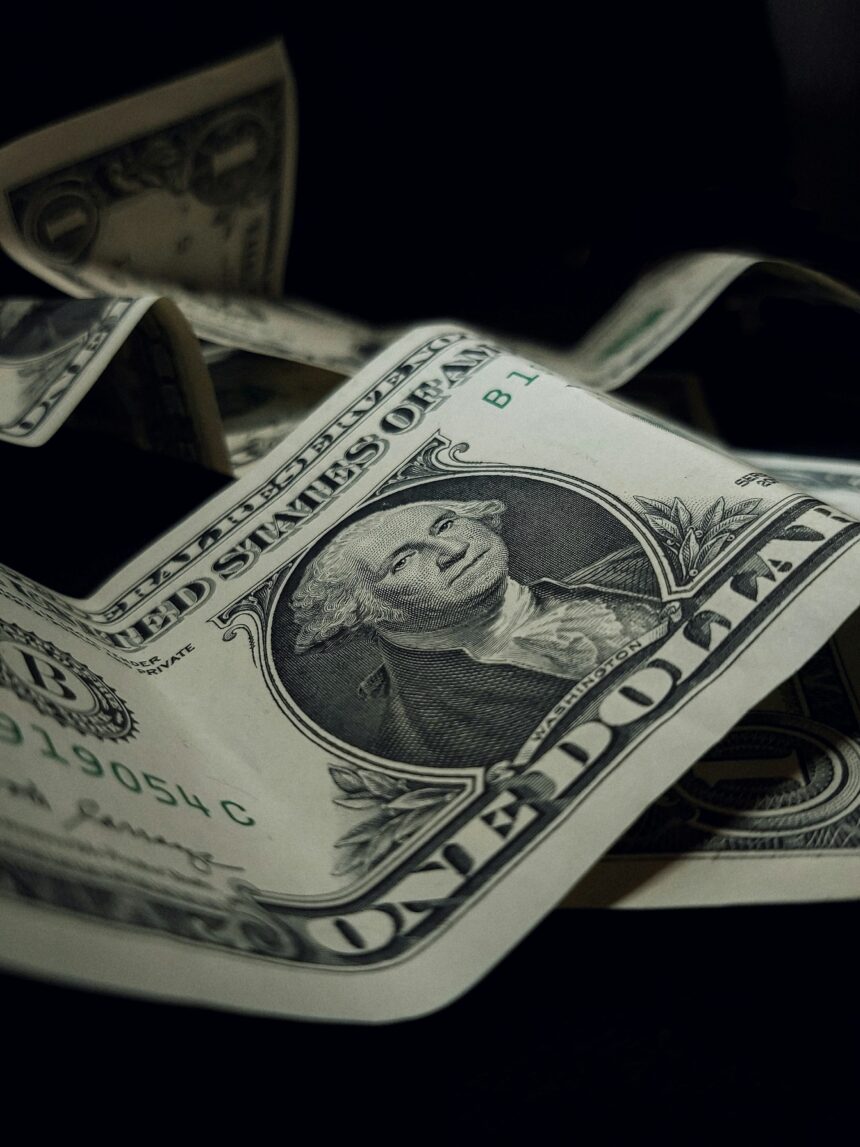
The dollar in your wallet doesn’t earn interest. It can be lost, stolen, or destroyed in a washing machine. And yet Americans are carrying more cash today than they were ten years ago, even as Venmo, Apple Pay, and contactless cards have made physical money look almost quaint. Economists have been trying to explain this for years. The answer they keep circling back to isn’t rational. It’s psychological.
And that distinction matters more than it might seem.
The Federal Reserve Bank of San Francisco has tracked cash usage through its annual Diary of Consumer Payment Choice for over a decade. The findings are consistent and, if you’re a payments industry optimist, a little deflating: cash still accounts for roughly a fifth of all U.S. consumer transactions.
Not a rounding error. Not a dying holdout. A fifth. Among lower-income households and consumers over 55, that share climbs higher. But here’s the strange part: even among Americans who use digital payments regularly, most still keep some cash on hand. Not because they have to. Because they want to.
The Wallet as a Safety Net
Part of it is practical in a way that gets dismissed too quickly. The 2003 Northeast blackout knocked out power from Detroit to New York City for two days. ATMs went dark. Card readers stopped working. Restaurants that stayed open took cash only. People who had it ate. People who didn’t wait. That memory, for anyone who lived through it, didn’t fade fast.
Natural disasters, system outages, and cyberattacks have a way of reminding people that digital infrastructure is a chain, and chains break. The 2021 Colonial Pipeline ransomware attack caused fuel shortages across the Southeast. Panic buying, long lines, and stations that couldn’t process cards. Same lesson, new decade. Cash is the backup battery for your financial life, and some Americans have decided they’d rather carry the weight than need it and not have it.
This isn’t paranoia. It’s pattern recognition.
The Control Problem Nobody Talks About

But the resilience argument explains some cash usage, not all of it. For that, you have to go somewhere messier: the psychology of spending control.
Research from the Massachusetts Institute of Technology published in the early 2000s found that people are willing to pay significantly more for the same item when using a credit card versus cash. The physical act of handing over bills registers as a loss in a way that swiping doesn’t. Behavioral economists call it the “pain of paying.” Cash makes that pain real. Visible. Tactile. You watch your wallet thin out.
For people trying to budget on tight margins, that friction isn’t a bug. It’s the feature. A $20 bill pulled from an envelope labeled “groceries” does something a debit card transaction cannot. It enforces a limit that’s physical, not digital. And when the bill is gone, it’s gone. No overdraft fee waiting to ambush you at the end of the month.
So some Americans carry cash not because they distrust technology, but because they distrust themselves with technology. Which sounds harsh until you realize the entire budgeting app industry exists to solve the exact same problem.
The Memory That Outlasts the Transaction

There’s a subtler layer underneath all of this, and it’s the one economists struggle most to quantify.
Cash has a history in American households that digital payments don’t. The grandmother kept emergency money tucked in an envelope in a kitchen drawer. The grandfather who didn’t trust banks after 1933, when Franklin Roosevelt’s executive order forced Americans to hand over their gold coins and gold certificates. The parents who paid rent in cash because the landlord preferred it that way, and nobody asked questions. Money, in physical form, carries memory. It links people to the financial habits of whoever raised them.
Generational distrust of financial institutions isn’t irrational in America. It has documented roots. The savings and loan crisis of the 1980s wiped out over a thousand institutions. The 2008 financial crisis erased roughly $10 trillion in household wealth. Banks got bailed out. Depositors got lessons. Some of those lessons became habits. Some of those habits got passed down.
The cash holdout isn’t just about this generation’s preferences. It’s about what this generation watched happen.
What the Unbanked Already Know

About 4.5 percent of U.S. households were unbanked as of the FDIC’s 2021 National Survey of Unbanked and Underbanked Households. That’s roughly 5.9 million households that have no checking or savings account. For them, cash isn’t a preference or a psychological quirk. It’s the only option. Prepaid cards, money orders, check-cashing service, and a whole infrastructure exists to serve people the digital economy has not reached or has actively excluded.
High account fees, minimum balance requirements, documentation hurdles for undocumented immigrants, and distrust built from prior negative banking experiences all keep people out of the system. When fintech evangelists talk about a cashless future, this is the population they tend to skip over. But policy doesn’t get to skip over them.
Cash, for the unbanked, is legal tender in a literal and urgent sense. And its elimination would not be a convenience upgrade. It would be a wall.
The Thing About Trust

Strip away the blackouts, the budgeting tricks, the generational memory, and the unbanked, and you still have one thing left. Trust.
Digital transactions require trusting a bank, a payment processor, a network, a technology company, and the government’s continued willingness to honor the system. Cash requires trusting a single institution: the U.S. federal government, which promises on every bill that the note is legal tender for all debts, public and private. For some Americans, that’s a shorter chain. Fewer points of failure. A more legible promise.
The Federal Reserve has studied the possibility of a central bank digital currency, a government-issued digital dollar. The debates around that proposal are genuinely complicated, touching on privacy, financial inclusion, and what it would mean for commercial banks. But the recurring objection from ordinary Americans in focus groups and surveys isn’t technical. It’s the same objection they have to everything: who’s watching?
Cash doesn’t log your purchases. It doesn’t build a profile. It doesn’t sell your spending habits to anyone. In an era when every click is catalogued, that anonymity has real value. Not just to people hiding something, but to everyone who has decided their financial life is their own business.
The persistence of cash in America isn’t nostalgia for metal and paper. It’s a considered answer to a question that digital payments haven’t finished answering yet: what happens to your money when the systems people built to hold it fail, freeze, or turn against you?
Americans who carry cash have already decided they’d rather not find out.
If a fully cashless economy ever does arrive in the United States, it won’t be because the technology got good enough. It’ll be because enough Americans finally trusted the institutions behind it. That’s a much harder problem than building an app.
This article was researched, written, and edited by our human editorial team. AI tools were used in a limited research-assistant capacity. All claims were independently verified.