


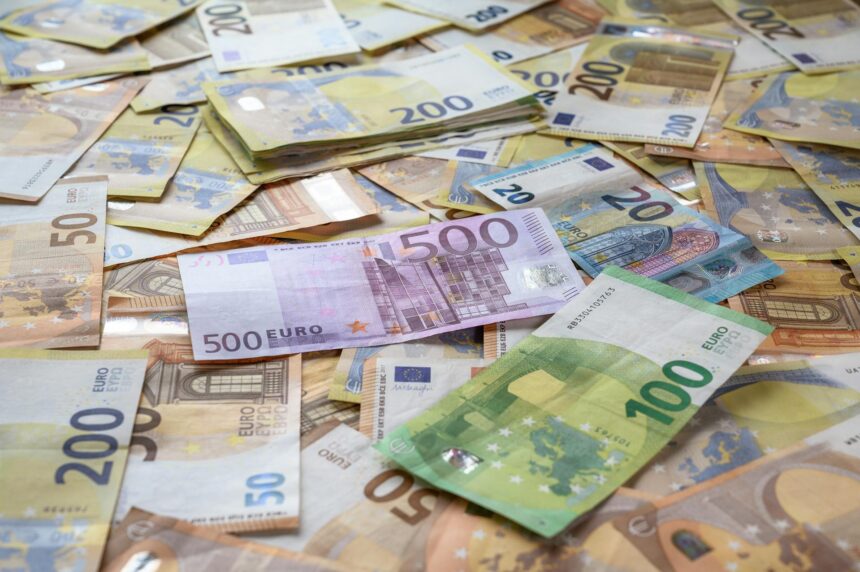
In the winter of 1997, Bulgarians stood in lines outside banks that were running out of money. Annualized inflation had crossed 2,000%. Salaries paid on Friday were worth less by Monday. Families who had saved for years, for apartments or their children’s education, watched those savings disappear in a matter of weeks. The lev, Bulgaria’s national currency since 1881, had become something you carried in stacks just to buy bread.
That crisis is why, nearly three decades later, a substantial share of Bulgarians still opposed joining the eurozone. Not because they misunderstand economics. Because they remember what happened the last time they trusted a currency.
On January 1, 2026 [EDITOR: confirm against official ECB/EU Council accession announcement], Bulgaria became the newest member of the eurozone. The lev a word meaning “lion” in early modern Bulgarian, a name chosen to signal strength and national pride when the currency was first issued, was retired after 144 years. The euro became the sole legal tender shortly after the January 1 adoption date [EDITOR: confirm dual-circulation end date from ECB/Bulgarian National Bank official sources]. And here’s the strange part: this was supposed to be a triumph. For much of Europe, it reads like one.
What the Lev Carried
The lev was not a simple currency. It was, in the way that all old currencies eventually become, a kind of national memory card, a physical record of everything Bulgaria had survived. It was issued in 1881, when Bulgaria was still finding its footing after centuries of Ottoman rule. It was held together through two World Wars, through the Soviet era, through the particular economic distortions of communist central planning, and then through the violent turbulence of post-communist transition in the early 1990s.
That transition nearly killed it. By March 1997, annualized inflation exceeded 2,000%. The banking system came close to total collapse. The government fell. People lost not just savings but faith, in institutions, in money itself, in the idea that a piece of paper issued by your own government was worth the paper it was printed on.
What pulled Bulgaria back was a currency board arrangement established in 1997, which fixed the lev to the German mark and later to the euro at a rate of 1.95583 BGN per euro. That peg held for over 28 years. It was, in effect, a pre-commitment device, a way of saying that Bulgaria would no longer try to manage its own monetary policy, because the last time it had, the results were catastrophic.
The peg worked. Inflation stabilized. The economy grew. Bulgaria joined the European Union in 2007. And yet the lev remained. Not because it was economically necessary, the peg had already surrendered most of the practical autonomy a currency provides, but because it was still something. A symbol. A lion on a banknote.
The Math Was Already Done

One of the quieter truths about Bulgaria’s euro transition is that it had been mathematically inevitable for years. The 1.95583 conversion rate wasn’t chosen in 2025. It was set in 1997, when the currency board was established, pegging the lev first to the German mark and later inherited as the euro rate.y board was established. Bulgaria had been running, in effect, on a shadow euro for over two decades before the official switch. The central bank couldn’t raise or lower interest rates. It couldn’t print money to stimulate growth. It couldn’t adjust the exchange rate in response to economic shocks. The monetary sovereignty the lev appeared to represent had already been quietly handed over, one policy constraint at a time.
Which makes the 49% opposition figure all the more interesting. What, exactly, were those people protecting? Not the practical tools of monetary policy, those were already gone. What they were protecting, it seems, was something closer to identity. The right to have a currency with a lion on it. The right to say: this is ours, and it has survived everything.
That is not an irrational position. It is, in fact, a deeply human one.
What a Currency Death Actually Costs

When a currency disappears, the accounting is complicated. There are transaction costs, conversion fees, the months of dual-pricing in shops and restaurants and petrol stations. There is the inevitable confusion among older citizens who have handled the same denominations for fifty years. There is the quiet work of removing 146 years of banknotes and coins from circulation.
But those are the visible costs. The harder ones to measure are the ones that live in memory. For the generation that stood in those bank lines in 1997, the lev was not just a medium of exchange. It was the thing that had failed them, then been fixed, then held. It had carried them through the worst and come out the other side with the same lion on its face. Letting it go meant letting go of the proof that recovery was possible.
Bulgaria had maintained the 1.95583 peg without deviation for more than 25 years. That kind of monetary discipline is, by any measure, remarkable for a country that had experienced 2,000% inflation within living memory. The eurozone was, in some ways, simply acknowledging what Bulgaria had already proven: that the country had earned its place at the table.
Whether the people standing in those 1997 lines ever felt that way is a different question entirely.
What the Lion Left Behind
There is a particular kind of loss that comes not from failure but from success. Bulgaria didn’t surrender the lev because it collapsed. It surrendered it because the economy had grown stable enough, the institutions trustworthy enough, the convergence criteria met. The lev died not in crisis but in good standing, which is perhaps the strangest way for a 146-year-old currency to go.
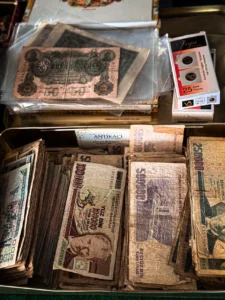
The 49% who opposed the switch will now use euros. They will get used to them, the way people always get used to new money. The prices will seem odd for a while, then familiar. The lion on the old banknotes will end up in desk drawers and shoeboxes, the way currencies always do when they retire, not thrown away, exactly, but set aside.
What doesn’t disappear is what the lev witnessed. The Ottoman exit. The communist decades. The hyperinflation winter of 1997 when a currency nearly destroyed a country, and then survived it. The 26 years of holding a fixed rate so precisely that the number, 1.95583, became a kind of institutional promise, honored long after the original crisis that made it necessary had faded from the headlines.
Bulgaria’s lev lasted 146 years. It outlasted empires and ideologies and economic catastrophes that would have finished lesser things. That it ended by design, on a scheduled date, with a fixed conversion rate, is in its own quiet way the most remarkable thing about it.
This article was researched, written, and edited by our human editorial team. AI tools were used in a limited research-assistant capacity. All claims were independently verified.