

In the summer of 1974, while most Americans were watching Watergate drag toward its end, Henry Kissinger was in Riyadh working on something quieter and, in the long run, far more consequential. The deal he helped put together didn’t make the front pages. It didn’t need to. Its effects would show up instead in the price of everything mortgages, groceries, the cost of borrowing for the next half century.
The arrangement was straightforward in structure, staggering in implication. Saudi Arabia would agree to price its oil exports in U.S. dollars and park the surplus revenue in American Treasury bonds. In exchange, the United States would provide military protection and a guarantee of regional security. No formal treaty. No congressional vote. Just an agreement between governments that quietly rewired the global financial system.
And here’s the thing most people still don’t fully grasp: that single arrangement is why the dollar has stayed the world’s reserve currency for fifty years. Not because of American manufacturing dominance, which peaked and declined. Not because of gold, which Nixon had already severed in 1971. Because of oil. Because every country that needed oil, which was every country, needed dollars first.
The 80 Percent Rule No One Talks About
For the past five decades, the large majority of international oil transactions, estimates have historically ranged from roughly 70 to 80 percent, have been conducted in U.S. dollars. Think about what that means in practice. A Japanese refinery buying crude from a Nigerian state oil company conducts the transaction in dollars. A South Korean shipping firm paying a Kuwaiti exporter does the same.
Neither country uses dollars domestically. Neither has a particular reason to prefer them. But the architecture Kissinger built in 1974 made dollars the toll road through which all oil trade passes, and because oil underlies nearly every manufactured good on earth, the toll road is almost impossible to avoid.
The practical effect is enormous. Because countries must hold dollars to buy oil, they buy U.S. Treasury bonds as a safe place to park those dollars. That demand keeps American interest rates lower than they would otherwise be.
Which keeps American borrowing cheaper. Which funds American government spending at a scale no other country could sustain. The petrodollar isn’t just an oil-market technicality. It is the structural reason the United States can run the kind of deficits it runs without the bond market calling its bluff.
Saudi Arabia has quietly illustrated how strange this arrangement has become. The kingdom now sells substantially more oil to China than to the United States. China has been Saudi Arabia’s largest single oil customer for years, yet it still prices those exports in dollars., yet it still prices those exports in dollars.
A Chinese refiner buying Saudi crude must first acquire dollars, use them to complete the transaction, then convert the proceeds back into yuan. It is a detour that benefits American financial infrastructure and costs everyone else a little friction, a friction the world accepted for fifty years because there was no real alternative.
What Changed in June 2026
A GIS Reports analysis, confirmed by Reuters reporting, documented something that had been building for years:, documented something that had been building quietly for months. Iran had begun conditioning tanker passage through the Strait of Hormuz on payment terms that excluded the dollar entirely.
Friendly tankers, those whose flag states maintained acceptable relations with Tehran, could pass. But the fees, including transit charges of up to $2 million per vessel, had to be settled in Chinese yuan or in stablecoins. Not dollars. Not a dollar-denominated instrument. Something else.
The Strait of Hormuz is not a side channel. Roughly 20 percent of the world’s oil supply passes through it. A toll booth at that chokepoint, denominated in yuan, is a different kind of pressure than anything the petrodollar has faced before. Previous challenges, attempts by Iraq and Libya to price oil in euros in the early 2000s, were isolated and quickly reversed.
This one comes with Chinese institutional backing, a willing counterparty in Beijing, and a global environment in which non-dollar oil transactions have already climbed to a meaningful and growing share of global oil trade, estimated by some analysts at between 10 and 20 percent, is now conducted outside the dollar.
A Tension Fifty Years in the Making
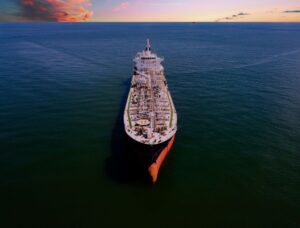
What makes the 2026 Hormuz situation different from the usual geopolitical noise is the Saudi arithmetic. Riyadh sells four times as much oil to China as to the United States, but still prices in dollars. That gap has existed for years. It stayed manageable as long as dollar pricing felt like a fixed fact of the oil world.
The Hormuz crisis is now forcing the question into the open: why, exactly, should Saudi Arabia maintain a dollar-pricing arrangement built around American military protection and American energy consumption, when its biggest customer is in Beijing and its most dangerous chokepoint is being actively managed by a country demanding yuan?
Nobody in Riyadh has announced a change. Saudi Arabia has not repriced its oil contracts. The petrodollar is not dead. But the architecture that made it feel permanent, the assumption that there was no functional alternative, that global oil would simply always flow through dollar channels, is no longer obviously true.
The arrangement Kissinger built in 1974 was elegant precisely because it was self-reinforcing. Countries needed dollars to buy oil. They bought Treasuries to hold dollars. That demand kept American borrowing cheap. Which kept America powerful enough to protect the arrangement. The loop held for fifty years. What’s worth watching now is whether the loop still closes, or whether the tankers now settling their Hormuz fees in yuan are the first sign that it doesn’t.
Sources
Primary source for petrodollar history
Corroborating reporting on Iran’s yuan-denominated Hormuz transit fee requirements
This article was researched, written, and edited by our human editorial team. AI tools were used in a limited research-assistant capacity. All claims were independently verified.