


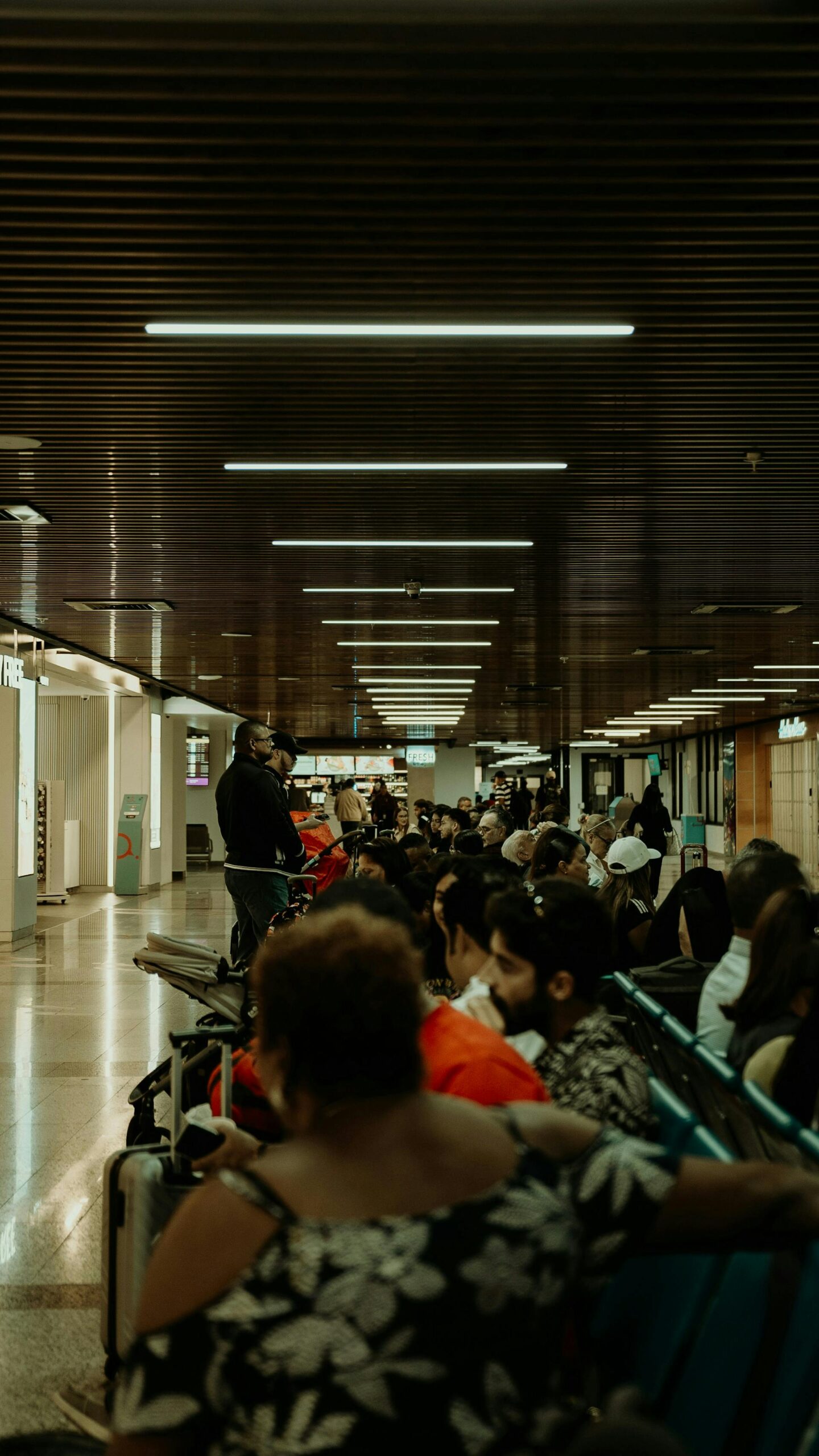
Walking a friend all the way to the gate used to be something you just did. You bought a coffee, watched the planes taxi through the window, maybe cried a little when someone left for good. No badge. No boarding pass. No federal officer asking what business you had past the security checkpoint. You just walked in. That world is gone. And the further we get from it, the stranger it seems that it ever existed at all. Air travel before the 1980s and especially before the security overhauls that came later operated on something close to an honor system. The airport was a public space in a way that’s hard to imagine now. What follows are eleven things that were completely normal, sometimes even expected, at American airports in the 1970s. Today, most of them would get you detained, fined, or arrested.
Meeting Passengers at the Gate
This is the one people remember most. You didn’t wait at baggage claim. You walked to the actual gate, stood at the jetway door, and watched your people come off the plane. Families did it. Couples did it. Businesses sent drivers to escort clients straight off the aircraft. No screening required. The gate was public territory. Today, getting past the security checkpoint without a boarding pass requires law enforcement credentials or a special escort pass. For most people, that’s simply not available.
Carrying a Gun Through the Terminal. Openly
This will stop some readers cold. In many states during the 1970s, openly carrying a firearm was legal, and airports weren’t uniformly exempt. Some travelers carried handguns in holsters or packed rifles in soft cases and walked them through the main terminal without checking them as luggage. Federal rules around firearms at airports were patchwork at best. Today, bringing a firearm, even legally owned, into the non-secure area of most airports requires specific procedures, and taking one past the security checkpoint is a federal felony.
Smoking at the Gate

Not outside. Not in a designated room down the hall. At the gate. In the chair you were sitting in while waiting to board. Ashtrays were built into the armrests of airport seating. Flight attendants smoked in the galley. Pilots smoked on the flight deck. A cigarette at Gate B12 today would bring the terminal to a halt.
Sending an Unaccompanied Child on a Plane With No Paperwork
Parents in the 1970s sometimes put a child on a domestic flight alone, handed them a ticket, and trusted the airline staff to keep an eye on things. There was no formal unaccompanied minor program, no required documentation, no designated escort service, no signed release forms. Airlines now require extensive paperwork, fees, and a dedicated escort protocol for any unaccompanied minor. Putting a child on a plane without going through that process would likely trigger a call to authorities before the plane left the gate.
Walking Onto the Tarmac
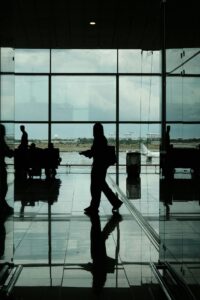
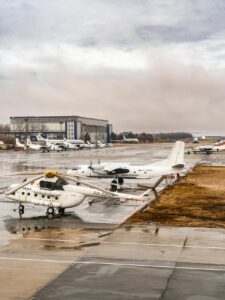
Regional airports, especially smaller ones, had no physical barrier between the terminal and the tarmac in many cases. Passengers walked across the open runway apron to board their planes via portable stairs. And some didn’t stop there. Families waved from the tarmac. Ground crew had friends who wandered out. It was casual in a way that seems almost fictional now. Unauthorized access to a tarmac today is a federal offense. The TSA treats it as a serious security breach.
Bringing a Loaded Cooler Through Security
Walk-through metal detectors didn’t show up at most American airports until around 1973, after a federal mandate pushed through following a wave of hijackings. Before that, and honestly for years after, the culture around screening was loose. People walked through with full coolers, oversized packages, and bags nobody looked twice at. Here’s the thing: the TSA didn’t exist yet. Neither did the X-ray machines, body scanners, or explosive trace detectors that now fill every checkpoint. Security was a suggestion. A polite one.
Showing Up With No ID

Domestic air travel in the 1970s did not require government-issued photo identification. You bought a ticket, often with cash, at the counter, and you boarded. Your name might be on a manifest, but nobody checked it against a driver’s license. People flew under assumed names without breaking any specific rule. Travel agents booked tickets for clients without requiring ID copies. Today, a valid government ID is required at every domestic checkpoint, and REAL ID compliance has added another layer to that requirement, though full federal enforcement has been subject to repeated delays, so readers should verify the current status.
Parking at the Curb Indefinitely
Dropping someone off at the airport today is a timed operation. You pull up, they get out, you leave. Linger more than a few minutes and an officer appears. At most major airports, parking at the terminal curb for more than a moment can result in a ticket or having your vehicle towed. In the 1970s, the curb was a social space. Families parked, unloaded slowly, said long goodbyes. Nobody was rushing you. The security logic that drives modern curbside rules didn’t apply.
Bringing Alcohol Into the Terminal From Outside
Airport bars and restaurants have always sold alcohol. But in the 1970s, it wasn’t uncommon for travelers to bring their own, a flask, a bottle in a bag, and drink it openly while waiting. Airport retail was thinner then, and the culture around public drinking was looser. Today, open containers of alcohol brought from outside are prohibited in most terminals, and consuming your own alcohol rather than purchasing it from a licensed seller inside the airport can get you removed.
Watching Planes From the Observation Deck

This one is bittersweet rather than alarming. Dozens of major American airports had public observation decks through the 1970s, open-air rooftop areas or enclosed upper floors where the general public could watch planes land and take off without buying a ticket. It was a Sunday-afternoon activity. Families brought lunches. Most of those decks closed after security tightening in the 1970s and again after 2001. A handful survive at smaller regional airports, but at the big hubs, they’re gone. Accessing the areas where those decks once stood, without authorization, would now constitute a security violation.
Watching the Baggage Being Loaded From the Tarmac
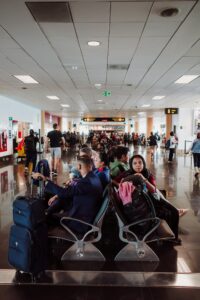
Here’s the one that captures the whole era in a single image. At some airports, particularly smaller regional ones, passengers could watch their luggage being loaded onto the plane from a nearby vantage point that wasn’t fenced off. You could see the bags, see the crew, see the aircraft up close. There was a directness to it, a transparency, that the modern airport, with its layers of restricted zones and controlled access, has entirely eliminated. You wouldn’t wander toward that area today without someone stopping you well before you got close. What’s worth sitting with is how fast the logic of all this flipped. These weren’t fringe behaviors. They were ordinary. The 1970s airport ran on a different assumption about who belonged there. And the shift didn’t happen cleanly. It came in waves, each one triggered by something that went wrong somewhere, a hijacking, a bomb threat, a Tuesday morning in September. If you flew back then, you remember the openness of it. And if you’re flying today, you’ve probably never given a second thought to what used to be on the other side of that security line.