


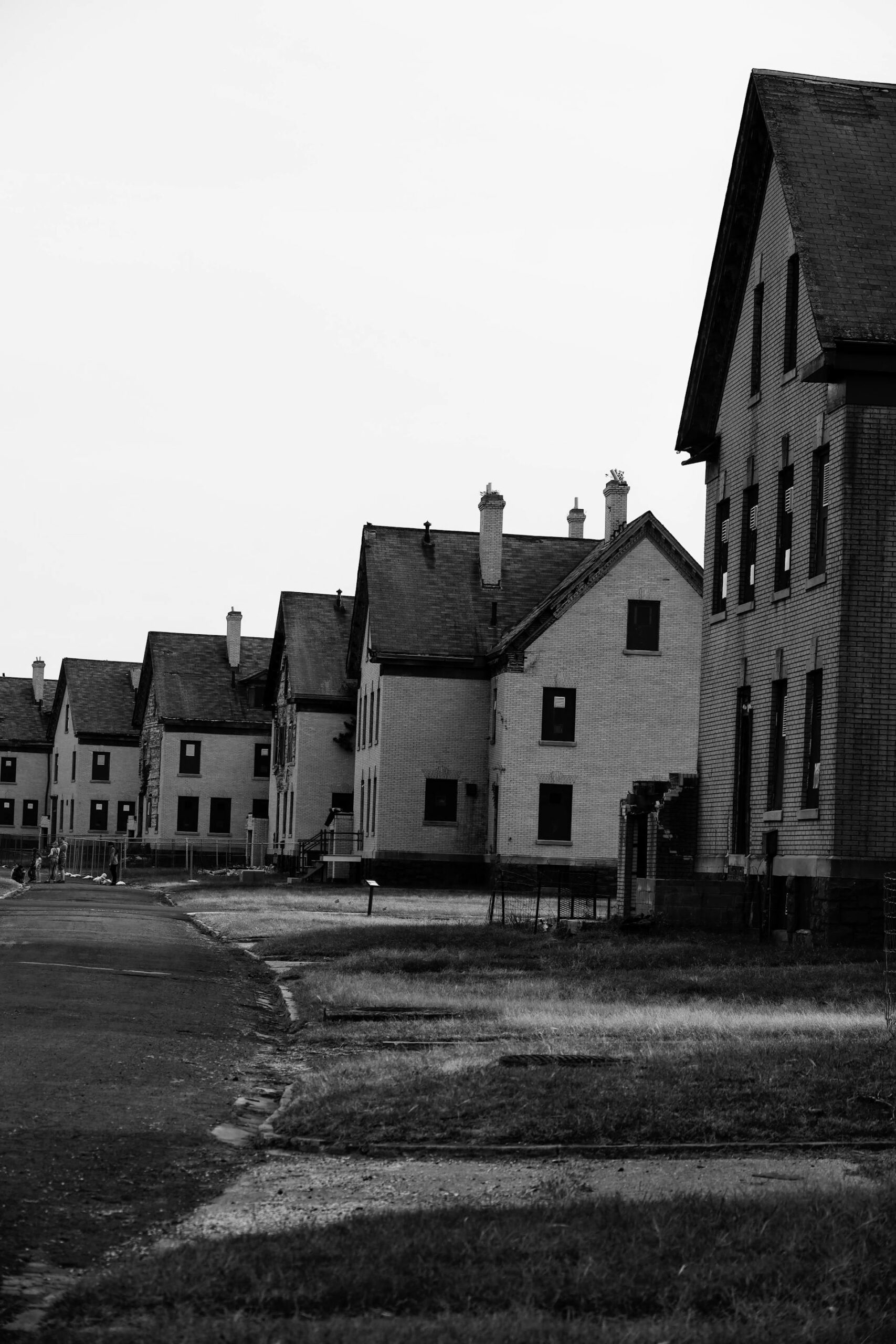
The house wasn’t yours. Neither was the store where you bought bread, the church where you got married, or the school where your kids learned to read. In some American towns, every building, every road, and every square foot of dirt belonged to one company. You worked for them, paid rent to them, and bought your groceries with scrip they printed. Leave the job, lose the house. It was that simple.
Company towns were never a secret. They were a business model.
From the coal hills of Appalachia to the Pacific Northwest timber country, American industry built entire communities from scratch not out of generosity, but out of logistics. Mines and mills were often carved into wilderness where no town existed. The company had to house its workers somewhere. And once you control where a man sleeps and where his family eats, you control a great deal more than that.
When the Company Store Was the Only Store
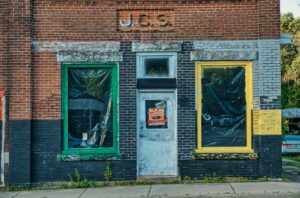
The most famous economic lever in these towns was the company store. Workers were often paid partly or entirely in scrip, a currency that only worked inside the company’s own shops. You couldn’t take it to the next county. You couldn’t save it in a bank. You spent it where the company told you to spend it, at prices the company set.
The result was a closed loop. Wages went in one pocket and out the other into the company’s cash register. In some cases, workers finished a pay period technically in debt to their employer. The old folk song “Sixteen Tons” captured it plainly: “I owe my soul to the company store.” That line landed because it was literally true for thousands of American families.
Here’s the part that tends to get skipped. Not all of it was misery. Some company towns were genuinely well-built, with housing nicer than workers could have afforded on their own, plus libraries, doctors’ offices, and baseball diamonds thrown in. Pullman, Illinois was designed by a landscape architect. It had indoor plumbing before most American cities did. The company was showing off, and some workers genuinely benefited from it.
But the control never disappeared. A worker in Pullman who went on strike in 1894 didn’t just risk losing his job. He risked losing his home, his children’s school, and his access to the only doctor in town. The benevolence and the coercion were the same thing.
What the Companies Actually Owned

Ownership varied. In some towns, the company held the deed to every structure outright. In others, workers could nominally rent with an option to buy, but the terms were set entirely by the employer, and the option rarely materialized. Either way, the practical reality was the same: if the company decided you were no longer useful, you had no legal standing to stay.
Coal company towns in West Virginia, Kentucky, and Pennsylvania were among the most documented. The terrain made them almost inevitable. Mining operations in mountain hollows couldn’t draw from an existing population center, the center had to be built. So companies built it, owned it, and ran it like a private government.
Timber towns in the Pacific Northwest followed a similar pattern. So did steel towns, copper towns, and textile mill villages in the Carolinas. Each industry had its own version of the arrangement, with its own particular balance between provision and control.
The Unraveling
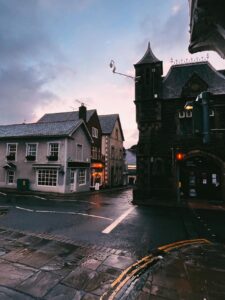
Most company towns didn’t collapse overnight. They faded.
When industries mechanized, when coal seams ran out, when textile manufacturing moved south and then overseas, the economic reason for the town evaporated. Companies that had once been paternalistic landlords suddenly had no interest in maintaining vacant housing. Some sold off properties piecemeal. Some simply walked away.
Converting a company town into a real municipality was slow, ugly work. It meant building a tax base from scratch, electing officials who had never governed anything, and sorting out who actually owned what land after decades of company deeds. Some towns got it done. Most didn’t, not cleanly, not fast.
A few towns made the transition successfully. Some became ordinary small towns, their company-town origins visible only in the uniform architecture of the old worker housing. Others became ghost towns. A handful became historical curiosities, preserved and toured. Thurmond, West Virginia is now managed largely by the National Park Service. Its permanent population is in the single digits.
What Happened to the People
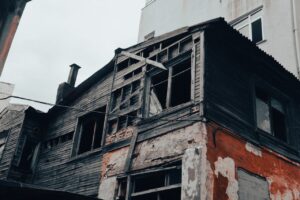
This is the part the economics textbooks don’t linger on.
When a company town closed, families didn’t just lose jobs. They lost the entire architecture of their daily lives, their neighborhood, their community, their sense of place. The displacement was total. Workers who had spent decades in one of these towns often had no savings, because the scrip system or low wages left nothing to save. No equity in a home, because the home was never theirs. No transferable skills in some cases, because the work had been so specific to one operation in one remote place.
Some families scattered. Some stayed in depopulated towns for generations, long after the company was gone, because they had nowhere else to go and no money to get there. The poverty that followed many former company towns through the 20th century wasn’t incidental. It was structural. It was baked in.
The company had owned everything. When it left, it took everything with it.
If you grew up in or near one of these places, you already know this story in your bones. The question worth sitting with is how many Americans still live in updated versions of the same arrangement, where the employer controls the housing, the healthcare, and increasingly the town, and just don’t have a name for it yet.
This article was researched, written, and edited by our human editorial team. AI tools were used in a limited research-assistant capacity. All claims were independently verified.