


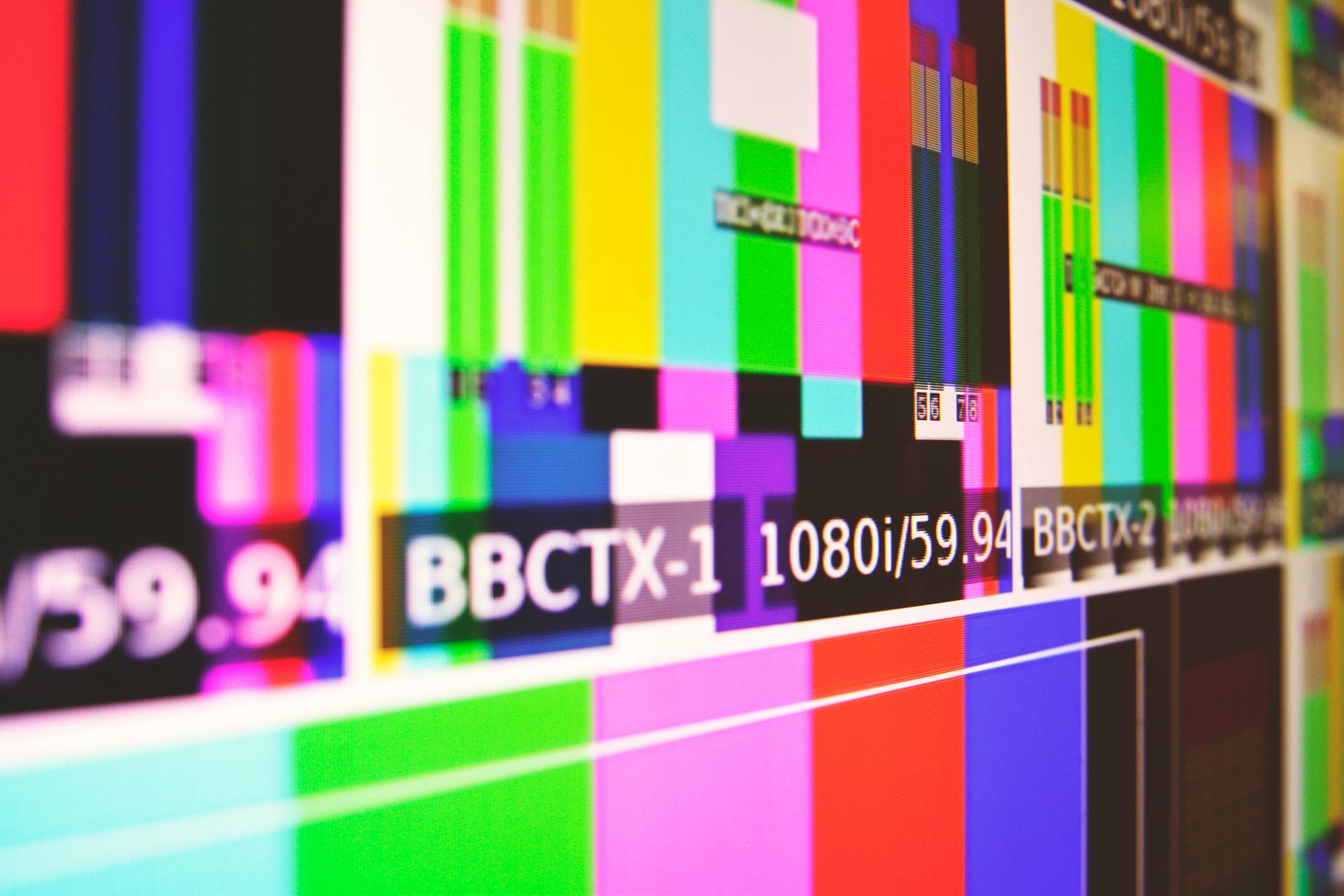
The yellow on your screen isn’t yellow. It never was.
Every sunny headline, every gold trophy emoji, every banana photo you’ve ever seen on a monitor, none of it was actually yellow light hitting your eyes. It was a trick. A very old trick, borrowed from the biology of your own eye, that engineers figured out how to exploit before most people had heard the word “pixel.” And once you understand how it works, you’ll never look at a screen quite the same way.
Here’s the strange part: the problem isn’t with the screen’s technology. It’s with the nature of light itself.
What Light Actually Is (and Why Yellow Is Awkward)

Visible light is a spectrum. Violet sits at one end, red at the other, with every color in between occupying its own precise wavelength. Yellow sits roughly in the middle,e around 570 to 590 nanometers. To produce genuine yellow light, a source needs to emit photons at those specific wavelengths.
Your monitor cannot do that.
A standard display is built around three types of light emitters: red, green, and blue. That’s it. Three. The entire rainbow of colors you see on any screen is constructed from combinations of those three. Engineers call this the RGB color model, and it has been the foundation of screen technology for decades, dating back to the earliest color television sets.
So where does yellow come from if the screen has no yellow emitters? This is where the biology gets interesting.
The Eye’s Beautiful Shortcut

Your eye contains two main types of light-sensitive cells: rods, which handle low-light vision, and cones, which handle color. Most people have three types of cone cells. Each type responds most strongly to a different range of wavelengths, roughly corresponding to red, green, and blue.
Here’s the thing: those cones don’t do: they don’t measure exact wavelengths. They measure the intensity of the response.
When genuine yellow light at 580 nanometers hits your eye, your red-sensitive cones fire moderately, and your green-sensitive cones fire moderately. Your brain receives two signals of roughly equal strength from those two cone types, and it interprets that combination as yellow.
Now here’s where the trick lives. If a screen blasts your eye with bright red light and bright green light simultaneously, no yellow photons involved whatsoever, your red cones and green cones still fire in that same approximate ratio. Your brain still reads the result as yellow.
The screen never turned yellow. It made your brain go yellow.
Which sounds like a cheat. It is, technically. But it’s a cheat so perfectly aligned with how human vision evolved that your eye has no way to tell the difference. The rods and cones simply don’t have the resolution to call the bluff.
Why This Doesn’t Work Perfectly, and Why Engineers Keep Trying

If this trick were flawless, the story would end there. It isn’t.
The range of colors a screen can reproduce is called its color gamut. Picture a triangle. The three corners are red, green, and blue. Any color inside that triangle can be mixed from those three primaries. Anything outside it cannot be made at all.
Yellow sits close enough to the triangle’s edge that most screens fake it convincingly. Other colors aren’t so lucky. Deep oranges. Vivid cyans. The specific green of a wet leaf in August sunlight, that green falls outside what most screens can show. You’ve never seen it on a monitor. Not really.
This gap has a name: the gamut boundary. It has been one of the central headaches in display engineering since the early days of color display and film engineering.
The film and photography industries ran into this wall hard. A sunset photograph taken on a professional camera can contain colors the photographer’s monitor will never accurately show. Print designers learned decades ago to work in color spaces that don’t match what their screens display, then trust the press to render what the screen could not.
The fix engineers reached for, the one nobody mentions at dinner, was improving the emitters themselves. Early monitors used phosphors that produced muddy, washed-out red and green light. That pushed the triangle’s corners inward and shrank the available palette. Better phosphor chemistry helped. Then LED backlighting replaced fluorescent tubes around 2010. Then, quantum dot panels pushed the corners outward further still. The gamut grew.
But it never swallowed the whole spectrum. No display technology has managed that. And the reason is fundamental: you cannot mix any color from three fixed points if the color you want sits outside the triangle those points define. More corners help; some professional displays now use four or more primary colors, but even that is still an approximation.
The Bigger Implication Most People Miss

Here’s what that means in plain terms. Every image you have ever seen on a screen was a compressed version of the original. The painter used richer colors than your monitor could carry. The camera captured more than the display could show. Depending on the image, that gap is not small.
Some of it has closed. High Dynamic Range displays, wide-gamut panels, and standards like DCI-P3 have genuinely improved things. A good monitor from 2024 shows colors that would have looked extraordinary on a screen from 2002.
But real yellow, photons actually vibrating at 575 nanometers, hitting your retina directly, still cannot come from a screen. It never will, not with RGB architecture. The screen will always send your brain a convincing impersonation and let your visual cortex do the rest.
The odd comfort in this is that your brain is apparently fine with that. It has been accepting the impersonation for as long as screens have existed, and it has never once complained.
If a display ever does produce true, single-wavelength yellow light, the engineering required to pull it off will be genuinely remarkable, and the difference visible to most people will probably be modest. The eye’s shortcut runs deep.
This article was created with AI assistance and reviewed by the author. The review included fact-checking, clarity edits, references, and sourcing of images