

Here’s what you’ll learn when you read this story:
- The boundary between our solar system and interstellar space turned out to be a sharp, defined wall — not the gradual fade scientists expected.
- Voyager 1 detected plasma hundreds of times denser than anything models had predicted in interstellar space.
- Both probes are still transmitting, running on less power than a refrigerator light bulb, from a distance no human-made object had ever reached before.
Scientists built the Voyager probes to study the outer planets. Jupiter, Saturn, Uranus, Neptune: the grand tour. Nobody seriously expected them to still be working forty-plus years later, let alone sending back data from beyond the solar system itself. But they are. And what they found out there was not what the models said would be waiting.
This is not a minor footnote in space science. The readings Voyager 1 and Voyager 2 sent back from the heliopause, the boundary where the Sun’s influence ends and true interstellar space begins, surprised researchers at institutions including NASA’s Jet Propulsion Laboratory. The surprise wasn’t that the data was strange. It was the strangeness that was consistent. Both probes found roughly the same thing.
And here’s the strange part: the space between star systems was supposed to be nearly empty. Cold. Quiet. A thin, diffuse scattering of particles with almost nothing to measure. What Voyager found instead was a region with structure. Density. A plasma environment far more active than anyone’s equations had suggested.
The Wall That Wasn’t Supposed to Exist
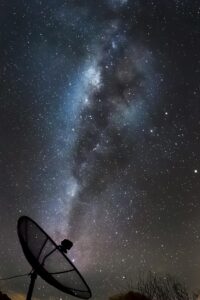
For decades, the standard picture of the solar system’s edge was a gradual blurring, like a city slowly giving way to countryside with no clear sign marking the boundary. The Sun blows out a constant stream of charged particles called the solar wind.
That wind pushes outward in every direction, carving a vast bubble called the heliosphere. At some point, the pressure from the solar wind weakens enough that interstellar matter pushes back. Scientists called this zone the heliosheath, and most models assumed the transition from solar to interstellar space would be gradual, messy, and hard to pinpoint.
It wasn’t.
When Voyager 1 crossed the heliopause, the change in readings was abrupt. Sharp enough that researchers could identify the moment of crossing with unusual precision. The solar wind essentially stopped. Interstellar plasma began. The boundary behaved less like a gradual coastline and more like a wall, thin, defined, and in some ways more orderly than the chaotic mixing the models had predicted.
Voyager 2 crossed several years later and confirmed the pattern. Two probes, entering at different points of the heliosphere, found a similar structure. That kind of independent confirmation matters in science. One weird reading is a glitch. Two consistent readings from opposite sides of the solar system start to look like reality.
The Plasma Problem
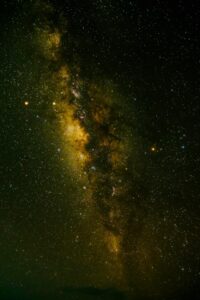
The bigger puzzle came from the plasma density measurements. Inside the heliosphere, solar wind plasma is relatively sparse. Models of interstellar space predicted that the plasma there would be even thinner as you get further from the Sun, further from any obvious energy source, so the numbers should go down.
They went up. Significantly.
Voyager 1 measured plasma densities in interstellar space that were far higher than pre-crossing models had anticipated. The interstellar medium turned out to be denser, in terms of plasma, than scientists had built into their standard framework. This wasn’t a rounding error. It suggested that our picture of what fills the space between stars, the interstellar medium, was missing something, or had the numbers meaningfully wrong.
Here’s the thing. The interstellar medium isn’t a niche concept. It’s the raw material that collapses under gravity to form new stars. It’s the ocean every future probe would have to cross. Get the density wrong by a significant margin, and you’re recalibrating star-formation models, galactic chemistry estimates, and the travel math for any mission that comes after Voyager. That’s a lot of downstream work from one surprising number.
Worth noting: the models weren’t wildly wrong. This wasn’t a paradigm collapse. But in a field where the measurements are as hard to get as they are in deep space physics, being off by this much matters.
Signals From Impossible Distance

Part of what makes Voyager’s findings so striking is simply the fact that there are findings at all. The probes were launched in 1977. They were designed for a planetary tour, not a multi-decade interstellar mission. The fact that instruments built in the mid-1970s are still functioning well enough to return meaningful data from beyond the solar system is, by any honest measure, one of the most remarkable engineering outcomes in human history.
The signal that arrives from Voyager 1 takes more than 22 hours to reach Earth, traveling at the speed of light. The probe itself runs on decaying plutonium, and the power output has been declining for decades. Engineers have had to shut down instruments one by one to keep the most critical systems alive. The probes are essentially running on fumes at this point, and still sending back surprises.
The math works out to something like the power draw of a single dim light bulb keeping the link alive across more than 15 billion miles. That’s not a metaphor designed to impress you. It’s just what’s true.
What We Still Don’t Know
The Voyager crossings gave scientists two data points. Two probes, two entry angles, two sets of readings. That’s better than nothing, considerably better. But the heliosphere is a three-dimensional structure, and two crossing points leave the vast majority of the boundary unmeasured. Researchers don’t know if what Voyager found is representative of the whole heliopause or specific to the regions the probes happened to cross.
There’s also the question of variability. The Sun goes through activity cycles, and the solar wind’s strength fluctuates. The heliosphere likely breathes in and out slightly as a result. Voyager’s readings are snapshots, not a continuous picture. What the boundary looks like at solar maximum versus solar minimum, or in a different direction from the Sun, remains largely unknown.
No follow-up mission designed specifically to study the heliopause is currently funded or in development, as far as publicly available information indicates. Voyager will keep transmitting until its power dies, probably sometime in the late 2020s. After that, the boundary between our solar system and everything else goes dark again.
Two probes, launched before most of today’s scientists were born, are currently the entire data set we have from interstellar space. Whether that’s humbling or astonishing probably depends on the day you ask.