



This story will teach you multiple concepts through its reading material.
- The words that you speak without thinking originated from authors and researchers and government leaders who created them instead of developing through centuries of language evolution.
- A few of these newly created words originated within the past two centuries, which creates a surprising finding.
- The inventors created new things that they knew to be false because this fact makes their complete absence from public knowledge create an unusual situation.
The English language feels old. The trick keeps operating. The weight of language exists for all time, which people use to express their thoughts through spoken words.
English speakers use the most common words throughout their day, which they used today before breakfast, because those words were created as specific language inventions.
Somebody created a name because they needed to identify something. The name remained in use after its creation.
The word that describes a creation process exists between two language origins because of its direct origin from Latin. The term evolved through its development from Old French. The process of creation happened through inventors who constructed their original concept.
The Myth of the Timeless Word
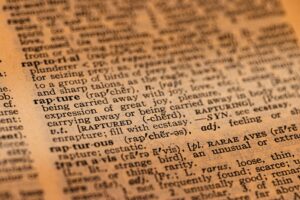
The majority of people view language development through a geological lens, which shows how language develops through unidentified periods of time with incremental changes. The statement applies to many different terms in English. The English language developed two different paths throughout its history because words were intentionally created to meet specific needs.
The practice that writers, scientists, and thinkers have followed throughout history creates documents that make their original sources invisible to readers. The moment people start using a word, its original meaning disappears from their understanding. The discovery of the invention has vanished from public knowledge.
People should focus on studying the process of disappearance. People make languages more adaptable because they shape their languages according to their needs, and the “timeless tongue” myth contradicts this fact. People use these particular words throughout their daily lives because they connect to a specific individual who spoke those words at a definite time for a specific purpose.
The term “scientist” serves as a contemporary name for natural philosophers who studied the natural world before its creation. The word was created to establish a professional term for scientists who needed to define their developing field during a period when science was forming into its current structure.
The practice exists today as an ancient tradition that people consider to be a permanent element of their society. The actual existence of the practice does not match this perception.
Ten Words, Ten Inventions

The term scientist emerged during the 19th century to designate a profession that required a new name because its previous titles no longer sufficed. The expression represents a single person who shares identical thoughts with another individual.
The term nerd originates from Dr. Seuss, who created it as the name for a fictional creature. The made-up animal evolved into a cultural identity within seven decades.
Horace Walpole invented the term serendipity,y which he used in a private letter to describe his discovery of a Persian fairy tale that tells the story of three princes from the island of Serendip. The inventor needed a term to describe unexpected positive results, so he created a new word. The term has become one of the most cherished words in English, which people for surveys identify as their preferred term.
John Milton created the name Pandemonium to designate the capital city of He, ll which he described in his epic poem. He constructed the term from Greek roots, which he used to create a proper noun. The term became common because it described chaos, which made people unaware that it originated from a fictional city name.
The term “Blatant,” which Edmund Spenser created, describes a monster that exists in his allegorical epic “The Blatant Beast,” which slanders through its loud noises. The word migrated from monster to adjective,e which describes something that is easily visible because its presence is excessively evident,nt yet maintains the original meaning of its monstrous beginnings.

Physicist Murray Gell Mann needed a name for a newly theorized subatomic particle. He borrowed it from a line in James Joyce’s “Finnegans Wake” because he liked the sound and the number matched. A particle smaller than an atom now carries the name of a nonsense word from one of the most deliberately obscure novels ever written.
The digital term “cyberspace” emerged from William Gibson, who used it to describe the online space where interconnected computer systems operated. The internet infrastructure Gibson was imagining barely existed when he wrote the word. Now it describes something that billions of people use every day.
The “catch” created by Joseph Heller, which is a logical trap which allowed you to be grounded for insanity. The phrase became common speech as people used it to describe no-win logical situations, which now exist in legal documents and corporate communications without anyone realizing its origins in fiction.
The Flemish chemist Jan Baptist van Helmont created the term by modifying the Greek word “chaos” to name a substance he investigated. The scientific community had no term to describe gas as a distinct physical state until van Helmont introduced his definition. The scientist created the term that scientists use to describe the fueling process of every car because he could only partially understand the phenomenon.
The Thing Most People Miss

I was so touched while writing it. The word that retains its original scent from its creator remains unrecognized by others. The term “Google” continues to exhibit its business character. The term “selfie” maintains its status as a new word. The terms “pandemonium” and “serendipity” now exist as completely separate entities because their original meanings no longer apply to their current state.
The actual narrative behind this listing presents itself through the exhibit. Human communication functions as an active system that develops through deliberate communication attempts while it discards all evidence of those attempts. All these words used to exist as new terms that people found difficult to use in the same way as “cryptocurrency” or “deepfake.” The objects from that period had time to become part of the background.
The first question requires deep thought because it investigates how many current words will become lost to time and which people will create the vocabulary that will become standard in 2125.
This article was created with AI assistance and reviewed by the author. The review included fact-checking, clarity edits, references, and sourcing of images