


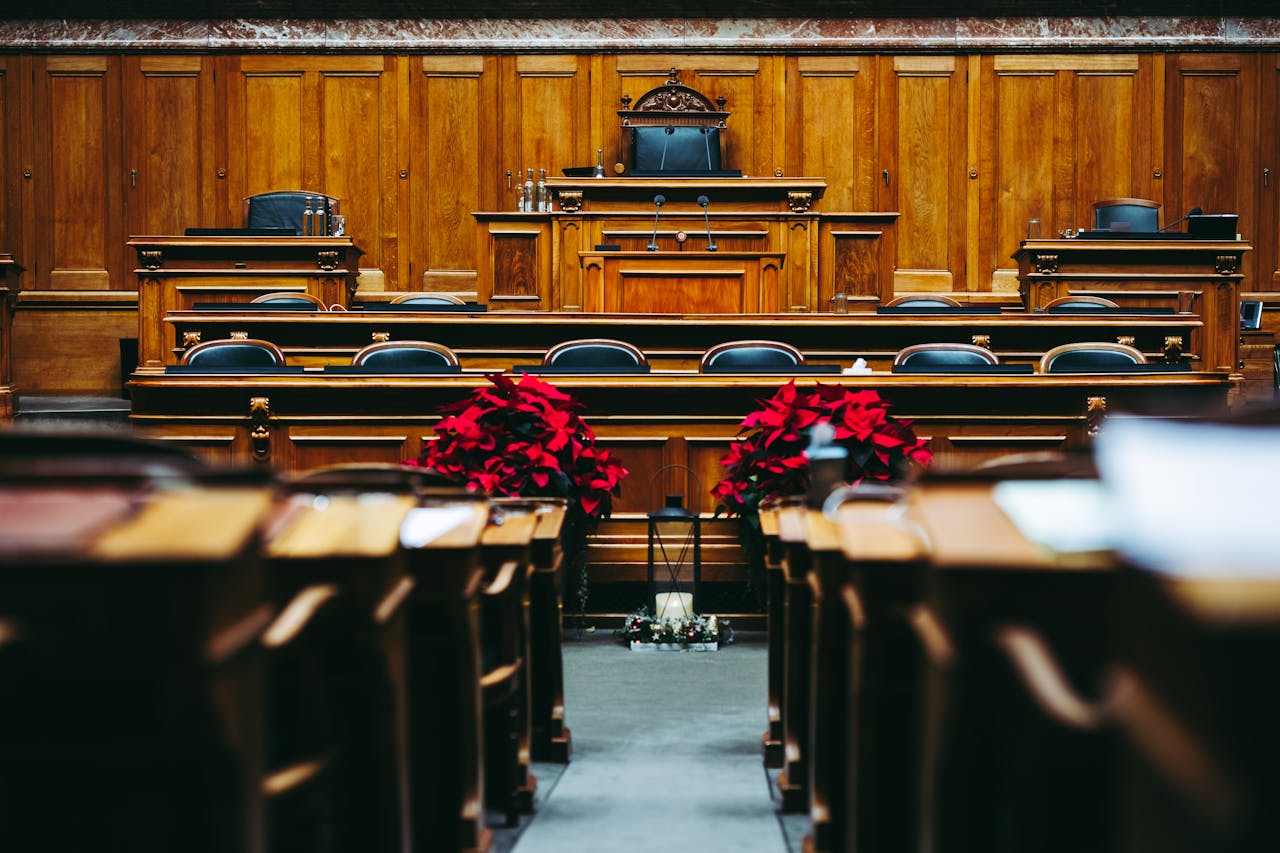
Your state’s law may predate your grandparents. And there may well be a cop writing you up on it.
Americans might think that unusual and old laws are simply a curiosity. In reality, it is far from being innocent. At least ten states have laws that make certain actions carried out every day by many people a crime, and even state representatives from these states have confessed to not stopping the enforcement in official statements and news releases. Not necessarily. Not all the time. But certainly enough times for you to feel differently about receiving the citation yourself.
Here’s the strange part: many of these laws have survived not because lawmakers forgot about them, but because repealing them turned out to be politically inconvenient, or because someone in local government quietly finds them useful.
When “Old Law” Doesn’t Mean “Dead Law”
One of the commonest types of ancient laws is certainly that of the blue laws, where the prohibition against performing tasks on Sunday had been made because of religious considerations in the colonial era. Some states still have laws limiting what the populace can buy, sell, or do on Sundays, but sometimes they apply only to selected counties, while other states enforce these laws statewide, but with so many exemptions that they could hardly be enforced. In the Southern and Midwestern regions, for instance, it is forbidden to sell alcoholic beverages until late Sunday afternoon, a law that has existed for decades now.

Jaywalking is yet another law. While California made headlines in 2023 for its decision to decriminalize the practice, most other states retain their jaywalking laws on the books, and in some states, notably in the Southeast and Mountain West, police forces have openly supported their ability to enforce such laws in campaigns aimed at pedestrian safety. “Selective enforcement” does not mean “no enforcement”; it simply means that you might get away with it ninety-nine out of a hundred times.
The Laws That Seem Absurd Until Someone Uses Them
Ordinances regarding noise seem like a dull topic until one takes into account the wide scope some states use in drafting them. Playing music in your own backyard during an ordinary weekday afternoon may be considered subject to a statute intended for noise emanating from industries, depending on whether the complaining neighbor convinces the enforcement officer to interpret it as such. This is not an exaggeration, because the municipal courts in several states such as Georgia, Ohio, and Texas have noise citations issued for everyday activities.

Fishing and hunting restrictions deserve their own category entirely. Some states still carry statutes making it illegal to fish on Sunday. Others prohibit the use of certain entirely common bait types, not because of conservation science, but because the law was written when that bait was associated with commercial fishing and never updated. A few states technically require permits for activities like collecting certain wildflowers or fossils on private land, under environmental statutes so broadly written that enforcement is theoretically possible even when the landowner consents.

Then there are the vagrancy and loitering laws. Loitering laws continue to exist in states such as Florida, Louisiana, and Arizona, with civil rights organizations citing the continuing use of such laws as ones that “shock the conscience of anyone who regards themselves as an upstanding law-abiding citizen.” Staying too long around a corner store. Sitting on a bench in public in a manner that raised the suspicions of a police officer’s discretion. Such laws have already been challenged, modified, and declared unconstitutional, only to be redrafted in similar fashion.
Why Repeal Is Harder Than It Sounds
You might ask why any legislature would keep a law that makes ordinary behavior technically criminal. The answer is usually one of three things.
Inertia first. Legislatures are already very busy, and old laws remain silent until challenged. The repealing process involves floor time, committee approval, and a legislative sponsor who is ready to risk political capital for an uncontroversial law that garners no media attention.

The second is leverage. Unusual laws allow for discretionary powers on the part of the government. Discretion means power. The law which may state the crime of playing music without permission or needing a special license to do particular types of construction or limiting where you can drive your food truck is not simply an outdated statute but a weapon that local governments have used against their citizens.

Third, and most importantly: many of these laws still have their proponents. “Blue laws,” for example, are still supported by religious groups, who see value in having Sunday prohibitions in place. Many hunting and fishing laws are supported by established interest groups who make use of them for financial gain. It is difficult to change these laws because their supporters want them to remain the way they are.
What This Actually Means for You
There’s nothing to get worked up about here. Most people who are going about their business and following the laws won’t ever come into contact with any of these laws. However, the difference between “legal” and “safe” is not as wide as you may think when it comes to certain areas and certain people.

The more interesting question isn’t whether these laws are weird. It’s why a legal system that prides itself on clarity and fairness has spent a century and a half tolerating laws that everyone acknowledges are outdated, and why enforcement, when it happens, tends to fall hardest on the people with the least power to push back.
That pattern isn’t an accident. And it isn’t unique to any one state.
If you think the strangest law in your state is just trivia, check your local municipal code. You might be surprised what’s still in there, and what your neighbors have been cited for.
This article was created with AI assistance and reviewed by Charlotte Dayes, author at NewsDailys. The review included fact-checking, clarity edits, and sourcing of images.