

On a Sunday evening in the fall of 1907, several of the most influential bankers in the United States found themselves trapped inside a closed private library in Manhattan. Trapped in the sense that they would remain there until they reached an agreement on the amount of money needed to halt the economic disaster already unfolding around them. By morning they had signed off. The panic ended. And the U.S. government, which hadn’t lifted a finger in the way of assistance, made some discreet notes.
This was perhaps the most pivotal moment in financial history that many Americans will never have heard of. Not that it was forgotten by historians, but that the government’s version of events in the aftermath made for a more agreeable story. The Panic of 1907 wasn’t simply one of frozen capital markets and bank closures. No, it served as an awakening to the fact that the country, despite its reluctance to admit it over the previous few decades, lacked any proper mechanism to stave off a national economic disaster.
This is where things get weird. The guy that saved the day, J.P. Morgan, by now seventy years old, already among the most powerful private individuals in the history of American finance, did not have the right to do any of it. He was not a governmental representative or bureaucrat; he was a private individual with the power and presence of mind to persuade other rich people into doing what he told them when they needed to do it the most. And while all of this might seem comforting to know, it actually reveals the fact that the fate of the whole economy lay in the hands of a single man that autumn.
The Kindling Had Been Building for Years
It did not happen spontaneously; the conditions were ripe for such an occurrence. The early years of the twentieth century were marked by a boom in industry, reckless speculation, and a banking system that consisted of many different banks, each separate from the others and operating in their own way with no reserves.
There was no structural buffer built into the system to handle a situation when one part was shaken by fear. If any depositor felt his or her bank in trouble and decided to withdraw money, there was no reason at all not to do so right away. Panic ensued.
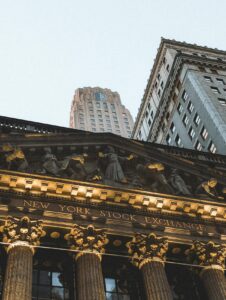
The spark that set off the chain reaction was an attempt by speculative investors to corner the copper market. It was not just a figure of speech, but quite literally the case. Some people attempted to purchase a significant number of copper stocks in order to control the prices. They failed and, as a result, the banks behind them found themselves in trouble. The trouble rapidly spread. Trust companies in New York were suddenly subjected to runs on cash. Stocks stopped trading. Short-term loan interest reached unheard-of figures.
What the Government Actually Did
Not much. Federal funds had been deposited with some of the larger New York banks by the Treasury, but that provided only marginal relief. There was no central bank, no coordinating apparatus, and no authority that could have legally stepped in as was necessary. The president of the day, Theodore Roosevelt, while never accused of timidity, had very few tools he could use to affect the situation officially.
It appears that Morgan just did what was required. He established the means to pool funds among the largest banks. He sorted out those that should be saved from those that deserved failure. Essentially, he triaged the entire American banking industry, using his own discretion and connections, along with other people’s funds that he had persuaded them to lend. The locked-door meeting is famous, but the event was really spread over weeks and involved continual innovation. At one point, according to legend, Morgan kept a deal from collapsing that would otherwise have put the stock exchange in ruins.
And it worked. The panic ended. The banks steadied themselves. The economy, suffering terrible wounds, survived.
The Lesson Washington Took. And the One It Didn’t
The story becomes truly disturbing at this point. The government realized it was faced with hard facts regarding the near-destruction of the country because of a financial panic that could only be averted through the efforts of one man and drew the conclusion that it was high time that the country established a central bank. Through years of political wrangling, committees, and one notable secret meeting on an island in Georgia where the structure of the whole operation was secretly planned, the Federal Reserve came into existence in 1913.
This part of the story is included in every account of how the Fed was established. What is not included, however, is the hidden recognition involved here. The establishment of the Federal Reserve was the admission of the failure of the country in terms of managing its finances in the wake of the 1907 panic, a void which had been temporarily filled by Mr. Morgan.

It is also safe to assume that it did not fully consider the consequences of waiting for so long to take action. Indeed, in 1907, panic was caused by the bank run that resulted in serious losses for many companies. There are even those who would say that the financial crash, which followed soon after, could be seen as another consequence of failing to come up with something other than letting things take their course.
In fact, none of those problems were experienced by the bankers from J. P. Morgan’s library; they were experienced by average depositors, workers, and small business owners.

Today, the Federal Reserve is already 111 years old. It can be criticized for many reasons, and there certainly were instances when it made decisions that were not necessarily right. However, it was created specifically to address the issues that 1907 exposed: the idea that an emergency response system should be run by one wealthy and well-connected individual was a gamble, and the country got lucky back then.
Whether the institution that replaced him has done better, that’s the argument that never quite ends.
This article was created with AI assistance and reviewed by Charlotte Dayes, author at NewsDailys. The review included fact checking, clarity edits, and sourcing of images.