

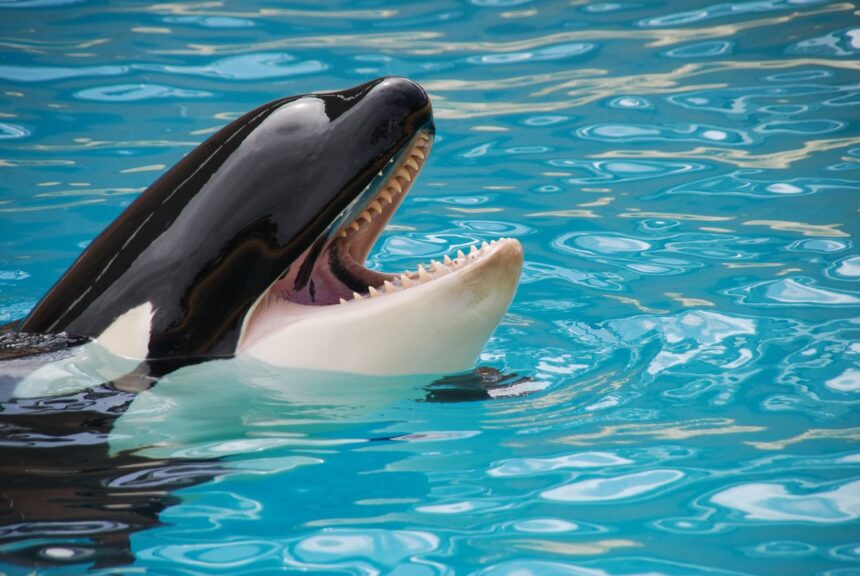
Something changed off the Strait of Gibraltar around 2020. Sailors already knew orcas lived there the Iberian population had been documented for decades, a small group hunting bluefin tuna along the Atlantic coast of Spain and Portugal. What nobody expected was for them to start hitting back.
Since then, more than 700 vessel interactions have been logged, according to data compiled by the Grupo de Trabajo Orca Atlántica, the Atlantic Orca Working Group tracking these events. Boats have had rudders bitten off, hulls spun in circles, steering systems destroyed. Several vessels have sunk after making port with damage too severe to repair.
The encounters cluster most heavily around the Strait of Gibraltar, the waters off Cape Trafalgar, and the Portuguese coast near Setúbal — but reports have spread as far north as the Shetland Islands.
And here’s the strange part: the behavior appears to be spreading. Not genetically. Socially.
Researchers studying the Iberian orca population believe the interactions began with a single female, nicknamed White Gladis by scientists at the Grupo. The working hypothesis, and researchers are careful to call it a hypothesis, is that White Gladis experienced some kind of traumatic event involving a vessel, possibly a boat strike or entanglement, and began treating boat rudders as objects to investigate, push, or disable. Younger orcas in her social group watched. Then they started doing it too. Orcas are among the most culturally sophisticated animals on the planet. They learn from each other. They teach.
What the Sailors Are Actually Describing
The accounts from sailors aren’t uniform, which is part of what makes this so difficult to categorize. Some describe coordinated approaches, three or four orcas working together on a rudder while others circle the hull. Others describe what feels like play, persistent nudging, the animals surfacing alongside the boat as if curious, then departing after twenty or thirty minutes.
A few describe something that reads more like targeted aggression: repeated ramming at speed, biting through fiberglass, continuing even after the boat has stopped moving. One sailing crew near the Moroccan coast reported their rudder being held in place by an orca’s mouth for several minutes before the animal released it and swam off. Not what you’d expect from a species with no historical pattern of this behavior.
The word “attack” has circulated heavily in media coverage of these events. Marine biologists have pushed back on that framing, hard. Alfredo López Fernández, a biologist with the University of Aveiro who has been one of the most visible researchers on these encounters, has stated publicly that he does not believe the orcas are acting aggressively toward humans. No sailor has been harmed. The animals are not targeting people, they’re targeting rudders, specifically, and almost exclusively. But “not aggressive toward humans” and “not dangerous to your boat” are two very different things.
Why No One Has a Clean Answer
The honest answer is that cetacean behavior at this level of specificity is genuinely hard to study. The Iberian orca population is small, estimates put it at fewer than 40 individuals, and critically endangered. Interventions are legally constrained. You can’t dart them, can’t relocate them, can’t easily modify the boats in ways that have proven effective. Magnetic deterrents, engine noise changes, and stopping the vessel entirely have all been floated as strategies; results from sailors are mixed at best.
What researchers do know is that the behavior has not faded on its own. It has grown. The geographic spread northward suggests either the original animals are ranging farther, or the behavior is being passed to animals in other social groups.
Both possibilities raise questions that current data can’t fully answer. Some researchers have suggested the orcas may associate rudder mechanics with the sensation of tuna pulling on a fishing line, a kind of misfired instinct. Others point toward play behavior that escalated. A few have noted that the timing coincides with increased shipping traffic and noise in the strait following the pandemic recovery. None of these explanations close the loop completely.
The Iberian orca was already fighting for survival before any of this started. Bycatch, prey depletion, ocean noise, the pressures on this population are real and documented. Whether what’s happening now is trauma, play, cultural transmission, or something else entirely, it has forced a genuine reckoning with how little we understand about what orcas do when the world around them changes.
Whatever White Gladis started, her social group turned it into something that has now outlasted five years of observation and baffled the researchers watching most closely. That’s not nothing.
If orcas are capable of passing down a behavior this specific, this persistently, across animals that weren’t present when it started, the question worth sitting with is what else they might be teaching each other that we haven’t noticed yet.
This article was researched, written, and edited by our human editorial team. AI tools were used in a limited research-assistant capacity. All claims were independently verified.