


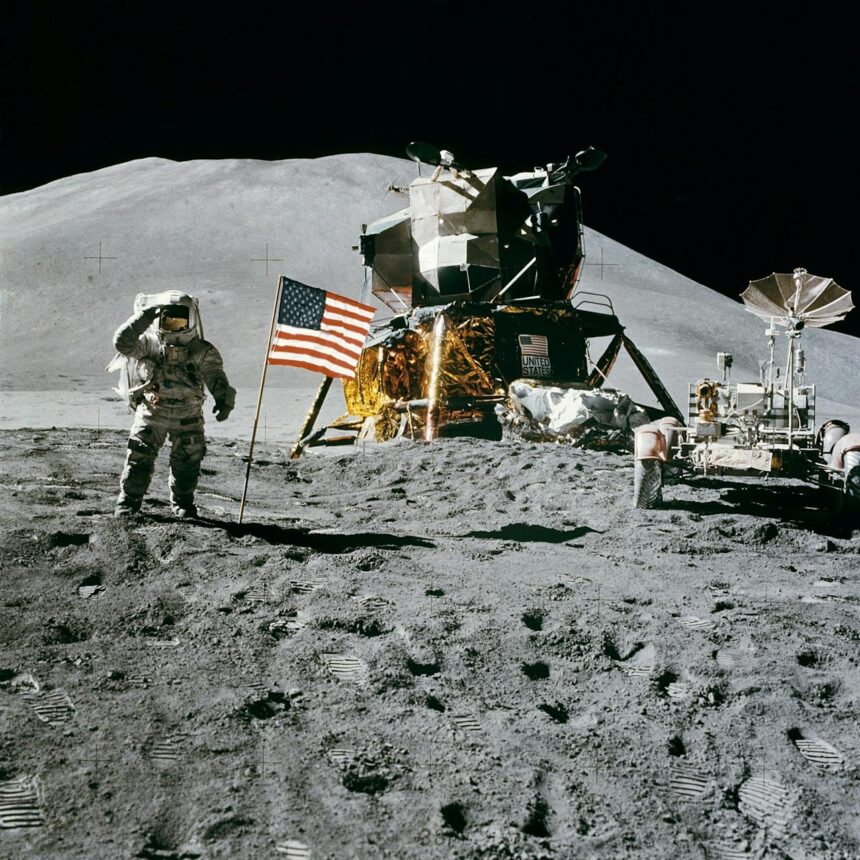
In late May 2026, NASA did something it hadn’t done since the Apollo era: it handed out contracts to build a base on the Moon. Not a study. Not a concept paper. Contracts hundreds of millions of dollars worth, spread across five commercial aerospace companies, for hardware expected to operate on the lunar surface within the next two years.
The Apollo program ended in 1972. For more than fifty years, the Moon stayed mostly theoretical in NASA’s budget documents. What changed on May 26 wasn’t just money. It was specificity.
The Companies, the Cash, and the Hardware
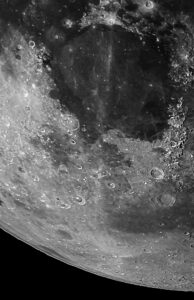
Astrolab received a contract in the hundreds of millions of dollars, and Lunar Outpost received a contract in the hundreds of millions of dollars — the two largest individual awards, both for crewed lunar terrain vehicles, the rugged rovers that astronauts will drive across the Moon’s surface. Both vehicles are expected to reach the Moon within the next several years, according to contract timelines. That’s not a projected arrival window or a planning horizon. That’s a delivery schedule with price tags attached.
Other commercial partners received separate awards for cargo landers, the uncrewed platforms that will carry supplies, equipment, and eventually scientific instruments to the surface before any human sets foot there. Think of them as the forward logistics chain, the trucks that arrive before the crew does.
And here’s the part that most coverage has undersold: Blue Origin’s Blue Moon Mark 1 lander, Blue Origin’s Blue Moon Mark 1 lander is scheduled to make the first Moon Base mission in the near term, according to program timelines., is scheduled to make the first Moon Base mission no earlier than fall 2026. That’s not a future generation’s problem. That’s this year.
Why the South Pole and Not Somewhere Easier
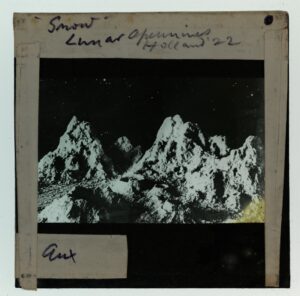
Every mission in this package targets the same general destination: the lunar South Pole, specifically a region near Shackleton Crater at the lunar South Pole. The choice isn’t accidental, and it isn’t aesthetic. It comes down to water.
The Moon’s South Pole sits at the edge of some of the most permanently shadowed terrain in the solar system. Craters there haven’t seen direct sunlight in billions of years. Scientists believe those frozen shadows hold water ice, and water ice on the Moon isn’t just water. Break it apart, and you get hydrogen for rocket fuel and oxygen for breathing. Collect enough of i,t, and you have the raw material for a self-sustaining outpost.
That’s the logic of the whole program in one sentence: the South Pole is where a base can eventually feed itself.
The problem, until recently, has been that no one knew exactly where the ice is or how accessible it might be. Which is where the drones come in.
Four Hopping Robots and a Precedent from Mars
source:pexel
NASA’s planned lunar scouting mission will deploy four hopping drones to scout the South Pole ahead of the crewed missions. The concept draws directly from the Ingenuity helicopter, which NASA sent to Mars as a 30-sol (approximately 30-day) technology demonstration. Ingenuity made 72 flights before the mission ended, more than fourteen times its planned number. The lesson NASA took from that: small aerial scouts in extreme terrain outperform every expectation on paper.
The Moon’s airless environment rules out rotary flight, so these drones hop rather than fly. But the strategic idea is the same: map the terrain before you commit humans to it. Find the ice. Identify the hazards. Confirm the landing sites. The rovers and landers can follow with better information than any orbiter has provided so far.
It’s worth sitting with the Ingenuity comparison for a moment. NASA planned 5 flights and got 72. That’s not just a good outcome, it’s an argument that the agency’s conservative planning assumptions routinely underestimate what hardware can do once it’s actually there. If the MoonFall drones perform anywhere near as well, the South Pole mapping effort could be largely complete before a single astronaut arrives.
What “Permanent” Actually Means

NASA has stated a long-term goal of establishing a permanent lunar base, with timelines subject to ongoing program development… The word “permanent” is doing significant work in that sentence. It doesn’t mean staffed around the clock from day one. It means infrastructure that stays, hardware on the surface that persists between missions, a base that future crews can return to rather than rebuild.
The Apollo missions landed, worked for a few days, and left. Nothing stayed except the descent stages, the flags, and a few scientific instruments. The new approach is structurally different. Rovers and landers arrive first, establish a foothold, and wait. Crews follow. The base accumulates rather than being built from scratch on every visit.
That model depends entirely on the commercial partners delivering on schedule. Blue Origin, Astrolab, Lunar Outpost, Astrobotic, and Firefly are not government contractors in the old NASA sense; they’re companies with their own investors, their own timelines, and their own reputations riding on whether their hardware works in one of the most hostile environments reachable from Earth.
So far, the contracts suggest NASA is betting they can. A billion dollars says so.
The Longer Calculation

Water ice at the South Pole is the variable that makes or breaks every projection about what a lunar base could eventually become. If the ice is accessible and abundant, the Moon stops being a destination and starts being a waypoint, a refueling stop for missions deeper into the solar system. If it’s scarcer or harder to extract than current models suggest, the calculus changes.
The MoonFall drones and the first Blue Moon lander, both expected to arrive in the coming years, will provide the first ground-truth data on that question. The answer will shape everything that follows.
Whether a Moon base by 2032 is achievable depends less on the ambition of the plan and more on what four hopping robots find in the shadows of Shackleton Crater. Maybe a solar system block party is closer than we think. Or maybe the ice is there, and it’s enough, and the most important construction project of the century is already in the contracting phase.
The paperwork, at least, is signed.
<h3>Sources</h3>
<ul class=”article-sources”>
<li><a href=”https://www.nasa.gov/news-release/nasa-provides-update-on-moon-base-rovers-landers-missions/” rel=”noopener noreferrer”>NASA. Moon Base Rovers, Landers & Missions Update</a>, Primary NASA announcement, May 26, 2026, detailing contract awards and mission timelines</li>
</ul>
This article was researched, written, and edited by our human editorial team. AI tools were used in a limited research-assistant capacity. All claims were independently verified.