

During the mission’s outbound leg, four people were farther from Earth than any human being had ever been. Not by a little. At a record-breaking distance from Earth, the crew of NASA’s Orion spacecraft had surpassed a record that had stood since April 1970, set not by triumph, but by an explosion that nearly killed three men trying to reach the Moon.
The distance record is the kind of number that makes the mind go quiet for a moment. Then you remember who was sitting in those seats.
The Mission That Carried 54 Years of Waiting

Artemis II launched in early April 2026, carrying Commander Reid Wiseman, Pilot Victor Glover, mission specialist Christina Koch, and Canadian astronaut Jeremy Hansen. Hansen became the first non-U.S. citizen ever to leave low Earth orbit. Glover became the first person of color to do so. Koch became the first woman.
Three firsts. One mission. A crew of four people who together represented something the American space program had never, in six decades, managed to put in the same capsule at the same time.
The last time any human left low Earth orbit was December 1972, when Apollo 17 lifted off from the lunar surface and headed home. That was 54 years ago. The gap between those two missions — between Gene Cernan climbing off the Moon and Reid Wiseman pointing Integrity toward the lunar far side- is longer than most of NASA’s entire history to that point.
Forty Minutes of Silence
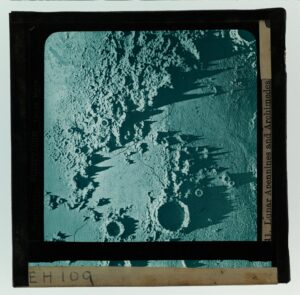
Here’s the part that stays with you. As Integrity swung around the Moon’s far side, the crew lost all contact with Earth for a period of roughly 30 to 40 minutes. No signal. No voice. No data. Just four people, a spacecraft named Integrity, and the absolute dark of the lunar far side, 248,655 miles from the nearest hospital, the nearest anything.
During that same pass, the crew may have witnessed the Moon occluding the Sun from their vantage point in deep space. The Moon moved between them and the Sun, and they watched it from a vantage point no human being had occupied since the Apollo era. Most of us will only ever see that kind of eclipse from a field somewhere, craning our necks. These four watched it from the other side.
The math worked out in ways that felt almost designed. The farthest point. The blackout. The eclipse. A Canadian astronaut on a NASA mission, a Black pilot, a woman, all of them past the boundary that had been exclusively white, exclusively American, exclusively male for half a century.
Splashdown, 2.9 Miles Off

Integrity splashed down in April 2026, in the Pacific Ocean in the late afternoon Pacific time, landing 2.9 miles from the targeted recovery point. For a spacecraft returning from the Moon’s vicinity at roughly 25,000 miles per hour, that kind of accuracy is almost offensive. The engineers who calculated that trajectory deserve their own record.
The full mission covered 695,081 miles. For context, that’s roughly the distance you’d cover driving around Earth’s equator 27 times in ten days.
What Artemis II did was prove the hardware. What it also did, quieter, less discussed in the technical debriefs, was prove that the question of who belongs in deep space had a new answer. Not just Americans. Not just men. Not just one demographic that happened to have access to the right rooms in the 1960s.
The next mission, Artemis III, is intended to land humans on the Moon’s surface for the first time since 1972. The crew hasn’t been announced as of this writing. Whoever they are, they’ll carry the distance record that four people set on April 6, 2026, as the baseline.
That record will eventually fall, too. The interesting question is who breaks it.
This article was researched, written, and edited by our human editorial team. AI tools were used in a limited research-assistant capacity. All claims were independently verified.