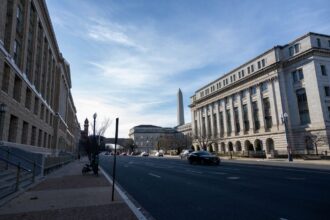


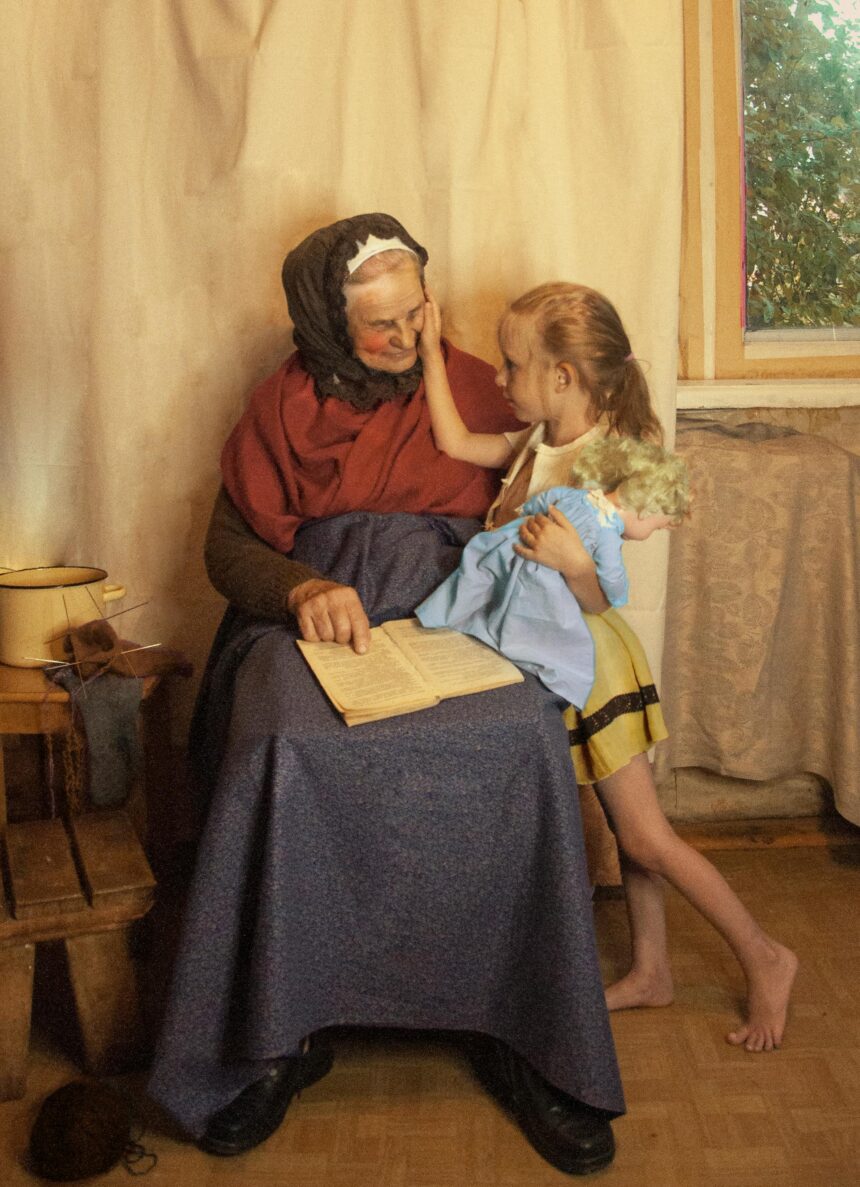
There was a particular sound in American neighborhoods during the early 1930s. Not the crash itself that happened on Wall Street, far away, in a language most people didn’t speak. The sound closer to home was quieter. It was the click of a bank’s front door being locked for the last time.
Thousands of banks failed between 1929 and 1933. Savings disappeared overnight. Wages stopped. And yet, in neighborhood after neighborhood, the corner grocery stayed open. The butcher was still cutting meat. The dry goods merchant was still measuring flour. How does a small shopkeeper survive something that destroyed institutions with marble lobbies and brass fixtures? The answer turns out to be one of the more quietly remarkable stories in American economic history, and it has almost nothing to do with money.
The Ledger on the Counter
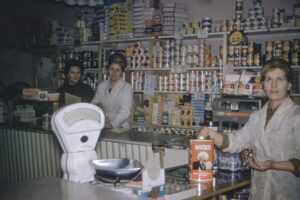
Walk into most corner stores of that era, and you’d find, somewhere near the register, a composition notebook or a cloth-bound ledger. It was the account book. And in the years after 1929, it became something more important than any bank statement.
Small retailers had been running informal credit for their regular customers long before the Depression hit. You bought your groceries, the shopkeeper wrote it down, and you settled up on payday. It was a system built entirely on trust and proximity. The grocer knew your name, knew your husband worked at the mill, and knew your kids by sight. That personal knowledge was the collateral.
When incomes collapsed, many shopkeepers made a quiet decision: they kept extending credit anyway. They stretched the ledger entries further. Some accounts went months without a payment. This wasn’t charity, or not only charity. It was a calculation. A customer who could no longer pay was still a customer who might pay later. And a neighborhood that survived the Depression together would still be buying bread and milk on the other side of it.
Here’s what the history books get wrong. Banks didn’t fail because of bad luck. They failed because a loan officer sitting in a downtown Chicago high-rise had no earthly idea whether the farmer in Peoria would bring in a harvest that fall. The corner grocer on that same farmer’s block knew exactly which families had a working adult and which were eating through their last savings. That ground-level knowledge let small retailers make credit calls that no bank formula could touch.
The Barter Economy Nobody Talks About
Here’s something that gets left out of the textbooks. Cash wasn’t the only currency moving through Depression-era neighborhoods.
Barter came back. Not in some organized, idealistic way, informally, quietly, the way practical people solve problems when the official system stops working. A woman who sews might mend the grocer’s apron in exchange for a few pounds of potatoes.
A man who could fix a leaky pipe got credit at the hardware store. Eggs from a backyard flock were bought from the bakery two streets over. None of this showed up in any economic statistic. All of it kept people fed.
Small retailers were often at the center of these arrangements because they had what people needed most: staple goods. And because they were embedded in the neighborhood, they could negotiate these trades without embarrassment on either side. There was a dignity to it that a bread line couldn’t offer. You were still a customer. You were still someone who paid their way, just in a different currency for a while.
Some shop owners went further. They reduced portion sizes rather than raise prices, keeping goods accessible to the most stretched households. Others quietly set aside day-old bread or slightly bruised produce for families they knew were in the worst trouble. None of this was policy. It was judgment, exercised every day behind a counter.
Why Big Retail Couldn’t Do What Small Retail Did

The 1930s also saw the rise of chain stores, operations like A&P that were expanding even as independent retailers struggled. And chain stores had real advantages: bulk purchasing power, lower prices, professional management. By some measures, they were better at retail than the corner shop.
But they couldn’t do the ledger.
A chain store manager answered to a corporate office, not to the neighborhood. There was no system for extending personal credit to individual families, no mechanism for accepting eggs as partial payment, no relationship deep enough to know which customer needed a quiet word and which needed a lower price.
The chain store model was optimized for normal times. The corner store model was optimized, without anyone planning it that way, for exactly the kind of crisis that came.
And here’s the strange part. The things that made small retail look sloppy, the loose bookkeeping, the handshake deals, the grocer who knew your mother’s maiden name, those were exactly the things that kept the lights on. What looked like a weakness in 1928 was a lifeline in 1932.
What the Ledger Actually Meant

The accounts that shopkeepers carried through the Depression weren’t just financial records. They were a kind of social contract, written in pencil, kept in a drawer under the counter.
Most customers did eventually pay. Not all, some families moved away, some never recovered enough to settle old debts. But anecdotal and oral history accounts suggest that the community bonds created by extended credit are often held. People remembered who had trusted them when trust was the only currency anyone had.
The corner store didn’t survive because it was financially clever. It survived because it knew people. Not accounts. People. And when formal systems stopped working, that turned out to matter more than any reserve ratio or federal guarantee.
If you grew up hearing your grandmother talk about “Mr. Kowalski at the shop” or “the Ng family down the street,” you already know what that relationship felt like. It wasn’t sentimentality. It was infrastructure.
We grew up, most of us, in a world where banks are insured, and groceries are bought with plastic. The Depression’s corner stores feel like a different country. But the principle those shopkeepers were working from, that community relationships are a form of financial infrastructure, didn’t stop being true just because the ledger books disappeared.
Some of those ledgers probably still exist, tucked in attic boxes in old neighborhoods, full of names and amounts and dates that nobody alive can put faces to anymore. A whole Depression-era economy, written in pencil, mostly paid back.
This article was researched, written, and edited by our human editorial team. AI tools were used in a limited research-assistant capacity. All claims were independently verified.