


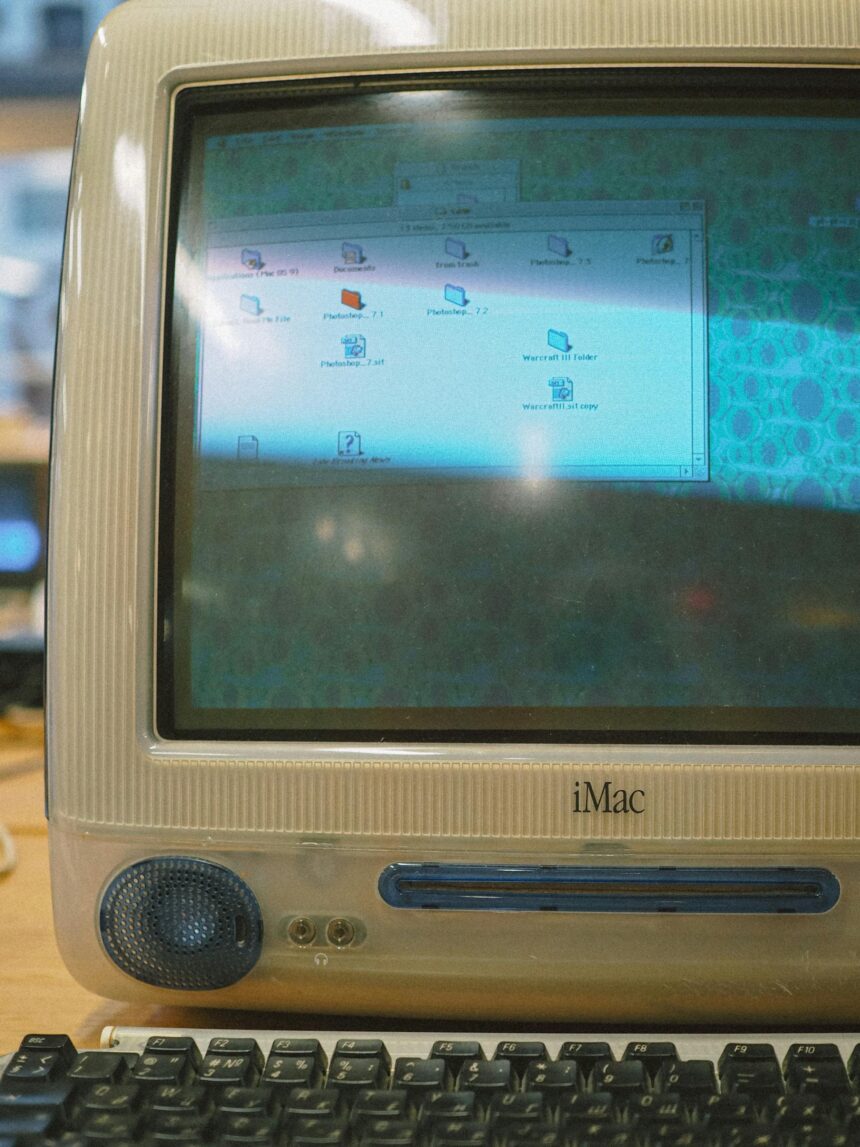
In early 1993, a small team at a federally funded research lab in Illinois released a piece of software that almost no one outside academic computing had heard of. It was a web browser. It had a point-and-click interface, could display images inline with text, and ran on ordinary personal computers. Within eighteen months, it had more users than anyone had projected for the entire decade.
That browser was called Mosaic. And the reason it matters still, today, in ways most people never think about is that it didn’t just give people a way to see the web. It decided what the web would look like. What it would feel like. What would it be for?
Here’s the strange part: nobody planned any of that.
The Architecture Nobody Voted On

The early internet, the one that existed before the web, running on university mainframes and government networks, was a place for sharing documents. Plain text. Academic papers. Technical specifications. The people who designed it were solving a specific problem: how do you let researchers at different institutions share information without relying on any single central computer? The answer they arrived at was distributed and decentralized. No hub. No owner. Just nodes talking to each other.
That design decision, made in the late 1960s and refined through the 1970s and 1980s, shaped everything that came after. The internet was never designed for commerce. It was never designed for video. It was never designed for social interaction between strangers. It was designed so that a physics professor in California could send a file to a physics professor in Massachusetts without calling anyone’s IT department.
When Tim Berners-Lee proposed the World Wide Web in 1989 at CERN, he was building on top of that infrastructure. His idea was elegant: link documents together using something he called hypertext, give each document a unique address, and let anyone with the right software navigate between them. The web was a layer on top of the internet, not the internet itself. A distinction most people have since stopped making.
What Berners-Lee did not design, what nobody designed, was a business model.
The Gap That Advertising Filled

By 1994, companies had started noticing the traffic. The web was free to use. Content cost money to produce. Someone had to pay for it, and the answer that emerged, not from any deliberate policy decision but from a series of individual choices made by individual companies, was advertising.
The first web banner ad is generally credited to a campaign placed on HotWired in the mid-1990s. It ran above an article. It was rectangular. It had a click-through rate that, by modern standards, was extraordinarily high, a figure widely cited in industry histories but difficult to independently verify today.. No banner ad has come close to that number since. The audience was new, the format was novel, and for a brief window the whole thing worked in a way it would never quite work again.
Content is free. Attention is the product. Advertisers pay for eyeballs, publishers get a cut, and the platforms sitting in the middle collect data on who watched what and sell that back to advertisers at a markup. Simple. And the platforms took the biggest cut of all.
That structure wasn’t inevitable. Other models existed. Subscription-based online services were already running in the early 1990s. Micropayment systems were proposed and debated. Some people argued for a federally subsidized public internet, modeled loosely on public broadcasting.
None of those won. Advertising won, partly because it was frictionless, partly because it scaled, and partly because the early web companies needed revenue fast and banner ads were something they could sell immediately.
The web was only a few years old before most of its users gave any serious thought to what they were trading for free access. By then the architecture was set.
What Got Built Into the Walls

The consequences of that early structure show up in specific, traceable ways.
The algorithm problem is one of them. If your revenue depends on advertising, and advertising rates depend on how much time users spend on your platform, then the platform has a financial incentive to maximize time-on-site. That incentive doesn’t care whether the time is spent reading something true or something false. It doesn’t care whether the user feels good or bad when they leave. It cares about the clock.
The data problem is another. To sell advertising effectively, platforms needed to know who their users were, their age, location, interests, purchasing history. That information had to come from somewhere. It came from the users, often without explicit consent in the early years, through a combination of registration forms, cookies, and behavioral tracking.
The infrastructure for mass personal data collection was built not by governments but by private companies trying to sell ads more efficiently. Which sounds insane until you realize it’s exactly what we’re still doing, at a scale those early engineers couldn’t have imagined.
The centralization problem is a third. The early internet’s distributed architecture was supposed to prevent any single point of control. The web, as it developed commercially, moved in the opposite direction. A small number of platforms, search, social, e-commerce, came to handle enormous fractions of all web traffic. The nodes were still technically independent. But in practice, if one major platform’s algorithm changed, thousands of websites lost most of their traffic overnight. The decentralized network had grown a de facto center.
None of this was designed. It emerged from the interaction of three things: an open technical architecture, a winner-take-all advertising market, and the speed at which the web scaled before anyone had time to think carefully about the rules.
The 1992 Question Nobody Asked

The year 1992 sits at the hinge. The web existed but wasn’t yet public. The commercial internet didn’t exist yet. The policy decisions that would shape the next thirty years, about liability for online content, about data privacy, about competition between platforms, hadn’t been made, because the thing those policies would govern hadn’t arrived yet.
By the time it arrived, it moved faster than policy could follow. Section 230 of the Communications Decency Act, passed in 1996 [VERIFY], gave online platforms broad immunity from liability for content posted by their users. It was written to encourage the growth of a new industry.
It also made certain business models much more viable than others, specifically, models where platforms aggregate user-generated content at scale without editorial responsibility. The platforms that exist today were shaped, in part, by that single legislative decision made when the web was still young enough that no one could see clearly what it would become.
Here’s the thing about architectural decisions. They look small when you make them. A browser that displays images inline. A rectangular ad format. A liability shield Congress handed platforms in 1996. A data standard that never required consent. You probably weren’t paying attention to any of that at the time. Neither was almost anyone else. But thirty years compound fast, and now you’re living inside all of it, and it feels like gravity because you’ve never known anything different.
The web in 2025 looks the way it does not because anyone chose it, but because a series of defaults compounded. The question worth sitting with is whether any of those defaults can still be changed, or whether we’ve simply built too much on top of them to start over.
This article was researched, written, and edited by our human editorial team. AI tools were used in a limited research-assistant capacity. All claims were independently verified.