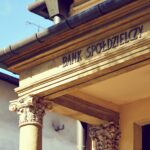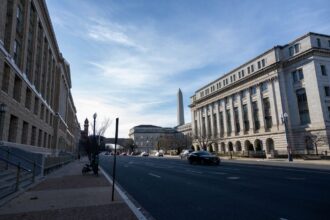


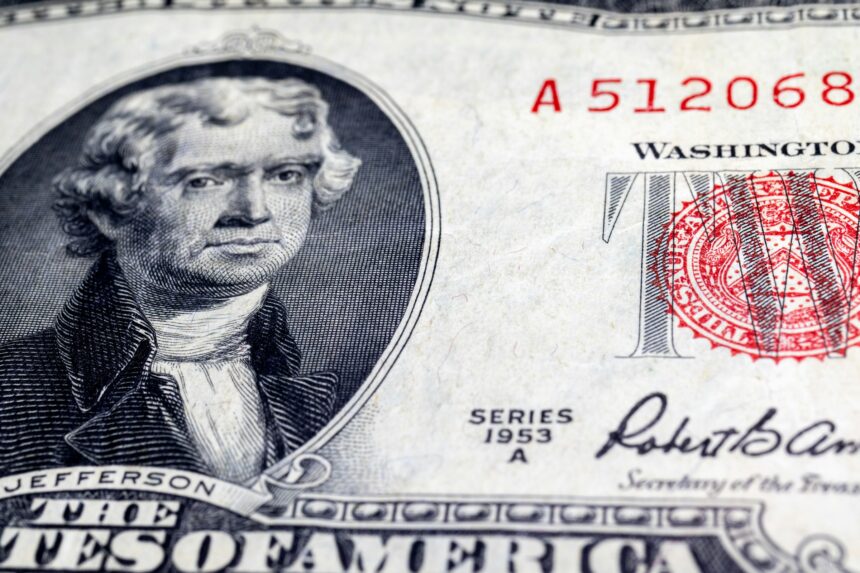
The dollar was worthless. Not figuratively, in Tenino, Washington, in 1931, the local bank failed and left the town with almost nothing to trade on. So the city did something that sounds like a prank and turned out to be one of the most quietly brilliant economic experiments in American history: it printed its own money On wood.
That detail stops people. Wood. Spruce, to be specific, was milled into thin wafers the size of a playing card, stamped with a denomination, and backed by the full credit of the city government. Residents spent it at local stores. Merchants accepted it. The town kept moving while the rest of the country locked up.
And Tenino wasn’t alone.
This is where most people’s mental map of the Depression falls short. The standard story is soup kitchens, breadlines, FDR, and the New Deal. What gets left out is the hundreds of American communities that didn’t wait for federal intervention; they improvised their own economic systems and, in many cases, made them work. Economists have a name for this class of instruments: scrip. The word sounds quaint. The practice was anything but.
The Crisis That Forced the Experiment
By 1932, bank failures had wiped out savings in communities across the United States. The Federal Deposit Insurance Corporation didn’t exist yet; it wouldn’t be created until 1933. When a local bank collapsed, the money was simply gone. No backstop, no guarantee, no phone number to call.
Towns that had been functioning normally in 1929 found themselves, three years later, without a working medium of exchange. You couldn’t pay your grocer. Your grocer couldn’t pay his supplier. The whole chain seized.
Script broke the seizure. Local governments, chambers of commerce, and civic organizations issued certificates redeemable for goods or services within a defined area. Some were backed by future tax revenues. Some were backed by warehouse inventories, literal bushels of corn or tons of coal used as collateral.
The Tenino wooden dollars were backed by the assets of the closed bank, held in receivership, which gave them real, if deferred, value. Residents trusted them because the math, however unconventional, actually added up.
The thing that made the script work wasn’t legal sophistication. It was social density. In a small town where everyone knew everyone, a piece of wood stamped by the city was as credible as anything printed in Washington. Trust traveled on familiarity. That’s worth sitting with for a second, because it says something uncomfortable about what money actually is.
What Backed It, and Why That Mattered

Source: Pexels
Economists would later describe Depression-era scrip as a form of “emergency currency”, a label that is technically accurate but undersells the ingenuity involved. Several schemes went further than simple substitution. The town of Anaheim, California, issued scrip that carried a small stamp tax each time it changed hands, which meant the currency accelerated rather than stagnated. Spend it fast, or pay a penalty.
The design forced velocity into a system that had locked up precisely because people were hoarding whatever conventional cash remained. It was a deliberate mechanism. Someone thought it through.
Not all of it worked. Some scrip schemes collapsed because issuers lacked the discipline to limit supply, they printed too much, eroded trust, and watched the certificates slide toward worthlessness. Others failed because merchants in neighboring towns refused to accept them, creating hard geographic limits on usefulness. The experiments that succeeded shared one trait: a credible, specific backing that residents could verify. Abstraction failed. Tangibility held.
The Federal Government’s Complicated Reaction
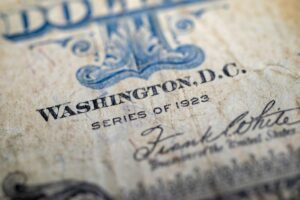
Washington’s response was, to put it gently, mixed. The Roosevelt administration was simultaneously sympathetic to communities in crisis and nervous about the precedent. Hundreds of private currencies circulating outside federal control was not a situation any Treasury secretary wanted to manage.
In 1933, as part of the broader banking reforms, the government began pushing communities toward federally coordinated relief rather than local improvisation. The scrip era wound down, not because it failed, but because a more centralized alternative arrived.
Tenino’s wooden dollars, though, outlasted the emergency. The town eventually began selling them as collector’s items. They became a point of local pride. Today, you can still find them in antique shops and on auction sites, small rectangles of spruce that once bought groceries and paid barbers during the worst economic collapse in modern American history. Some sell for considerably more than their face value. Which sounds like a punchline, but is really just proof that meaning outlasts crises.
The deeper lesson isn’t really about wood or stamps or small-town ingenuity, though all of that is genuinely interesting. It’s about what happens when official systems fail,l and communities are forced to ask a foundational question: what do we actually agree to treat as valuable?
The Depression-era scrip towns answered that question in real time, under pressure, with their own names on the line. Most of them got it right. That’s not a footnote to economic history. It’s the whole argument, compressed into a playing card made of spruce.
If the dollar is only worth what people agree it’s worth, and that’s exactly what it is, then Tenino’s wooden money wasn’t a workaround. It was the real thing.
This article was researched, written, and edited by our human editorial team. AI tools were used in a limited research-assistant capacity. All claims were independently verified.