


When a rocket releases a satellite into low Earth orbit, a clock starts. Not a metaphorical clock. An actual countdown baked into international space law that determines whether the object you just launched is a functioning piece of infrastructure or, legally speaking, your problem for the next century. The number is 12 minutes. And the gap between passing and failing that window is smaller than most people realize.
Here’s the strange part: 12 minutes isn’t some arbitrary bureaucratic relic. It’s the calculated difference between a satellite that burns up harmlessly in the atmosphere within 25 years and one that lingers in orbit long enough to become a genuine collision hazard for everything else up there.
The Inter-Agency Space Debris Coordination Committee, which sets the standards that NASA and other space agencies align with, built the 25-year deorbit rule around orbital mechanics. The 12-minute figure emerges from how launch windows, orbital insertion burns, and atmospheric drag interact at altitudes between roughly 200 and 2,000 kilometers.
The Altitude Problem Nobody Talks About

At 400 kilometers, where the International Space Station orbits, atmospheric drag does most of the work. A defunct satellite there will naturally decay and reenter within a few years without any help. Go up to 800 kilometers, and the math changes completely.
A satellite parked at that altitude without a deorbit plan could stay up for 150 years. The 12-minute rule applies to the propulsion burn at end-of-life, specifically, whether the satellite carries enough onboard fuel to execute a controlled deorbit burn that lasts long enough to drop its perigee into the upper atmosphere. Miss that burn window by 12 minutes, and the trajectory math puts reentry beyond the 25-year threshold.
Miss it by more, and you’ve just added to a debris field that already contains roughly 27,000 tracked objects larger than a softball, according to NASA’s Orbital Debris Program Office. The number of objects smaller than that untracked, uncatalogued, moving at 17,500 miles per hour, runs into the millions.
What “Controlled” Actually Means at 17,500 MPH

Operators don’t flip a switch and watch their satellite fall. A controlled deorbit requires the spacecraft to be functional, oriented correctly, and carrying residual propellant at the end of what might be a five-year operational life. That last part is where missions fail.
Satellites that run out of fuel before executing a deorbit burn become instantly ungovernable. No thrust, no attitude control, no options. The 12-minute rule forces engineers to budget for end-of-life fuel reserves from the moment they design the mission, because by the time you need that fuel, you’ve already spent years deciding whether you’d have it.
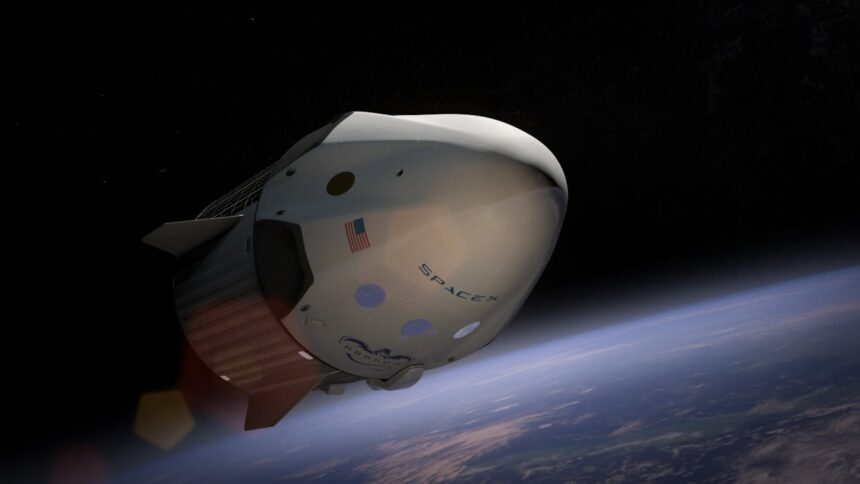
SpaceX’s Starlink constellation addressed this directly in its second-generation design, building autonomous deorbit capability that the company says can execute reentry within five years of end-of-life. That’s well inside the 25-year threshold. But Starlink is the exception. Dozens of smaller commercial operators, particularly in the emerging smallsat market, have launched hardware with no meaningful deorbit strategy. Some of those satellites are already past their operational life. None of them is coming down on schedule.
The Legal Gray Zone Nobody Wants to Own

International space law assigns responsibility to the launching state, not the company, which sounds clean until you realize that a startup incorporated in Luxembourg, launching on a Russian rocket from Kazakhstan, deploying a satellite built in California, creates a liability chain that no single agency can fully enforce. The Outer Space Treaty of 1967 was written when only two countries had launch capability. It was not written for this.
The FCC stepped into this gap in 2022, formally adopting a five-year deorbit rule for U.S.-licensed satellites in low Earth orbit, stricter than the international 25-year standard. But FCC jurisdiction only covers U.S. operators. The other 70-plus countries now capable of reaching orbit are under no obligation to follow suit.
Why the 12-Minute Window Gets Tighter Every Year

The math gets more complicated as the orbital environment gets more crowded. Every dead satellite increases the probability of a collision. Every collision generates debris. Debris generates more debris. The scenario has a name: Kessler Syndrome, first described by NASA scientist Donald Kessler in 1978, in which cascading collisions make certain orbital shells permanently unusable. Kessler’s original paper described it as a long-term theoretical risk. Some researchers now describe parts of low Earth orbit as already showing early-stage Kessler characteristics.
The 12-minute rule, then, isn’t just a technical compliance benchmark. It’s the line between a satellite that exits cleanly and one that becomes a permanent fixture in a debris cloud that every future mission has to navigate around.
We’re adding roughly 2,000 new satellites to low Earth orbit per year right now. The question worth sitting with isn’t whether the 12-minute rule is strict enough. It’s whether anyone can actually enforce it on the operators who have the most to gain from ignoring it.
This article was researched, written, and edited by our human editorial team. AI tools were used in a limited research-assistant capacity. All claims were independently verified.