

Every major economic collapse in American history left wreckage. Banks failed. Factories shuttered. Families lost everything they had spent decades building. That part of the story gets told over and over.
What doesn’t get told is what happened on the other side of the ledger.
Because for every business that went under during the Panic of 1893, the Great Depression, or the financial crisis of 2008, something else was happening quietly in the background. Certain companies weren’t just surviving. They were expanding, acquiring, and positioning themselves for decades of dominance using the collapse itself as their greatest competitive advantage.
And here’s the strange part: most of these companies are still household names today. You’ve used their products. You’ve probably owned their stock. But the chapter where they made their real money, the chapter set against the backdrop of national catastrophe, almost never comes up.
The Logic of Crisis Fortunes

Before getting to the names, it helps to understand the mechanism. Economic collapses don’t destroy wealth uniformly. They redistribute it. When asset prices collapse, whoever holds cash or access to credit can acquire things at a fraction of their real value. Real estate. Equipment. Competitor businesses. Talented workers who have nowhere else to go.
The companies that built crisis fortunes almost always shared three traits. They had liquidity when everyone else was desperate. They operated in sectors where demand didn’t disappear even when incomes did, such as consumer staples, discount retail, debt collection, and essential services. And they were willing to move fast while competitors were paralyzed by fear.
That’s not luck. Its structure.
The Crash That Created Discount Retail
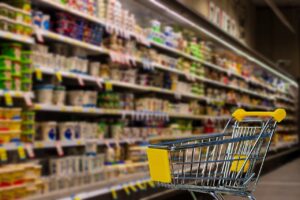
Some of America’s most recognizable discount and value retail chains trace their founding moments or their most aggressive expansion phases directly to economic downturns. During the Great Depression, when middle-class Americans suddenly found themselves with Depression-era budgets, a new kind of store discovered its audience. The stores that had always competed on price, the ones the prosperous years had made seem slightly embarrassing, suddenly had lines around the block.
Several of these companies used the Depression years not just to survive but to lock in real estate leases at collapsed prices, hire experienced retail managers who had nowhere else to go, and build the supply-chain relationships that would define them for the next half century.
The financial crisis of 2008 ran a nearly identical script. Dollar stores, discount grocers, and off-price apparel chains reported some of their strongest comparable sales growth in history during and immediately after the crash. Major dollar store chains significantly expanded their store footprints in the years following 2008, accelerating an expansion plan that the crisis had made dramatically cheaper to execute.
Debt, Insurance, and the Business of Other People’s Misery
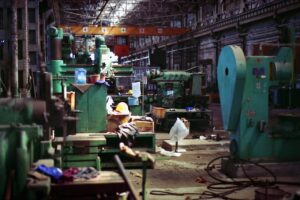
It’s less comfortable to talk about, but debt collection and distressed-asset acquisition firms have historically been among the most reliable crisis beneficiaries. When defaults spike, someone has to manage the paper. Banks sell off portfolios of bad loans at steep discounts to firms that specialize in recovery. Those firms, if they’re competent and well-capitalized, can generate substantial returns on assets they acquired for pennies.
The same pattern holds for certain insurance categories. Economic stress tends to increase fraud, litigation, and liability claims, which is bad for some insurers and very good for the specialty firms equipped to handle it.
None of this is nefarious, exactly. Markets need entities willing to absorb distressed assets. That function has genuine economic value. But it does mean that the business model only works when things are going badly for everyone else. Which sounds uncomfortable until you realize it’s exactly how parts of Wall Street have operated for over a century.
The Crisis That Built Big Grocery

The consolidation of American grocery retail has a long history, but some of its most decisive chapters were written during economic downturns. When small independent grocers couldn’t survive tightening margins and falling consumer spending, larger chains absorbed their locations, their supplier contracts, and their customer bases.
During economic downturns, including the Depression era and the years following 2008, regional grocery chains that had spent years competing on even terms suddenly found themselves with opportunities to acquire struggling rivals at distressed prices. The national footprint some of these companies have today was built, brick by brick, on the ruins of businesses that didn’t survive the crash.
Pharmaceutical and Healthcare Expansion
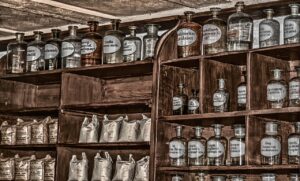
Health crises and economic crises don’t always overlap, but when they do, the companies positioned in essential healthcare, generic drug manufacturers, hospital supply chains, and certain diagnostics firms have historically seen demand hold steady or increase even as the broader economy contracts. People don’t stop needing medication because the stock market collapsed.
Some of the generic pharmaceutical companies built market share during downturns specifically because economic pressure pushed patients and insurers toward lower-cost alternatives. A recession is, functionally, a massive advertisement for the value proposition of generic drugs. The companies that had invested in manufacturing capacity before the crash were the ones positioned to capture that demand.
What the Pattern Actually Tells You

Here’s what’s easy to miss when you look at this list: none of these companies got lucky. They got structural. The ones that consistently made money during collapses had made deliberate choices before the crisis that positioned them to benefit, including cash reserves, recession-resistant product categories, and the operational capacity to move fast when opportunities appeared.
The uncomfortable implication is that America’s worst economic moments weren’t purely destructive. They were, simultaneously, the founding chapters of some of its most durable business empires. The wealth didn’t disappear. It moved.
Most people who lived through those collapses, who lost jobs, homes, and savings, never had a chance to be on the receiving end of that transfer. The companies that did weren’t operating illegally. They were just operating differently.
Whether that’s a story about capitalism’s resilience or its ruthlessness probably depends on which side of the ledger you were on.
This article was created with AI assistance and reviewed by the author. The review included fact-checking, clarity edits, references, and sourcing of images