


There was a time, not long ago by any historical measure, when an American wedding meant a church, a cake from someone’s kitchen, and a dress you might actually wear again. The reception was often a Sunday dinner, scaled up. The guests were people you already knew. The whole thing cost what a good suit costs.
That world is gone. According to The Knot’s annual Real Weddings Study (most recently published in 2026), based on responses from thousands of U.S. couples who married in 2025, the average American wedding now runs approximately $34,000, according to The Knot. Zola’s annual wedding spending survey (most recently published in 2026) put that number even higher, at approximately $36,000 up significantly since 2020, outpacing general inflation over the same period, a rate that has outpaced general inflation by a significant margin. A large majority of couples surveyed by Zola said they were worried that tariffs and continued inflation would push their final bills higher still.
Here’s the strange part: almost none of what drives that number is ancient custom. The white dress, the multi-tiered cake, the professional photographer, the catered dinner reception each of these became a standard wedding expectation within the last hundred years, often within the last fifty. And in most cases, a specific industry or marketing campaign helped push them there.
When White Became the Only Color

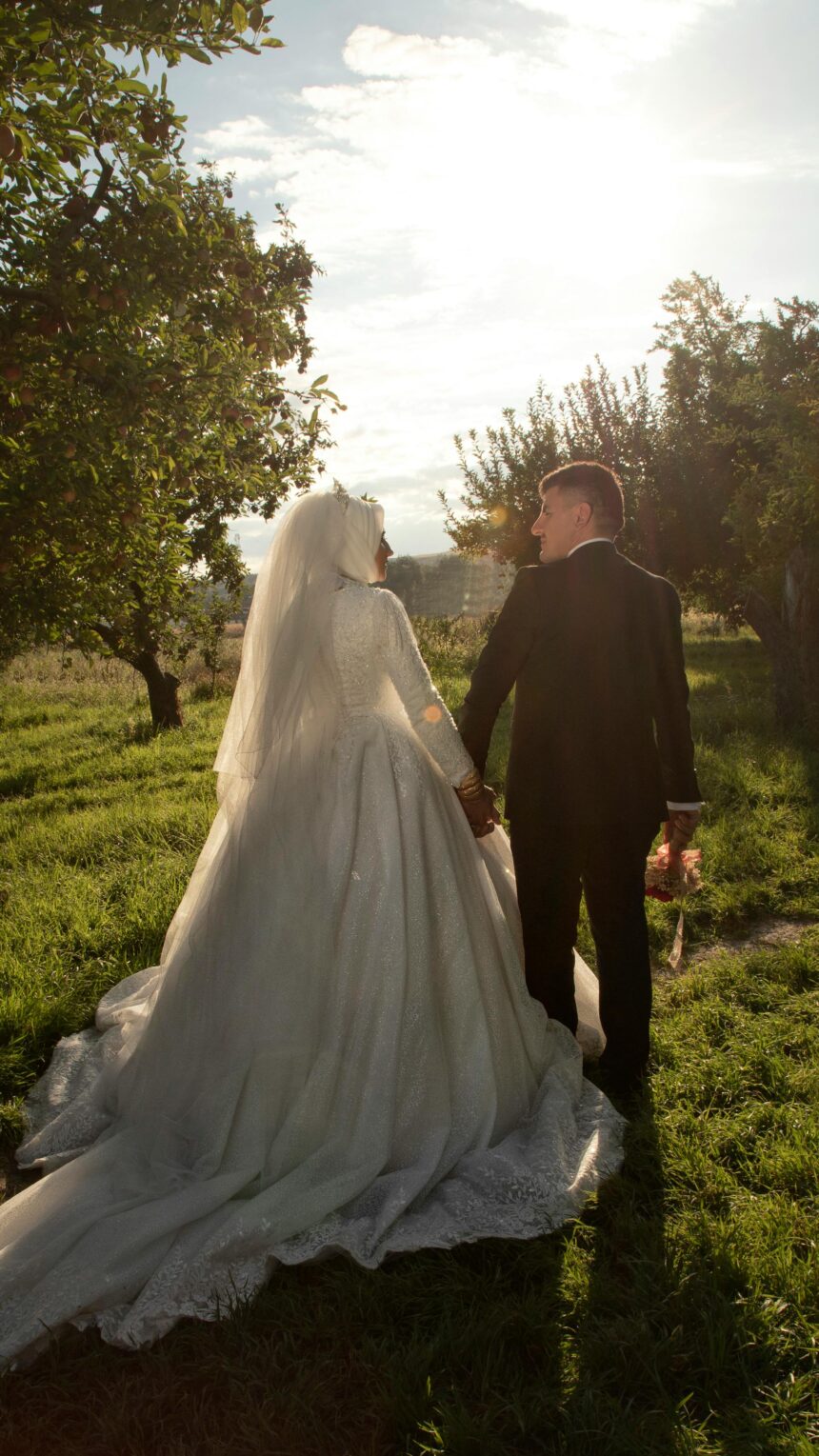
Queen Victoria wore white to her wedding in 1840. That fact is real. What’s less often told is how long it took for the trend to travel from British royalty to the American middle class, and what gave it its final, decisive push. For most of the 19th century and well into the 20th, American brides wore their best dress, whatever color that happened to be. White was expensive to keep clean and impractical to re-wear, which made it a luxury, not a norm.
The bridal fashion industry changed that calculation steadily through the mid-20th century, building magazines, retail departments, and eventually entire store chains around the idea that a bride needed a white gown purchased specifically for the occasion and worn only once. By the time the postwar economy gave American families real spending power, the white wedding dress had been so thoroughly marketed as tradition that most brides couldn’t imagine an alternative. The dress was the first item on a list that would keep growing.
The Cake, the Camera, the Caterer

The multi-tiered white wedding cake has a similar story. Tiered cakes existed in Victorian England as status symbols; their height depended on how skilled and expensive your baker was, but the elaborately frosted structure most Americans picture today was standardized by the baking and catering industries through the mid-20th century, partly through bridal magazine advertising and partly through the growth of commercial bakeries looking for high-margin seasonal products. A wedding cake became expected. Then it became elaborate. Then it became a line item on a budget that keeps surprising people.
Professional wedding photography followed a related arc. Before World War II, most wedding photographs were taken by a relative or a local portrait studio as a brief formality. The postwar decade produced a generation of professional photographers who saw an opportunity: a single day that couples would pay almost anything to remember correctly.
By the 1970s, the professional wedding photographer had become standard enough that skipping one felt like a mistake you’d regret forever. That feeling didn’t come from nowhere. It was cultivated carefully.
The catered reception, with its plated dinner and open bar, grew out of the same postwar prosperity. Before that, receptions were often held in church halls or family homes. They were modest, not because people didn’t care, but because modesty was the normal register for a celebration. What changed wasn’t human sentiment;t, it was the availability of commercial venues, catering companies, and a hospitality industry that had strong financial reasons to make the hotel ballroom feel like the only appropriate setting.
The Geography of What It Actually Costs

One thing the 2026 data makes clear is that the $36,000 average flattens a wide range of real experience. A 150-guest wedding in San Francisco runs approximately $85,000; the same wedding in a mid-tier Midwestern market like Milwaukee comes to significantly less. Same guest count. Same number of traditions observed. A $42,000 difference explained almost entirely by local market pricing for venues, catering, and labor.
Who pays also shapes what gets spent. The Knot’s data shows that weddings heavily funded by family cost nearly twice as much as those paid entirely by the couple. For luxury weddings topping $100,000, families tend to cover the majority of the total cost, according to industry surveys. There’s a logic to this: when the money comes from someone else’s savings, the ceiling rises. The wedding planner gets the call. The florist gets a larger budget. The guest list grows.
The Micro-Wedding Countermovement

Not everyone is following the script anymore. In 2026, A growing share of couples, roughly one in five by some industry estimates, chose micro-weddings with fewer than 30 guests, up from 15% in 2023. That’s a meaningful shift in three years, and the couples making that choice aren’t describing it as a compromise. They’re describing it as a preference, for intimacy over spectacle, for a dinner that feels like dinner instead of a production.
Some of them are getting married at a restaurant table. Some are getting married in a backyard. Some are doing exactly what couples did before the bridal industry existed: gathering the people who matter, making it meaningful, and spending what they actually have.
Which is, it turns out, how tradition worked before it became a product.
The industries that built the modern wedding understood something important: if you can attach a price tag to a feeling, people will pay it. The white dress felt like purity. The tiered cake felt like a celebration. The professional photographer felt like proof that it mattered. None of those feelings was invented by marketing, but the specific products attached to them were, each one, sold.
The $36,000 average is not the cost of love or commitment. It is the accumulated retail price of roughly a century’s worth of very effective selling. Whether the next generation keeps paying for it, or whether the micro-wedding quietly becomes the new norm, is one of the more genuinely interesting questions in American consumer behavior right now.
<h3>Sources</h3>
<ul class=”article-sources”>
<li><a href=”https://www.zola.com/expert-advice/whats-the-average-cost-of-a-wedding” rel=”noopener noreferrer”>Zola. What’s the Average Cost of a Wedding?</a>, Primary source for 2026 wedding cost data, Zola Wedding Spend Survey figures, and micro-wedding trend statistics</li>
<li><a href=”https://www.theknot.com/content/average-wedding-cost” rel=”noopener noreferrer”>The Knot, 2026 Real Weddings Study</a>, Source for $34,200 average figure, 10,474-couple sample, family-funding cost ratios, and geographic cost comparisons</li>
</ul>
This article was researched, written, and edited by our human editorial team. AI tools were used in a limited research-assistant capacity. All claims were independently verified.