

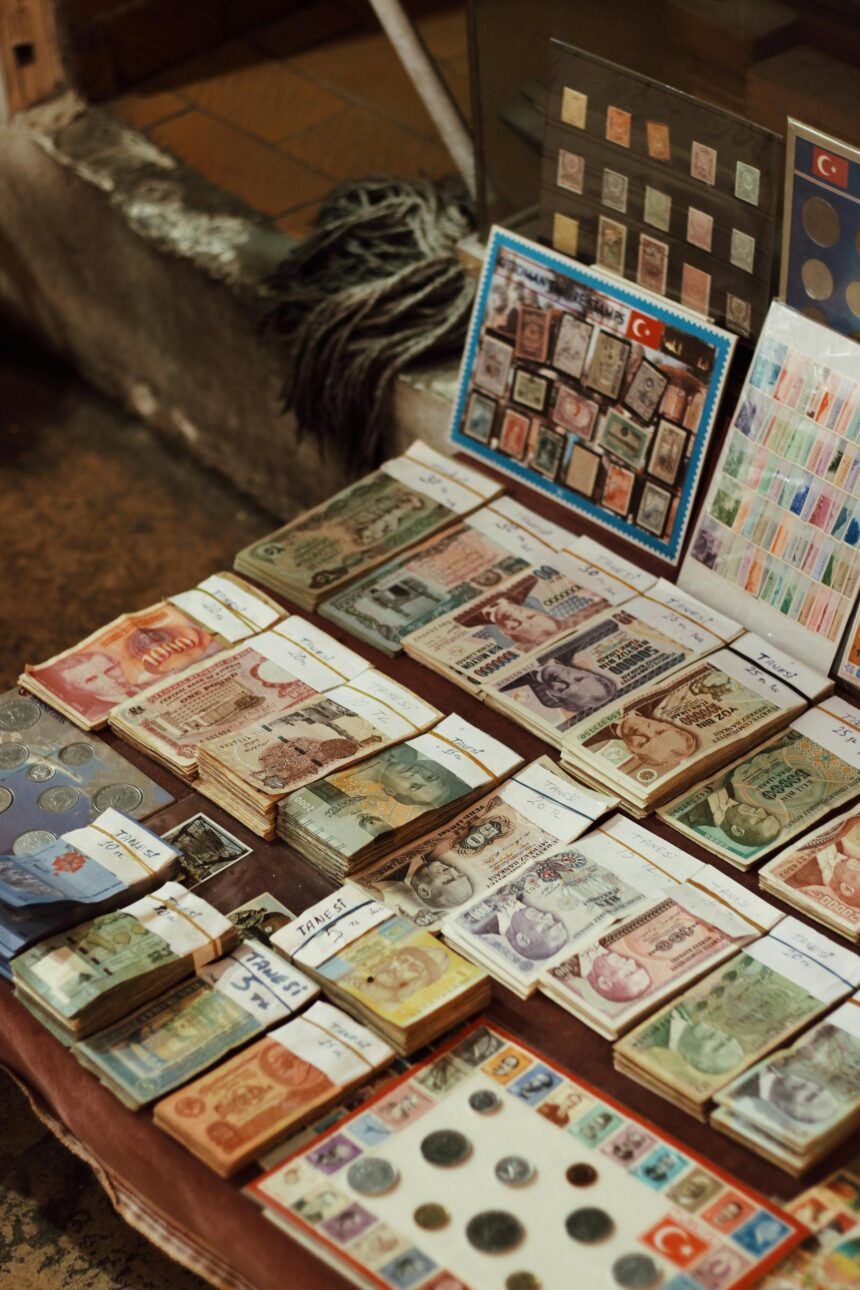
In the spring of 1979, an Iranian family saving money for a refrigerator, a wedding, a child’s education, held rials that felt solid. One US dollar costs them roughly 70. Their savings had weight. Then came four decades of sanctions, money printing, political isolation, and a series of policy decisions that, one by one, hollowed out every bill in their wallets. By late April 2026, the rial had crossed approximately 1.8 million per dollar, according to Al Jazeera reporting. The same currency that traded at 70 to the dollar now requires more than 1.8 million of itself to buy one. A loss of value roughly 20,000 times over, according to reporting by Al Jazeera within a single human lifetime. And here’s the strange part: most people outside Iran barely noticed until the protests began. For years, Iran’s government tried to manage the pain through what economists call a subsidized exchange rate.
As recently as 2018, Iran’s central bank held an official rate of 42,000 rials per dollar for essential imports, such as food, medicine, and industrial parts. The idea was to shield ordinary Iranians from the worst of the open-market rate, which had already climbed far higher. In practice, it created two parallel economies: one on paper, one on the street corner. That gap between the official rate and the real one fed a black market, rewarded those with government connections, and drained foreign reserves. When the subsidized rate was formally scrapped in the early 2020s, the fiction ended. The official number finally caught up with the street. And the street was brutal. What the subsidized rate had done, in a way, was delay the reckoning while making it worse.

Artificial exchange rates have a habit of doing exactly that. They compress the damage into a shorter, sharper window when they finally break, and they always break. The rial had been falling for years. But the drop in early 2026 was different in scale. In January of that year, the currency had already passed well over one million rials per dollar.81 million. The Strait of Hormuz is the narrow channel through which a large share of Iran’s trade passes. Estimates typically range from roughly 70 to over 80 percent of its seaborne trade. Close it, or even make it unreliable, and you have not merely disrupted trade.
You have told the world that Iran cannot reliably import or export anything. Currency markets responded the way they always do when a country’s lifeline is cut: they sold. Mass protests followed inside Iran, according to Al Jazeera’s reporting. People who had watched their savings erode for years found themselves holding money that had lost all remaining pretense of value. The IMF, for its part, estimated Iran’s economy would contract significantly in 2026, according to IMF projections, with inflation running at elevated double-digit levels, according to IMF projections. China, long Iran’s largest remaining trading partner, had cut its bilateral trade with Iran sharply year-on-year in early 2026, according to trade data.
Even the buyer of last resort had pulled back. The rial’s story is extreme, but the mechanics behind it are not unusual. Currencies collapse when several forces align: persistent sanctions that cut off foreign exchange earnings, central banks that print money to cover government deficits, loss of trading partners who might otherwise provide a floor, and governments that delay hard reforms until the delay itself becomes the catastrophe. Iran experienced all of them, in sequence, over four decades. Sanctions beginning in the early 1980s cut Iran off from global dollar clearing. Without access to dollar-denominated trade, Iran couldn’t easily accumulate the foreign reserves that act as a currency’s shock absorber. Its central bank filled the gap by printing rials. More rials chasing fewer goods, the oldest inflation story there is. Then came the nuclear-related sanctions of the 2000s and 2010s, which deepened the isolation.

Then, the 2018 US withdrawal from the nuclear deal and the reimposition of sweeping sanctions. Each wave pushed the open-market rate higher. Each wave made the subsidized official rate a bigger and more expensive lie to maintain. By 2022, the lie was no longer affordable. And by 2026, the blockade removed the last illusion that the situation might stabilize. There is something worth sitting with in that original figure: 70 rials to the dollar in 1979. It is a number that belongs to a different world, one where Iranian families planning a wedding or saving for a new stove were doing so in a currency that still carried recognizable weight. Twenty thousand times. That is the gap between that world and this one.
We talk about inflation in single digits, sometimes low double digits, as though those numbers represent genuine hardship, and they do, for the people living through them. But they exist on a different planet from what happens when a government loses the trust of its own population entirely, when the currency becomes something people convert out of the moment they receive it, when holding cash feels less like saving and more like watching ice melt. How strange it is to remember that every currency in the world started somewhere like 70.
The rial’s collapse will be studied for a long time, not as a curiosity from a distant country, but as a clear-eyed record of what happens when political decisions and economic realities diverge for long enough. Sanctions alone don’t kill a currency. Printing alone doesn’t either. It is the combination, isolation plus money creation plus artificial rates held too long plus the final shock of physical blockade, that produces a number like 1.81 million. Most people in 1979 Tehran didn’t see it coming. Most people never do. This article was researched, written, and edited by our human editorial team. AI tools were used in a limited research-assistant capacity. All claims were independently verified.