


On April 6, 2026, four astronauts inside an Orion spacecraft (Artemis II) were more than 250,000 miles from Earth farther from home than any human being had ever been. The record they broke had stood since April 1970, when the crew of Apollo 13 drifted to 248,655 miles during their crippled return from the Moon. Apollo 13 broke that record by accident, trying to survive. Artemis II broke it on purpose, in the middle of a seven-hour science observation window that most of the launch-day coverage never got around to explaining.
Here’s what actually happened up there.
The Mission Most People Watched and the One They Missed
NASA’s Artemis II ran in early April 2026, carrying commander Reid Wiseman, pilot Victor Glover, mission specialist Christina Koch, and Canadian Space Agency astronaut Jeremy Hansen. It was the first crewed lunar flyby since Apollo 17 in December 1972, a gap of more than 53 years.
Koch, on that mission, became the first woman in history to complete a lunar flyby. That fact got a headline. What got less attention was the science the crew conducted during their closest approach, and specifically what the human eye can detect, record, and process that no robotic probe has ever quite replicated.
The crew had dozens of designated science targets to observe during their observation window. Thirty. That is not a casual sightseeing pass. That is a working shift.
What Seven Hours at the Moon Looks Like
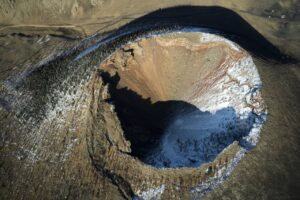
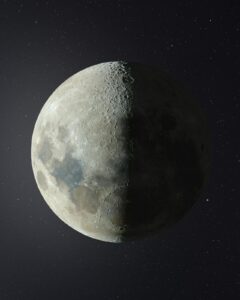
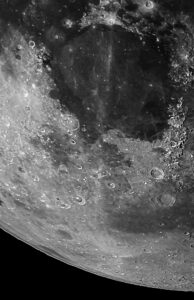
One of the primary targets was the Orientale basin, a crater roughly 600 miles wide that straddles the boundary between the Moon’s near and far sides. From Earth-based telescopes, the Orientale basin is almost impossible to observe directly, it sits at the very edge of the Moon’s visible face, foreshortened into near-invisibility by geometry. From the Integrity, the crew could look at it straight on.
That matters more than it sounds. Orientale is one of the largest and most structurally intact impact basins in the inner solar system, and its concentric ring structure tells geologists something about the Moon’s early crust that flat photography from lunar orbit has never fully resolved. Having human observers document it in real time, with the flexibility to adjust camera angles, note transient lighting conditions, and flag anomalies on the fly, is qualitatively different from automated imaging passes.
But the Orientale basin was not the moment anyone on that spacecraft will remember first.
The Light Show That Hadn’t Been Seen Since 1972
During the observation window, the crew may have observed an Earthset, the Earth sinking below the lunar horizon, and then, from the far side, potentially an Earthrise. The Earthrise photograph from Apollo 8 in December 1968 is one of the most reproduced images in human history. The Artemis II crew watched it happen in real time, not through archival prints.
Then came something stranger. Still in the far-side pass, the crew witnessed a solar eclipse from deep space, the Moon blocking the Sun as seen from the Orion capsule, producing a corona of light around a dark disc in a way that no human being had experienced since the Apollo era. The eclipse lasted nearly an hour. That duration alone sets it apart from anything visible from Earth’s surface, where totality typically lasts a few minutes.
And here’s the thing that tends to get buried in the technical briefings: for roughly 40 minutes of that pass, the crew was completely unreachable. The Moon itself was blocking every signal between Integrity and Earth. No telemetry. No voice. No data. Among the longest communications blackouts in human spaceflight history, according to NASA.
Forty minutes of silence, 252,000 miles out. The crew was not in distress. They were working.
Why the Science Window Matters More Than the Distance Record
Source: Pexels
The distance record is the easier story to tell, a number, a comparison, a superlative. But the Artemis program is not built around records. It is built around preparation, and the April 6 observation window was, in a specific technical sense, a dry run for the lunar surface missions that follow.
What the crew learned during those seven hours about visibility conditions, camera behavior in deep-space lighting, the practical challenges of tracking a moving target like the Orientale basin across a shifting terminator line, that data feeds directly into planning for Artemis III, which is intended to put humans on the lunar surface for the first time since 1972. Human observers are not just passengers in this process. They are instruments.
There is an old argument in space science about whether crewed missions justify their cost compared to robotic ones. The Artemis II observation window did not settle that argument. But it made a specific, concrete case: a human crew can repoint, reframe, and respond to what they are seeing in ways that a pre-programmed probe cannot. The 30 science targets were a framework. What happened inside that framework was improvised, adaptive, and unrepeatable.
The Record That Actually Matters
The number 252,760 miles will appear in reference tables for a long time. It is a real record, and it belongs to four real people who were calm enough during the farthest human journey in history to spend the time doing science.
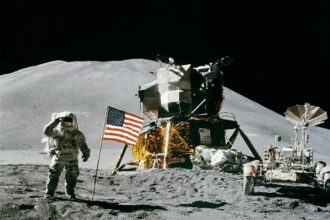
Christina Koch, Reid Wiseman, Victor Glover, and Jeremy Hansen flew around the Moon and came back. The last crew to do that was Gene Cernan, Harrison Schmitt, and Ronald Evans in December 1972. Between those two missions, every human being who has ever lived was confined to low Earth orbit or closer.
That is the number worth sitting with. Not 252,760. Not 248,655. The one that measures the gap between 1972 and now, and what it cost, in time and patience and engineering and political will, to close it.
The Artemis II crew spent seven hours at the Moon watching the Earth rise and set. Whatever comes next, they were the first people in more than half a century to see it.
This article was researched, written, and edited by our human editorial team. AI tools were used in a limited research-assistant capacity. All claims were independently verified.