


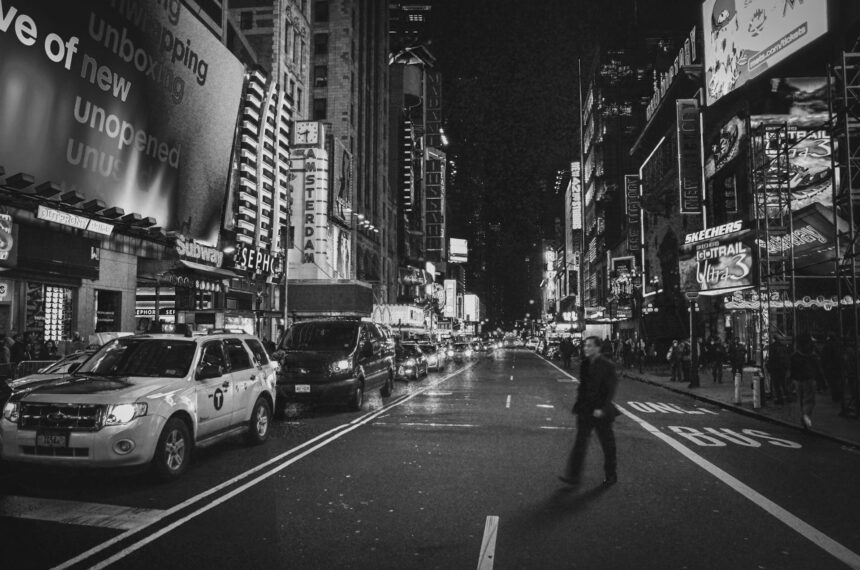
On the night of July 13, 1977, the lights in New York City went out. Not in one neighborhood. Not in one borough. Everywhere. Streetlamps, storefronts, subway tunnels, hospital corridors — dark. The city that had always announced itself in neon and fluorescence went quiet in a way it never had before and, most would argue, never has since.
By morning, more than 1,600 fires had been set. Thousands of storefronts had been looted across Brooklyn, the Bronx, and Harlem. Nearly 3,800 people had been arrested. And a city already teetering under the weight of fiscal collapse, population flight, and decades of deferred maintenance had shown the country something it had been trying not to look at directly:
American cities were in a kind of trouble that no one in Washington had a tidy answer for.
What happened in the months and years that followed is the part most history classes skip.
The City Washington Had Decided to Let Fail

New York in the summer of 1977 was not the New York of tourist brochures or movie premieres. It was a city that had nearly gone bankrupt two years earlier, that had watched its middle class decamp to the suburbs through the late 1960s and early 1970s, and that was running municipal services on something close to faith and borrowed time.
The famous headline, the one about President Ford telling the city to drop dead — the Daily News headline “FORD TO CITY: DROP DEAD,” published on October 30, 1975,, captured the mood in Washington with uncomfortable accuracy. Cities were seen, in certain policy circles, as problems of their own making.
The blackout cracked that argument open. Because what the looting revealed, and what made it different from the 1965 blackout, which had passed with almost no disorder, was not simple criminality. It was the visible result of years of disinvestment.
The neighborhoods that burned and looted were the same ones that had lost the most jobs, the most services, the most investment, in the decade prior. Historians have since pointed to the 1977 blackout as the moment when urban decline stopped being an abstraction in policy conversations and became undeniable footage, burned into the national memory.
And here’s the strange part: it took a night of chaos to produce years of serious thinking.
The Policy Shift That Came Through the Back Door
Source: Unsplash
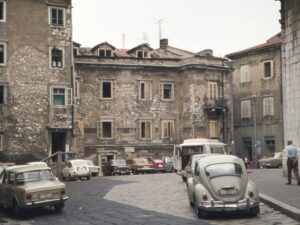
In the years right after the blackout, something shifted in how federal and city officials talked about neighborhoods. Not loudly. Not through landmark legislation. Quietly, through the kinds of adjustments that rarely make the evening news but change how cities look for decades. Community development funding, which had existed in various forms since the Housing Act of 1974, started moving with more urgency toward distressed urban areas.
The idea behind what would eventually become enterprise zones, tax breaks for businesses willing to invest in high-poverty neighborhoods, picked up serious momentum in policy circles through the late 1970s, in part because of what the blackout had made impossible to ignore.
Cities began rethinking how they handled neighborhoods that had been, effectively, written off. None of this was a straight line. None of it was fast. But historians who study urban policy in the late twentieth century have noted, with some consistency, that the blackout served as a kind of forcing function. It compressed years of slow-moving debate into a single news cycle that the country couldn’t change the channel on.
What the Looting Actually Showed
Source:
There is a version of the 1977 blackout story that treats the looting as the story. Television coverage at the time leaned heavily on images of broken glass and burning buildings. That framing stuck. But the fuller picture is more complicated and, in some ways, more useful.
The neighborhoods where disorder was most concentrated had seen their populations decline sharply in the preceding decade. Manufacturing jobs that had sustained working-class families in those areas had moved out, first to suburbs, then out of the region entirely. Landlords had walked away from buildings. City services had been cut as the fiscal crisis deepened. The social infrastructure that holds a neighborhood together had been thinned down to almost nothing.
What the blackout revealed, in the most visceral possible way, was what happens at the bottom of that kind of long, slow erosion. It wasn’t a surprise to the people who lived there. It was a surprise to everyone else.
Urban scholars have returned to those 25 hours repeatedly, not because the blackout caused urban decline, but because it made the consequences of urban decline impossible to ignore. You can look away from a trend line in a policy report. You cannot look away from a city on fire.
The Decade That Followed

The 1980s brought a different political climate. Less interested, in general, in writing checks to cities. And yet the decade after the blackout saw a slow buildup of local and federal programs aimed at exactly the kinds of neighborhoods that had made the news on that July night. Community development corporations, nonprofits focused on rebuilding housing and economic life in distressed areas, grew fast through the late 1970s and 1980s. The Low-Income Housing Tax Credit, passed in 1986, became the main tool for rebuilding affordable housing in urban America. Its logic traced directly back to the kind of problem the blackout had put on television.
New York itself began the slow, uneven process of rebuilding the neighborhoods hit hardest. The South Bronx, which by 1977 had become a national shorthand for urban collapse, was the place President Jimmy Carter walked through that October, picking his way through rubble while cameras rolled. The rebuilding that followed was slow, contested, and incomplete. But it happened.
What a Single Night Actually Changed

Here’s the thing. Historians aren’t arguing that the blackout wrote any legislation. That’s not how it worked. The argument is simpler: the blackout changed the room. It gave urgency to conversations that had been stalling in committee for years. It made it harder for officials to describe inner-city poverty as something that just happened, rather than the result of specific choices made by specific people over specific decades. You can debate a policy memo. You cannot debate 25 hours of live footage from a burning city.
That is a quieter kind of influence than a new law. But in some ways it is more durable. Laws get amended, defunded, reversed. The image of a city going dark and what came after it, that stayed. It shaped how a generation of urban planners, community organizers, and local politicians understood what their job actually was.
How strange it is to think that 25 hours without electricity may have done more to shift that understanding than anything Congress put on paper in the same decade.
This article was researched, written, and edited by our human editorial team. AI tools were used in a limited research-assistant capacity. All claims were independently verified.