

In the spring of 1861, when Texas voted to leave the Union, most of the German-settled counties in the Hill Country voted no.
That fact alone is striking. But the more you look at what these settlers had built and what they were willing to risk to protect it the stranger and more significant the story becomes.
The German communities of the Texas Hill Country were not accidental. They were the product of a deliberate colonization effort, organized in the early 1840s by a group of German noblemen who formed a society specifically to relocate German emigrants to Texas.
The plan was ambitious, underfunded, and repeatedly mismanaged. Thousands of immigrants arrived at the Texas coast in the mid-1840s, many of them sick, stranded, and broke. The society that had promised them land and support collapsed under debt. But the settlers kept moving inland.
What they built in the Hill Country, over the next two decades, was something that had no real parallel anywhere else in antebellum Texas.
A Society Built on Different Assumptions
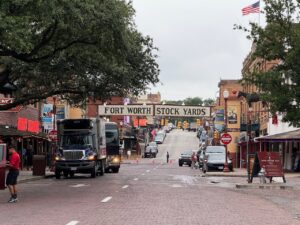
The German settlers established towns. Fredericksburg, New Braunfels, and Comfort, that had newspapers, schools, and civic institutions within years of their founding. They built roads connecting their communities when the state wouldn’t. They established courts and local governance structures that functioned in German as well as English. They formed singing societies, debating clubs, and Turner associations, the gymnastic-political organizations that were, in Germany, closely linked to liberal democratic ideals.
And here’s the thing most Texas history classes skip: a significant portion of these settlers were political refugees. The failed revolutions of 1848 in the German states had driven educated liberals, lawyers, doctors, journalists, professors, out of Europe and into Texas. These were people who had fought for constitutional government and lost. They had opinions about slavery. They had opinions about secession. And unlike most white Texans of the era, they were willing to say them out loud.
The town of Comfort, in particular, became known as a center of freethinker politics. The settlers there were largely irreligious, deeply skeptical of the plantation economy, and philosophically committed to the idea that forced labor was incompatible with the democratic principles they had crossed an ocean to practice.
None of this made them abolitionists in the modern sense. The picture is complicated. Some German settlers did own enslaved people. Others participated in the broader Texas economy in ways that depended on slavery’s existence. The German Hill Country was not a moral island, floating free of its context. But the community’s dominant culture, its newspapers, its political organizations, its public discourse, was hostile to the expansion of slavery and, increasingly, to the Confederate project.
What the Vote Meant
When Texas held its secession referendum on February 23, 1861, the results in the Hill Country counties were distinctive. While the state voted to secede by a wide margin, several of the German-majority counties returned majorities against secession. Gillespie County, home to Fredericksburg, was among them.
This was not a symbolic gesture. Voting against secession in Texas in 1861 was a statement with consequences.
The Confederate government moved quickly to assert control over dissenting areas. Texas passed a loyalty oath requirement, and men who refused to swear allegiance to the Confederacy faced serious legal and physical danger. In the Hill Country, enforcement was carried out with particular harshness. Armed units were deployed to the region to compel compliance.
In the summer of 1862, a group of German Unionists tried to walk out of Texas entirely. Rather than serve in the Confederate Army, they headed for Mexico. Confederate forces caught them at the Nueces River and hit the camp before dawn. About 34 men died, some fighting back, others shot after they’d already surrendered. The survivors ran. Nobody buried the dead.
For years, the bones stayed on the riverbank. After the war ended, survivors and relatives went back and gathered what remained. They carried the bones to Comfort and put up a monument, one of the only Civil War memorials in the South that honors men who died for the Union. It still stands. The inscription reads Treue der Union. Loyal to the Union.
What They Were Protecting
Source: Pixabay
The German settlers’ resistance wasn’t simply ideological. It was also practical. They had built something in the Hill Country that the Confederate economy threatened to erase.
Their towns ran on free labor. Their own. The Hill Country’s rocky terrain wasn’t suited to large-scale cotton farming, the kind that pushed the plantation economy east and south. German farmers raised livestock, grew what they needed, traded with neighbors. Enslaved labor didn’t fit that model. They’d built without it, and they meant to keep building that way.
Here’s the thing. An economy built on free labor had a real stake in protecting free labor politically. Secession, from where these settlers stood, wasn’t about liberty in the abstract. It was a direct threat to the specific thing they’d crossed an ocean to build.
The newspapers published in German in Fredericksburg and New Braunfels made this argument explicitly. They were read. They were discussed. They shaped how a community understood its own interests.
After the war, the Hill Country German communities largely aligned with the Republican Party during Reconstruction. Some of this was pragmatic. Some of it was principled. The communities that had resisted the Confederacy were not, as a rule, eager to restore the political order it had represented.
That alignment faded over generations, as it tends to do. By 1917, speaking German in public across Texas had become socially dangerous and, in some places, legally risky. The language retreated. By mid-century, much of the specific political memory of the 1860s resistance had been folded into a broader Texas identity, smoothed over and mostly forgotten.
But the monument in Comfort didn’t move. The inscription didn’t change.
Treue der Union. The bones under it belonged to men who had voted no in 1861, refused to swear an oath to a government they hadn’t chosen, and tried to walk out of Texas rather than fight for something they believed was wrong. They didn’t make it.
The monument is what’s left of that decision, and it remains one of the stranger, quieter facts about what the Confederacy actually was: a project that not everyone in the South accepted, including people who had come a very long way specifically to build something different.
This article was researched, written, and edited by our human editorial team. AI tools were used in a limited research-assistant capacity. All claims were independently verified.