


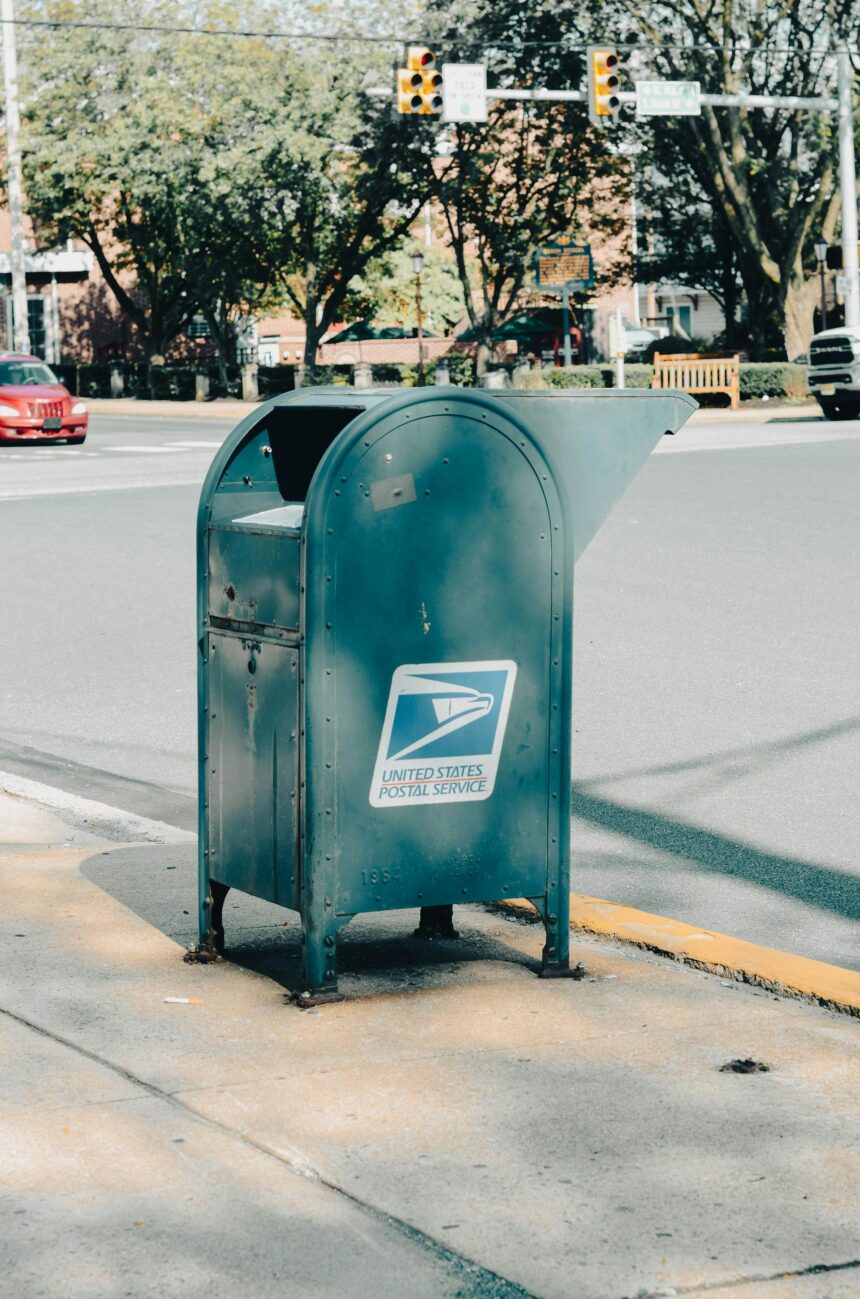
In the flattest country in America, a letter could travel 200 miles by train and still not reach the person it was meant for. Not because the postal system failed. Because it never tried.
Across the Mississippi Delta during the postwar decades, something unusual took shape in the spaces the federal government left empty. Rural Black communities sharecropper settlements, church clusters, tenant farm rows developed their own informal infrastructure for moving correspondence, small packages, and money orders through networks that operated entirely outside official postal channels.
No federal charter. No postmaster general oversight. No record in the National Archives.
And here’s the strange part: it worked. For years.
What the Official Map Left Out

The U.S. Post Office Department operated on a route logic that made sense in cities and in white rural communities with consolidated landholding. You needed a named road, a numbered address, a permanent structure. In the Delta, that description covered a fraction of where people actually lived.
Sharecropper cabins sat at the ends of unmarked dirt lanes on private plantation property. Some settlements had no names that appeared on any county map. Families might move several times in a decade, following the rhythm of crop contracts and landlord disputes. The formal postal infrastructure had no mechanism for this. Rural free delivery routes bypassed much of the Delta’s interior, serving the plantation owner’s address at the road’s edge, not the workers’ quarters a half-mile back.
The result was a gap so large it functioned almost like policy. Whether it was policy in any deliberate sense is a question historians still argue. The effect, regardless of intent, was the same: a substantial portion of the Delta’s rural Black population, numbering in the tens of thousands by some estimates had no reliable way to receive mail at home.
How the Network Filled the Space

The informal systems that emerged weren’t invented wholesale. They grew from existing social structures, the church, the juke joint, the general store, the barber shop. These were already the connective tissue of rural Black life in the Jim Crow South. Mail became one more thing they carried.
A trusted person in each community, often a deacon, a schoolteacher, or a small business owner, would receive correspondence addressed to a single general address, usually a store or church, and distribute it from there. Some of these hubs served dozens of families. A few served what amounted to entire small communities, holding mail for people who might not pass through for a week or more.
The movement of money was more urgent and more elaborate. Remittances from family members who had migrated north during the Great Migration, particularly its second wave, which was still ongoing in the 1950s needed to reach people who had no bank account, no post office box, and no street address.
Money orders made out to a community hub, then subdivided and passed along through personal trust networks, were common. So were informal couriers, people who made regular runs between Delta settlements and nearby towns, carrying letters and small packages for neighbors the way a rural mail carrier might, but without the uniform or the federal salary.
Churches played a particular role that hasn’t received much scholarly attention. Sunday services pulled in people from scattered areas once a week. The deacon handed out letters after the closing hymn. The church secretary tracked who was waiting on what. In some congregations in Delta towns, communities like those around Greenville and Clarksdale, among others, this became so routine that the building was doing two jobs at once: saving souls on Sunday morning, sorting mail by noon.
The Question of Federal Awareness

Whether federal postal authorities knew about these parallel networks and chose to ignore them rather than fold them in is genuinely unclear from the documentary record. What is clear is that no official accommodation was made.
Civil rights organizations working in the Delta through the late 1950s and into the 1960s kept running into the same wall. Voter registration drives depended on mail. You had to send materials out, confirm appointments, keep organizers connected across county lines.
But communities with no reliable delivery couldn’t get any of it. So the informal networks that had been moving birthday cards and rent money got pressed into political work too. Nobody planned it that way. That’s just what happens when the only system available gets handed a new job.
Here’s the thing. The people running these networks had every reason not to write any of it down. A letter from a civil rights organization arriving at a plantation church, passed from the deacon to families living on that same plantation, putting that on paper was dangerous in a county where the sheriff might be the plantation owner’s cousin.
So the records, such as they are, may live in oral history archives, in church annals that were never digitized, in the occasional mention buried in the correspondence of civil rights workers who noted, in passing, that they were sending materials “through the network” without explaining what that meant.
What Changed and What Didn’t

Postal access in the rural South improved incrementally through the 1960s and into the 1970s, driven partly by civil rights legislation, partly by rural development programs, and partly by the slow consolidation of rural addresses as part of broader infrastructure projects.
Federal rural development and community action programs and related federal programs began requiring legible address systems as a precondition for receiving certain funding, which pushed counties to formalize what had been informal.
The informal mail networks didn’t disappear overnight. Some persisted well into the 1960s in the deepest rural areas of the Delta, not because the formal system hadn’t reached those communities yet, but because the trust infrastructure that had built up over years didn’t dissolve just because a postal route now technically existed. People kept picking up their mail from the church for years after they could have redirected it. Habit, and the social function of the exchange, outlasted the necessity.
There’s a version of this story that treats the informal network as a failure of federal governance, which it was. There’s another version that treats it as an example of community self-sufficiency filling a gap, which it also was. Both things are true simultaneously, and that’s precisely why it resists easy summary.
What it resists most is the implication that these communities were simply waiting for the government to reach them. They had built something that worked. The tragedy isn’t that they needed it. The tragedy is how long they needed it.
The church secretary who distributed Sunday mail is not in any federal archive. Her name, her congregation, the families she served, none of it was recorded by anyone with an official title. But the letters she handed out reached people who otherwise wouldn’t have gotten them. That’s a postal system. It just didn’t come with a stamp.
This article was researched, written, and edited by our human editorial team. AI tools were used in a limited research-assistant capacity. All claims were independently verified.