


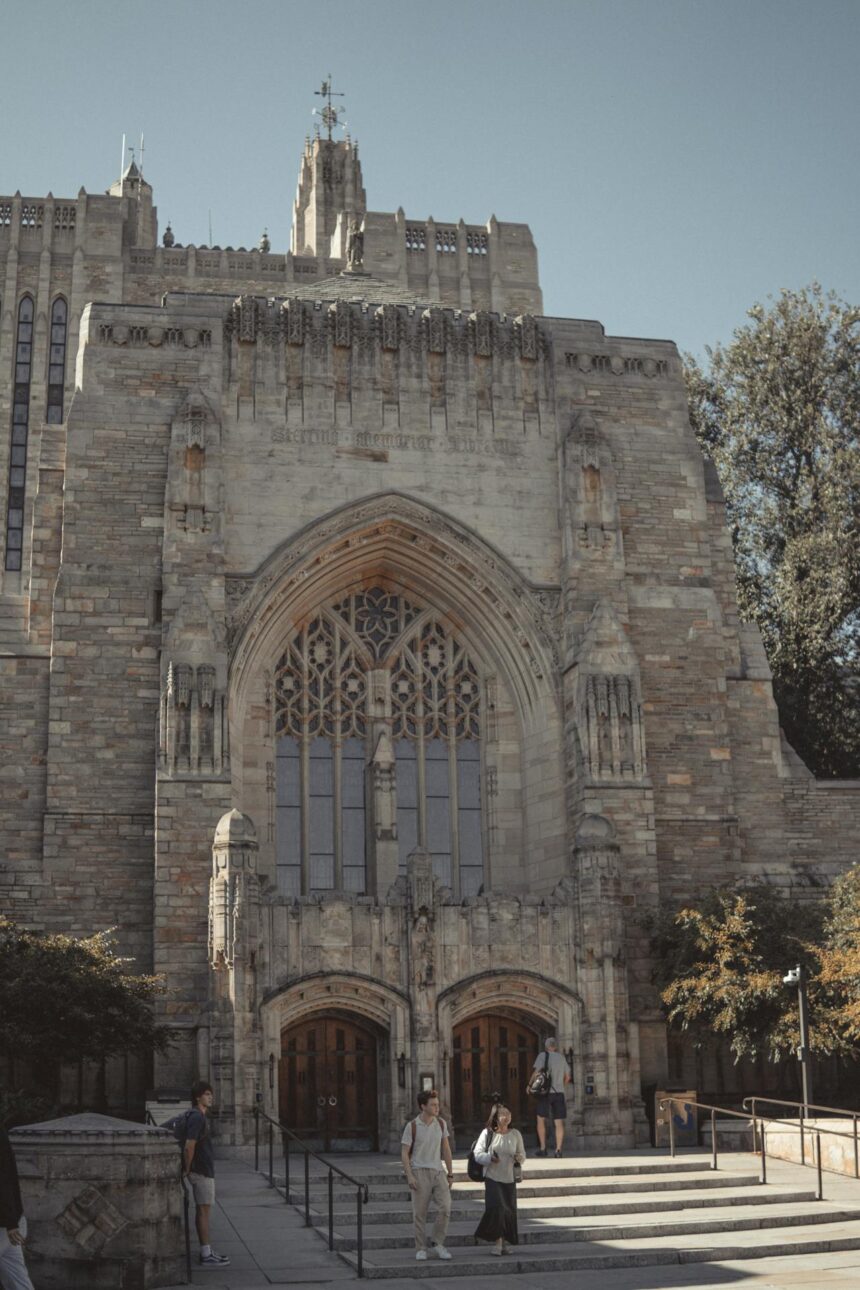
In 1883, Andrew Carnegie wrote a check to his hometown of Dunfermline, Scotland, and started something that wouldn’t stop for nearly four decades. By the time his library-building program wound down around 1919, he had funded more than 2,500 public libraries across the United States, the United Kingdom, Canada, and beyond. The American share alone ran to roughly 1,700 buildings.
That’s not the interesting part. The interesting part is what he required in exchange.
Carnegie didn’t simply donate buildings. He donated building grants, and the difference matters enormously. Every municipality that wanted Carnegie money had to agree to a specific set of conditions before a dollar changed hands:
The town had to demonstrate genuine public need, provide a suitable building site at its own expense, and this is the part that set the whole arrangement apart, commit to funding the library’s annual operations at roughly ten percent of the original grant amount. In practice, that meant the gift was never really free. A town that accepted $50,000 for a building was promising to spend $5,000 every year, in perpetuity, out of local tax revenue. Carnegie called it the “gift that keeps on giving.” Local aldermen occasionally called it something less charitable.
The Architecture Wasn’t an Accident
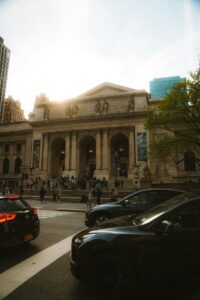
Here’s the thing most people miss when they walk into one of the surviving Carnegie libraries: the design was as deliberate as the financing. Carnegie’s program, administered through his personal secretary James Bertram after the program’s administrative structure was formalized in the early twentieth century, eventually issued a set of standardized architectural guidelines, sometimes called “Notes on the Erection of Library Buildings” [sic], that pushed applicant towns toward a recognizable model.
Neoclassical or Beaux-Arts facades. Raised entrances with stone steps. Prominent windows to signal openness and light. A central reading room positioned to draw visitors through the building rather than toward a desk or a gate.
Carnegie had grown up poor in Dunfermline, the son of a hand-loom weaver, and he credited every scrap of his self-education to a private lending library opened by Colonel James Anderson in Allegheny, Pennsylvania. Those steps that make you feel like you’re climbing toward something?
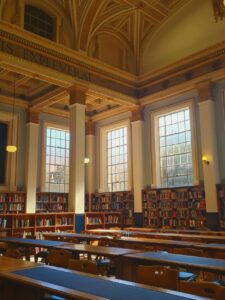
Not decorative. The open floor plan, the tall windows flooding the reading room with afternoon light, these were arguments, built in stone. A library should feel like a public institution in the truest sense: available, dignified, worth the walk.
Bertram grew impatient with towns that proposed cramped or eccentric designs and began rejecting applications that strayed too far from the model. Some requests went back and forth for years. A few towns gave up. Others quietly redesigned their proposed buildings to match what New York was willing to fund. The result, visible in towns from Maine to Oregon, is a loose but unmistakable visual family: buildings that look, at a glance, like they were drawn from the same source.
Why So Many Survived When Everything Else Didn’t
Source: Pexels
Of the roughly 1,700 Carnegie libraries built in the United States, a substantial majority are still standing. That is a survival rate that would be remarkable for any building type, let alone one built for public use between roughly 1889 and 1917. Post offices from that era are largely gone. Schoolhouses have been demolished or converted. Train depots became restaurants or sat empty until they fell. Carnegie libraries became yoga studios, town halls, museums, law offices, apartments, and, in many cases, still libraries.
Solid construction helped. Bertram’s office was skeptical of towns that proposed cheap materials to stretch a grant, so brick and stone were standard, foundations were deep, and the buildings were built to outlast the people who commissioned them. That’s part of it.
But the more durable reason is civic psychology. You probably live within an hour of one of these buildings. The town that got it fought for it. They submitted applications, secured land, persuaded the council to accept an ongoing tax commitment, and put their name on the cornerstone. When the building aged, there was already a local constituency for saving it. Not always, some were lost. But the survival rate says something real about what happens when a community has skin in the game from day one.
The Condition Nobody Talks About
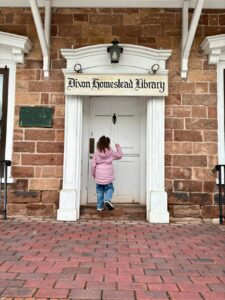
Carnegie’s grants excluded one category of city almost entirely: towns that refused to levy a public tax for library support. This sounds obvious now, but in the late nineteenth century,y it wasn’t. Public libraries funded by taxation were still a contested idea in many parts of the country.
Some towns believed private subscription or church-affiliated reading rooms were the appropriate model. Carnegie disagreed, and he made his disagreement structural. If a town’s government wouldn’t commit public funds to sustain a public library, Carnegie wouldn’t build one there.
The effect was to accelerate a legal and political shift that was already underway. States had been passing library tax-enabling legislation since the mid-nineteenth century, but the laws sat dormant in places where there was no pressure to use them. Carnegie’s grant requirements created that pressure
. Towns that wanted the building had to activate the law. Towns that activated the law hired librarians, built collections, and established governance structures that outlasted Carnegie’s program by a century.
He used philanthropy as a policy lever. Full stop. Carnegie identified the institutional infrastructure he wanted to exist, made his money conditional on building it, and stepped back. By the time the program ended, the public library tax wasn’t a novelty. It was just how things worked. And that shift didn’t happen because of legislation or a federal mandate; it happened because one man in Pittsburgh decided to attach strings to his checks and wait.
Dry as that sounds, it is one of the more effective pieces of social engineering in American history. Which sounds like an overstatement until you consider that you probably grew up within driving distance of a Carnegie library and never thought to ask why it looked the way it did, or why the town kept it running, or why the steps were so steep.
Some towns are still paying. The building is a hundred years old. The commitment, written into the original grant agreement, never had an expiration date.
This article was researched, written, and edited by our human editorial team. AI tools were used in a limited research-assistant capacity. All claims were independently verified.