

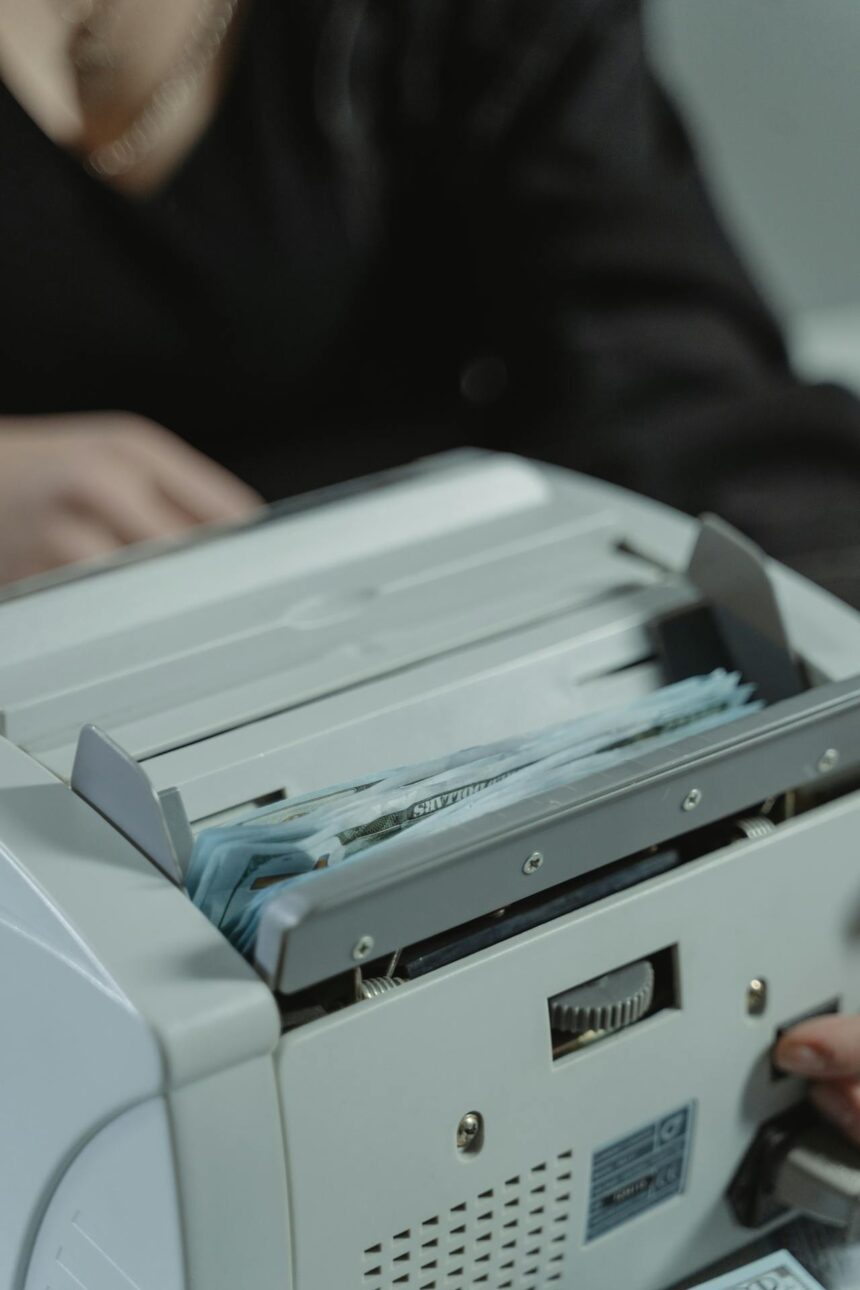
There was a fax machine in the corner of nearly every office my mother ever worked in. Beige, chunky, always slightly warm to the touch, and producing that particular shriek of electronic negotiation whenever it connected with another machine somewhere across town. By the time she retired, her colleagues were joking that it was a relic. That was fifteen years ago. The machine is still there.
The fax machine has outlasted the typewriter, the Rolodex, the overhead projector, and about a dozen technologies that were supposed to replace it. And not because people are sentimental
It’s still alive because it does something that email, cloud drives, and encrypted messaging apps have struggled to replicate in the industries that matter most: it produces a legally traceable, point-to-point transmission that arrives as a physical document, without passing through a server that a third party controls.
That’s the part most people miss.
The Legal Accident That Kept It Alive

When fax technology became widespread in the 1980s, it arrived just as American healthcare, banking, and real estate were formalizing their document requirements. Courts and regulators began treating fax transmissions as legally equivalent to signed paper documents. That was a reasonable call at the time. What nobody anticipated was how sticky that ruling would become.
Decades later, those legal frameworks are still in place. Healthcare providers in the United States are required by federal privacy law to maintain certain transmission records, and fax fits neatly inside existing compliance structures in ways that newer systems sometimes don’t.
Changing the standard isn’t just a matter of downloading a new app. It means rewriting policy, retraining staff, renegotiating vendor contracts, and potentially reopening compliance certifications that took years to establish.
So the fax machine stays. Not out of ignorance. Out of institutional inertia that is, in a very real sense, rational.
Why Hospitals Fax More Than You’d Expect

Here’s where it gets genuinely strange. Healthcare is widely regarded as one of the most fax-dependent industries in the United States, and remains heavily reliant on fax in several other developed nations.. Prescriptions, referrals, patient records between providers, insurance authorizations, a significant portion of this paperwork still moves by fax, even in hospitals with sophisticated electronic health record systems.
The reason has less to do with the machines themselves than with what surrounds them. A fax sent from one hospital to another doesn’t require both institutions to be on the same software platform. It doesn’t require an API handshake, a shared login system, or compatible file formats.
It requires a phone line and a fax number. In a healthcare system where dozens of different electronic record systems coexist without talking to each other particularly well, that simplicity is not a small thing.
There is also a security argument that serious people make, and it’s worth hearing out. A fax transmission travels point-to-point, over a dedicated phone connection, without touching the open internet. It cannot be intercepted by the same methods that compromise email. For sensitive medical or financial documents, that’s a genuine feature, not a quirk. Which sounds like a defense of 1980s technology, because it is. And somehow, it holds up.
The Money Side Nobody Mentions

Banking and real estate lean on fax for some of the same compliance reasons, but add another layer: signature verification. A faxed signature has a long legal history behind it. Courts have upheld faxed signatures in contract disputes for decades. The paperwork trail is familiar to judges, title companies, and auditors who have processed thousands of transactions using it.
When a title company closes a mortgage, the fax record goes straight into the audit file. Every party in that deal, the buyer, the seller, the bank, the title company, the insurer, and often a county recorder’s office running decades-old legacy software, has to agree on a document format. That’s not a tech problem. It’s a coordination problem dressed up as one.
The Quiet Industry Built Around a Dead Machine

Here’s the thing. There’s an entire business sector most people have never heard of: cloud fax. Companies like eFax and RingCentral take your fax transmission, run it through internet infrastructure, and hand it to regulators and recipients as a fully fax-compliant document. The market isn’t shrinking. Analysts tracking the sector have reported continued or growing demand in recent years, quietly, while everyone was writing the fax’s obituary., quietly, while everyone was writing the fax’s obituary.
This is how the fax machine survived its own death. It didn’t stay alive as a physical object in every office. It migrated into the cloud, shed its beige plastic casing, and kept its legal identity. The transmission standard, the compliance record, the point-to-point logic, those survived. The machine became a protocol.
And here’s something that still surprises me, even having thought about this for a while: the fax’s persistence is not a failure of innovation. It is a kind of proof that technology adoption is never purely about what works best in a lab. It’s about what works best inside a system of laws, habits, contracts, and human relationships that took generations to build. Replacing the fax means replacing all of that at once, which is a much harder problem than building a better machine.
My mother’s office machine finally went quiet a few years ago. But somewhere in the same building, a cloud fax account is still receiving insurance authorizations at two in the morning, converting them to PDFs, and filing them without anyone noticing. The fax is gone. The fax is everywhere.
This article was researched, written, and edited by our human editorial team. AI tools were used in a limited research-assistant capacity. All claims were independently verified.