


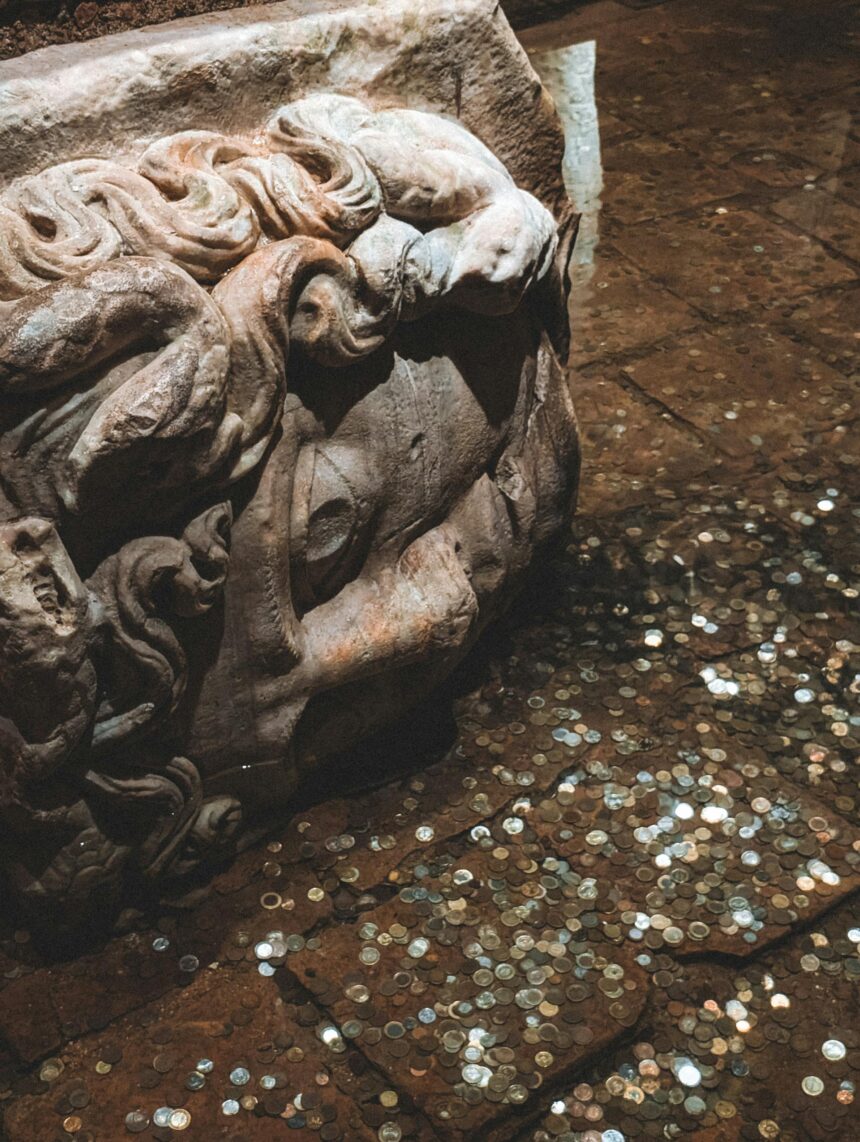
Under the floors of ordinary homes in a village reported as Senon, a small village in northeastern France, workers with France’s National Institute for Preventive Archaeological Research found three ceramic amphorae packed with coins. Tens of thousands of them. The jars had been buried carefully, accessed repeatedly, and then, for reasons no one fully understands, left behind.
The numbers alone are striking. An INRAP numismatist identified in reports as Vincent Geneviève documented the contents: the first jar held roughly 23,000 to 24,000 coins, according to INRAP reports. The second contained 18,000 to 19,000 coins, according to INRAP reports. Together with a third amphora, the three jars held more than 40,000 coins in total, according to INRAP, all dating to approximately AD 260 and 310, according to INRAP.
And here’s the thing that changes how you read this story: the coins weren’t dumped all at once.
According to INRAP, physical evidence suggests the jars were accessed multiple times, coins were added and removed after initial burial, indicating active use rather than a one-time deposit. The pits were reopened. Coins went in, and coins came out. According to INRAP, that pattern of deposits and withdrawals is proof these weren’t panic hoards, not a frightened family burying silver before soldiers arrived. They were household savings accounts. Managed. Active. Familiar.
Savings Under a Crumbling Empire
The coins themselves tell a political story. They bear the faces of Victorinus, Tetricus I, and Tetricus II, the emperors of the Gallic Empire, the breakaway state that controlled Gaul from 260 to 274 CE. Rome was fracturing. The central government had lost its grip on the western provinces. A separate emperor ruled from Cologne (and later Trier), minting his own coins and running his own army. minting his own coins and running his own army.
The people who buried these jars in Senon lived through that instability. They knew the currency in their hands might not be honored by whoever came next. And yet they kept saving. They kept depositing. How strange it is to think about now, ordinary people in a crumbling state, still managing their money the way we do, still trusting that the jar under the floor would be there when they needed it.
Near the excavation site, according to INRAP, sits a Roman military fortification from the same period. That proximity raises a question researchers haven’t fully answered: Were these savings connected to garrison payroll? Did soldiers deposit their wages in household jars rather than a centralized treasury? The coins’ dates align with the period when Gallic Empire currency was in active circulation, which suggests the savings were built up over years, not weeks.
The Part That Sounds Like Right Now
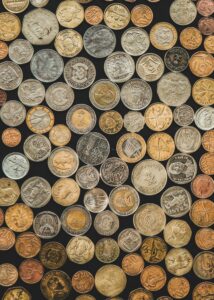
We tend to imagine ancient financial behavior as either primitive or purely desperate, people burying gold because they couldn’t think of anything better to do with it. These jars push back on that assumption hard. The residents of Senon weren’t panicking. They were liquidity-managing. They were doing what people still do during financial instability: keeping accessible reserves close to home, in a form they controlled, outside whatever system they no longer trusted.
The parallel isn’t perfect. Roman amphorae under a dirt floor aren’t a savings account at your local credit union. But the behavior, regular deposits, occasional withdrawals, a container you could access without asking anyone’s permission, maps onto something recognizably modern. During the financial crisis of 2008, mattress-stuffing and home safes saw a documented surge in the United States. The instinct to keep savings physically close during times of institutional collapse is not new. It’s apparently not even medieval. It goes back at least to the third century in a village in northeastern France.
INRAP’s analysis, reported by Live Science and Futura-Sciences in late 2025 and into early 2026, continues to develop as researchers work through the full coin inventory. What they’ve already found reframes a question that seems purely archaeological but isn’t: when the system you’ve built your finances around starts to fail, what do you do with your money?
The people of Senon buried their answer under the floor. Then they kept adding to it.
This article was researched, written, and edited by our human editorial team. AI tools were used in a limited research-assistant capacity. All claims were independently verified.