



In the early 1970s, Edwin Land watched something happen in his test groups that his engineering team had no category for. People weren’t just taking pictures. They were handing them to each other while the image was still developing. They were holding the print at the edges, watching the chemistry work, narrating what they saw to whoever was standing next to them. The photograph had become an event. Not a document. An event.
That distinction between a photograph as record and a photograph as social moment, is one that the consumer technology industry spent the next four decades trying to engineer on purpose. Nobody has fully managed it.
What Land Actually Built

The instant camera’s core technology solved a real problem: the delay between taking a picture and seeing it. Before Polaroid, you shot a roll of film, dropped it at a drugstore, and waited anywhere from a few days to a couple of weeks. The image you got back was fixed, finished, mailed to you in an envelope. The moment was long gone. Polaroid collapsed that gap to roughly one to two minutes, depending on the film type and era.
But here’s the strange part. The problem Land solved wasn’t the one that mattered most. The sixty-second development window wasn’t just faster, it was *social*. The print emerged in public, in front of witnesses. That meant the photograph still belonged to the moment it came from. It hadn’t been processed in a back room somewhere. It was right there, warm, unfinished, passed between hands.
Nobody designed that experience. It emerged from the chemistry.
The Behavior That Wasn’t in the Brief
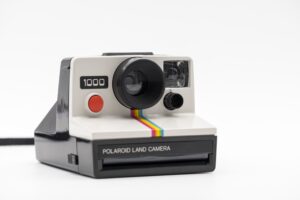
Consumer technology companies have a long history of building features and then discovering that users invented the actual product themselves. The Polaroid camera is probably the earliest and cleanest example of this.
What users created, without instruction or prompting, was something that behavioral researchers would later describe in terms of shared ritual a physical object passed between people, a waiting period that created collective attention. A physical object passed between people. A waiting period that pulled everyone into the same thirty seconds of attention. And an artifact with texture, weight, slight chemical imperfection, something that felt made rather than printed.
Here’s the thing: remove any one of those three elements and the whole experience collapses. This is why digital photography spent years failing to produce the same emotional pull, despite being faster, cheaper, and better on every spec sheet that mattered to engineers.
Silicon Valley noticed. And tried.
Forty Years of Chasing the Feeling
The first serious attempt to engineer the Polaroid effect was the photo-sharing app, which emerged in the mid-2000s as mobile cameras became good enough to use casually. The logic was straightforward: if people wanted to share photos immediately, give them a frictionless way to do it digitally. Remove the wait, remove the cost, remove the physical object.
What happened instead was scale without intimacy. You could share a photo with five hundred people in thirty seconds. But the social ritual, the small group, the held print, the narrated moment, had been replaced by broadcast. The photograph became content. The audience became followers. The experience migrated from the kitchen table to the feed.
Instagram’s early designers appear to have understood this, at least partially. The square format was a deliberate echo of Polaroid’s frame. The filters were designed to introduce imperfection, grain, vignette, slight color distortion, because the engineers knew that perfect images felt cold. The platform launched in October 2010 and grew faster than almost any consumer app before it. But what it built was an audience, not a ritual. The Polaroid gesture, hand this to one person, watch their face, doesn’t scale.
The physical product revival that followed was telling. Fujifilm’s Instax line became one of the most commercially successful camera formats of the 2010s, with Fujifilm reporting strong annual sales growth throughout the decade, not because the image quality was competitive, \
but because it reproduced the original conditions: a small print, a waiting moment, a physical object you could put in someone’s hand. The Polaroid brand itself was revived more than once and continues to sell hardware built around the same basic chemistry Land’s team developed decades earlier.
That chemistry, by the way, is genuinely complex. Self-developing film requires a sealed pod of reagents, developer, fixer, and a white pigment layer, that ruptures when the film is pulled through the camera’s rollers. The pigment layer keeps light from fogging the developing image while the chemistry works.
The whole system has to complete in roughly a minute at room temperature, without electricity, without a second device. It is, in its way, a miniaturized darkroom that fits in your back pocket.
The fact that anyone thought this was simpler than digital photography is a reminder of how strange the history of technology actually is.
What Silicon Valley Got Wrong
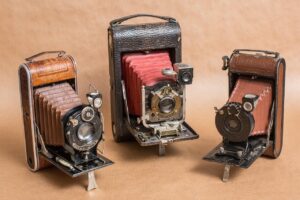
The deeper mistake wasn’t technical. It was categorical. Engineers looked at the Polaroid and saw a delivery mechanism for photographs. What they missed was that the camera was a prop in a social performance. The photograph was almost secondary. What people wanted was the experience of making something together, the anticipation, the reveal, the argument over whether the exposure was right.
Digital photography eliminated friction. But some friction is load-bearing. The sixty seconds while the Polaroid developed weren’t a flaw in the system. They were the system.
You probably remember this pattern from other places. Streaming services spent years adding features trying to replace the experience of browsing a video store with a friend. Social platforms tried to replicate the feeling of showing someone a photo in person. Messaging apps layered in reactions, threads, and voice notes trying to approximate a conversation. Each time, the technology got more capable. The experience got thinner.
The Polaroid camera never had an algorithm. It had chemistry, a spring-loaded roller, and sixty seconds that belonged to everyone in the room.
Whether that’s a design lesson or just a reminder that some things don’t transfer is still, forty-odd years later, an open question.
This article was researched, written, and edited by our human editorial team. AI tools were used in a limited research-assistant capacity. All claims were independently verified.