

In 1998, two separate teams of astronomers set out to measure how fast the universe was slowing down. They expected deceleration. Gravity pulls things together, and conventional thinking held that the expansion from the Big Bang should be losing momentum over billions of years, the way a thrown ball eventually arcs back toward the ground.
Both teams found the opposite. The universe wasn’t slowing. It was speeding up.
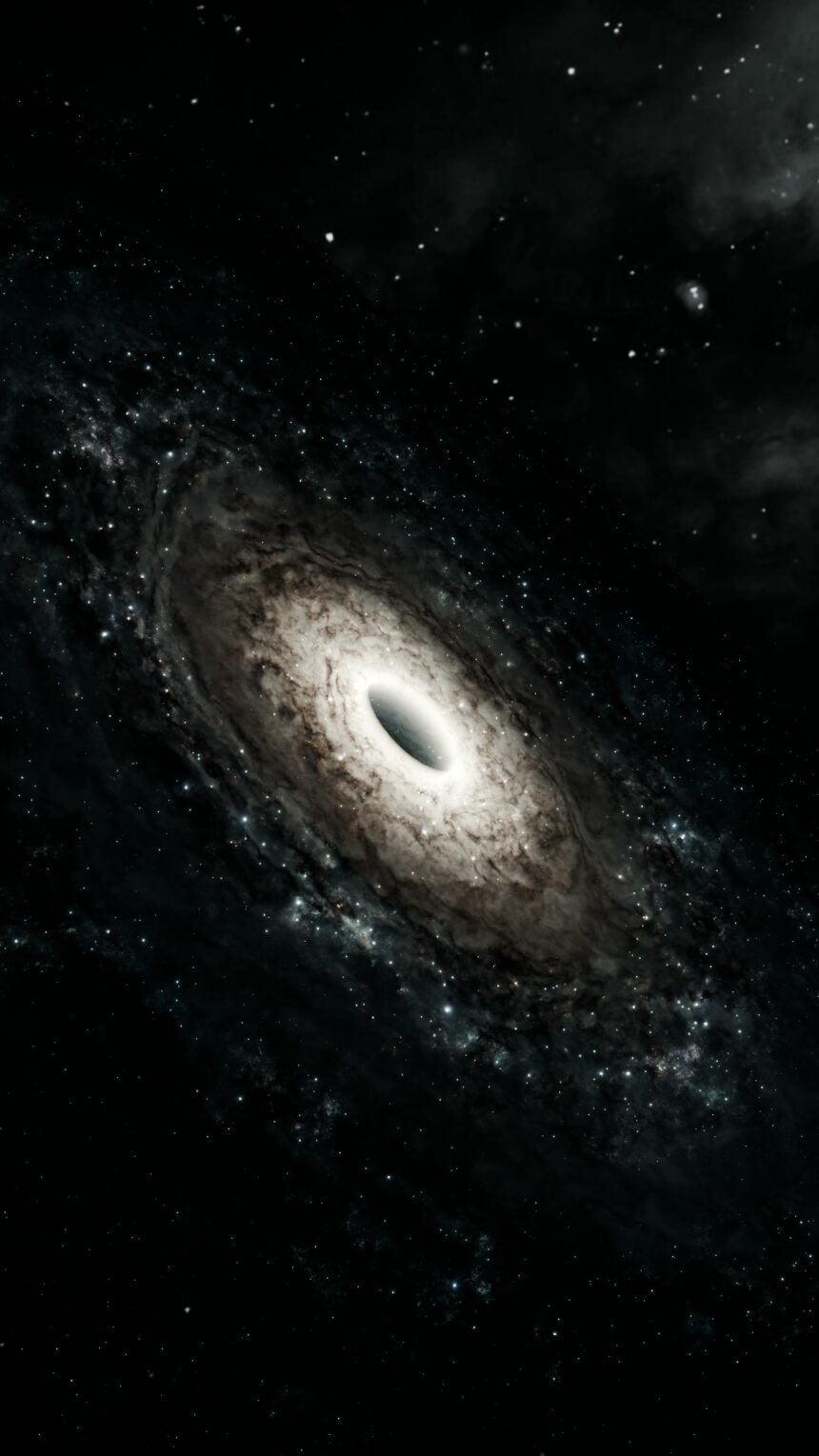
That discovery awarded the Nobel Prize in Physics in 2011 reshaped cosmology overnight. It gave physicists a new term to work with: dark energy, a placeholder name for whatever force was pushing the cosmos apart faster and faster. And it produced a model called Lambda-CDM, which became the standard framework for understanding the universe’s structure, composition, and fate.
For about a decade, Lambda-CDM held up beautifully. Then the cracks started showing.
The Number That Keeps Coming Out Wrong
The specific problem goes by a name that sounds almost bureaucratic: the Hubble tension. It refers to a persistent, stubborn disagreement between two ways of measuring the Hubble constant, the number that describes how fast the universe is expanding right now, expressed as a rate of speed per unit of distance.
One method looks at the early universe. Physicists use detailed measurements of the cosmic microwave background, the faint glow of radiation left over from roughly 380,000 years after the Big Bang, to extrapolate what the expansion rate should be today. This approach relies on the standard cosmological model and produces one consistent number.
The other method looks at the present-day universe directly. Astronomers measure the distance and recession speed of stars, galaxies, and other cosmic objects, a chain of measurements built outward from nearby stars to the edge of the observable universe. This so-called cosmic distance ladder produces a different number. A higher one.
Here’s the strange part: both methods have been refined, checked, and rechecked for years. Neither contains an obvious error. Yet they keep disagreeing, by several percentage points, typically cited in the range of around 5 to 10 percent depending on the measurement method used. In cosmology, that gap is not a rounding error. It is a crisis.
Why the Gap Matters More Than It Sounds
To understand why cosmologists lose sleep over this, consider what the standard model is actually claiming. Lambda-CDM describes a universe that is approximately 13.8 billion years old, composed mostly of dark matter and dark energy that no one has directly detected, and governed by physical constants that have remained stable since the first fractions of a second after the Big Bang. It is, by any measure, a staggeringly ambitious theory. And it has worked, predictions matched observations, across decades of telescopes and probes.
The Hubble tension is the first measurement that won’t cooperate.
When two independent measurement chains, using completely different physical phenomena and completely different instruments, consistently produce different answers to the same question, scientists have to consider three possibilities. First: one or both measurements contain a systematic error no one has found yet. Second: the measurements are both correct, and the discrepancy is statistical noise that will eventually resolve. Third: the standard model is missing something real.
The first two possibilities have been under investigation for over a decade. Astronomers have scrutinized every rung of the cosmic distance ladder, looking for calibration errors, instrument drift, and selection bias. The gap has not closed. Some recent analyses using data from the James Webb Space Telescope have suggested that the tension may actually be sharpening, not softening, as measurements improve.
That leaves the third possibility: the model is incomplete.
What Could Be Missing

Physicists have proposed a range of explanations, and none has won consensus. Some researchers have suggested that dark energy is not constant, that it varied in strength in the early universe, which would affect how the expansion rate evolved over time.
Others have proposed additional forms of early dark energy, or early dark radiation, that left a signature on the cosmic microwave background that current models don’t account for. A smaller but vocal group has suggested that the Hubble tension points toward a modification of general relativity itself, the foundational theory of how gravity works at cosmic scales.
Each of these fixes solves part of the problem and creates others. Adjusting early dark energy, for example, can bring the early-universe measurement closer to the late-universe one, but it tends to break other well-tested predictions of the standard model in the process. The solutions keep requiring more moving parts than the problem they’re solving.
And here is what makes this intellectually honest rather than just frustrating: the cosmologists proposing these alternatives are not fringe figures working outside mainstream science. They are publishing in peer-reviewed journals, presenting at major conferences, and openly acknowledging that the field has reached a genuinely uncertain moment. The Hubble tension is not a controversy manufactured by outsiders. It is a problem the insiders created by doing their jobs too well.
What the Telescopes Are Telling Us
The James Webb Space Telescope launched in December 2021. Its ability to resolve individual stars in distant galaxies let astronomers refine the cosmic distance ladder with more confidence than Hubble ever could. But the early results didn’t close the gap. They sharpened it. Late-universe measurements keep coming in higher than what the early-universe models predict, and so far no one has a clean explanation for why.
This is not, to be clear, a discovery that the standard model is wrong. Lambda-CDM still correctly predicts the large-scale structure of the universe, the distribution of galaxies, the formation of galaxy clusters, the acoustic peaks in the cosmic microwave background, with extraordinary precision. It is a model with enormous explanatory power. The Hubble tension does not erase that.
What it does is introduce a specific, quantified, reproducible anomaly that the model cannot explain. That is how physics has always moved forward: not by wholesale abandonment of what works, but by following the one number that refuses to fit.
The history of the field suggests this matters. Before the 1998 discovery of accelerating expansion, physicists had strong theoretical reasons to believe dark energy didn’t exist. The evidence changed the theory. Before Before the detection of gravitational waves in 2015, announced publicly in February 2016, some physicists wondered whether the prediction was too in, some physicists wondered whether the prediction was too indirect to test directly. The evidence arrived anyway.
The Hubble tension may resolve into an error in the measurement chain that no one has found yet. Or it may turn out to mark the edge of what the current model can explain, the place where the next version of cosmology has to begin.
You probably expect science to tidy itself up over time, errors shrinking as instruments improve. And usually it does. But the universe has been reliably indifferent to what we expect it to do. The expansion rate was supposed to be slowing. It wasn’t. The two measurements were supposed to converge. They haven’t. At some point, the simplest explanation for a disagreement that won’t go away is that something real is causing it.
This article was researched, written, and edited by our human editorial team. AI tools were used in a limited research-assistant capacity. All claims were independently verified.