


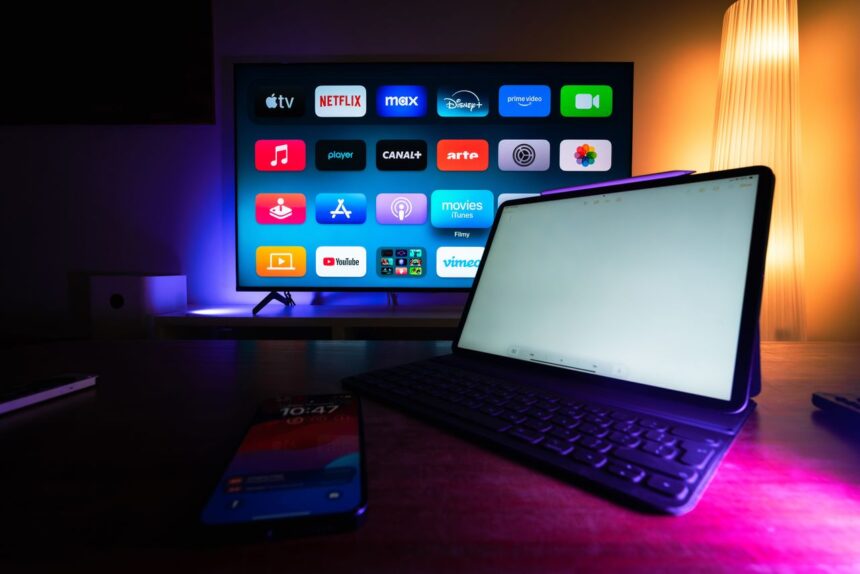
Your smart TV has been watching you back. Not in the dramatic, sci-fi sense — but in the quiet, systematic, entirely legal sense that most people don’t think about until they start paying attention.
The device sitting in your living room is one of the most data-rich sensors in any home. It knows when you wake up, roughly how many people are in the room, what other devices are connected to your network, and how you move through your day. And almost none of that has anything to do with whether you finished the last season of whatever show you’re halfway through.
Here are ten things your smart TV is tracking that have nothing to do with your viewing habits.
Your Physical Presence in the Room

Most modern smart TVs use a combination of motion sensors and camera-based detection to determine whether anyone is actually in front of the screen. This is partly for energy efficiency the TV can dim or shut off when the room empties. But that presence data is also logged, timestamped, and in many cases transmitted. The TV builds a rough picture of when your home is occupied and when it isn’t.
The Other Devices on Your Network
When your smart TV connects to your home Wi-Fi, it doesn’t just use the internet. It scans. Many TV operating systems actively detect other devices on the same network, such as phones, tablets, smart speakers, and laptops, and use that information to build a cross-device profile. Advertisers call this “household graph” data. You can call it something else.
Your Voice, Even When You’re Not Talking to the TV

If your TV has a voice assistant built in, and most do now, the microphone isn’t always as dormant as you’d assume. The specific trigger conditions vary by manufacturer and model, but the design architecture means that audio processing begins before the wake word is confirmed, because the device has to hear the word in order to recognize it. What happens to those pre-trigger audio fragments differs by platform. Worth reading the fine print on.
The Exact Time You Turn It On and Off

Here’s the strange part: this sounds boring. It isn’t. Behavioral data about when you turn the television on, how long it stays on, and when you shut it off is genuinely valuable to advertisers building daily routine models. A household that turns on the TV at 6 a.m. looks different from one that turns it on at 11 p.m. Those patterns get sold, bundled, and used to target you elsewhere, on your phone, your laptop, your browser.
How Long Do You Pause on a Screen Before Skipping
Automatic Content Recognition, or ACR, is the technology that identifies what’s playing on your screen in real time. But it also tracks the hesitations. The moment you paused on a thumbnail for three seconds before deciding not to watch something, that’s data. It tells platforms what you were almost interested in, which is arguably more useful to an advertiser than what you actually chose.
Your Approximate Location, Without GPS

Smart TVs don’t typically have GPS chips. They don’t need them. IP address geolocation, combined with Wi-Fi network data and zip code information entered during setup, gives the device a serviceable location profile. For most advertising purposes, knowing you’re in a specific metro area or zip code is precise enough. Some platforms push further, using local content preferences and regional ad targeting to narrow it down considerably.