

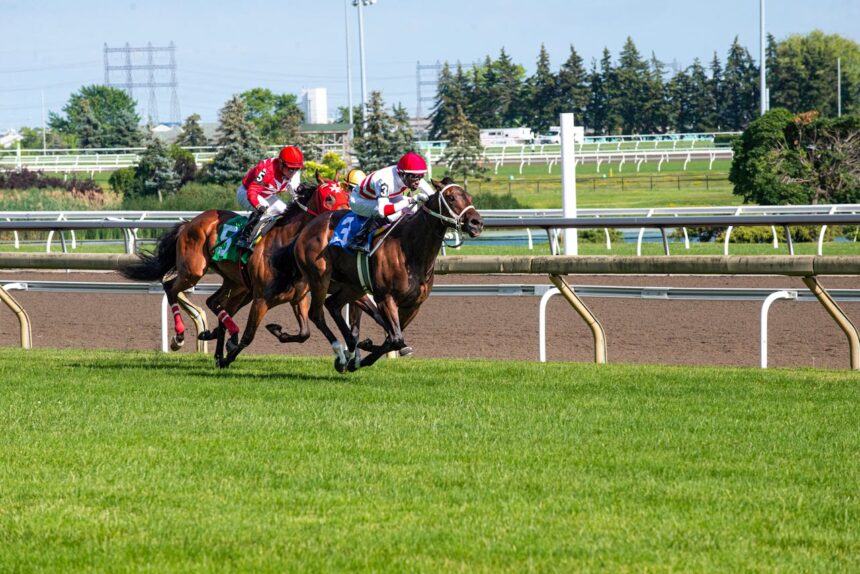
The first Kentucky Derby, run on May 17, 1875, paid the winning owner a purse reported at around $2,850. That was real money in 1875, roughly what a skilled tradesman might earn in two years. By the standards of American horse racing at the time, it was a serious prize.
By 2026, the winner’s share of the same race is reported at approximately $3.1 million. That’s not inflation. That’s something else entirely.
The story of how the Kentucky Derby went from a regional prestige event to a $5 million spectacle runs directly through a machine that looks, to most people who see one, like a slot machine. It sits in a casino-style gaming room, takes your money, and shows you a horse race. The difference, the legal difference, the financial difference, the difference that built a golden age for one sport while the rest of the industry quietly collapsed, is that the race it shows you already happened. Maybe in 1987. Maybe in 2003.
The outcome is fixed in time, buried in a database. But under Kentucky’s legal framework for pari-mutuel wagering, a wager placed on a completed race has been treated as a wager on a horse race. And that distinction changed everything.
These are called historical horse racing machines, or HHR. And here’s the strange part: they work.
According to reporting by Louisville Public Media and the Kentucky Lantern, both of which have covered HHR’s impact on Kentucky racing,, Kentucky’s total racing purses reportedly tripled, from roughly $70 million to over $200 million, once HHR revenue started flowing into the industry once HHR revenue started flowing into the industry. Churchill Downs Inc., the company that owns and operates the Derby, reported record net revenue in 2025, figures the company disclosed in its annual earnings.
The striking detail buried in that number: the substantial majority of the company’s revenue growth came from historical horse racing operations in Kentucky and Virginia, according to the company’s financial disclosures.
Not from the Derby itself. Not from television rights or sponsorships or the $1,000 mint julep cups. From ghost races.
When the Purse Outgrew the Crowd

The Derby purse jumped significantly, from $3 million to $5 million, ahead of the 2024 running, described by Churchill Downs as one of the largest purse increases in the race’s history. Churchill Downs attributed the increase directly to HHR revenue. Which is worth sitting with for a moment, because it means the race that most Americans think of as the pinnacle of the sport, the two-minute spectacle that draws a hundred thousand people to Louisville on the first Saturday in May, is now financially underwritten by people feeding money into machines at racetracks and off-track betting parlors, watching digitally rendered replays of races that ended before some of this year’s jockeys were born.
Marshall Gramm, an economics professor at Rhodes College, put it plainly. Purses have been rising faster than live race wagering handles, he said, “effectively decoupling fans from the economics of the sport, or words to that effect”. That phrase deserves attention. In most sports, the money fans spend watching, on tickets, on broadcasts, on merchandise, is at least loosely connected to what the athletes earn.
The crowd and the competitor are part of the same financial circuit. At Churchill Downs in 2026, the circuit will be rerouted. The fan in the grandstand and the gambler at the HHR terminal are not the same person, and they’re not funding the same thing in the same way. The grandstand sells the spectacle. The terminal pays the purse.
This is not, historically, an unusual arrangement. It’s just an unusually visible one.
American horse racing has subsidized itself through gambling since its earliest organized form. The tote board, the pari-mutuel betting system that became standard at American tracks through the 1930s, was itself a financial innovation, a way to pool wagers and take a percentage off the top before distributing winnings, ensuring the track always made money regardless of which horse won. Lotteries funded public works in colonial America.
Off-track betting offices transformed New York racing revenue in the 1970s. The specific mechanism changes. The underlying logic, that the money people lose gambling subsidizes the money athletes compete for, stays the same.
What’s different with HHR is the scale nd the speed.
A Sport in Two Worlds
While Churchill Downs reported nearly $3 billion in revenue, the broader American horse racing industry has been contracting for decades. Attendance at live races has fallen sharply since the 1970s. The number of active thoroughbred racehorses in the United States dropped by more than half between the 1980s and the 2010s. Smaller tracks have closed or shifted to other uses. The horse that wins the Derby on the first Saturday in May runs before a global television audience; the horse that runs in a mid-card race at a regional track on a Tuesday in September runs before a few hundred people in the grandstand and a few thousand more placing bets online.
HHR machines have slowed some of that decline in Kentucky, at least on paper. The tripling of purse money has kept more horses in training and more owners investing. It has kept smaller tracks economically viable. Whether it has brought new fans to the sport, whether people who feed money into an HHR terminal at a Kentucky Downs gaming floor become people who one day sit in a grandstand and watch a live race, is a different question. Gramm’s observation about decoupling suggests the answer may be no, or not yet, or not in any way that’s easy to measure.
What’s easier to measure is the winner’s circle. In 1875, the owner who sent a horse to Louisville for the first Derby and came home with $2,850 had done something remarkable. The purse was a signal: this race matters. By 2026, the signal has been amplified to a frequency that would have been unimaginable to the men who built Churchill Downs. A $3.1 million winner’s share. A $5 million total purse. The largest single-year increase in the race’s history, funded not by the people in the seats but by players at terminals, wagering on races that are already over, in a legal gray zone that most states still haven’t figured out how to handle.
The Derby itself has never looked more prosperous. How strange it is to remember that the money behind it comes from a database of old races, running on a loop, somewhere in the back of a building that most visitors never see.
Sources
Kentucky in a golden age of horse racing, supercharged by bigger prizes and more gambling”
This article was researched, written, and edited by our human editorial team. AI tools were used in a limited research-assistant capacity. All claims were independently verified.