


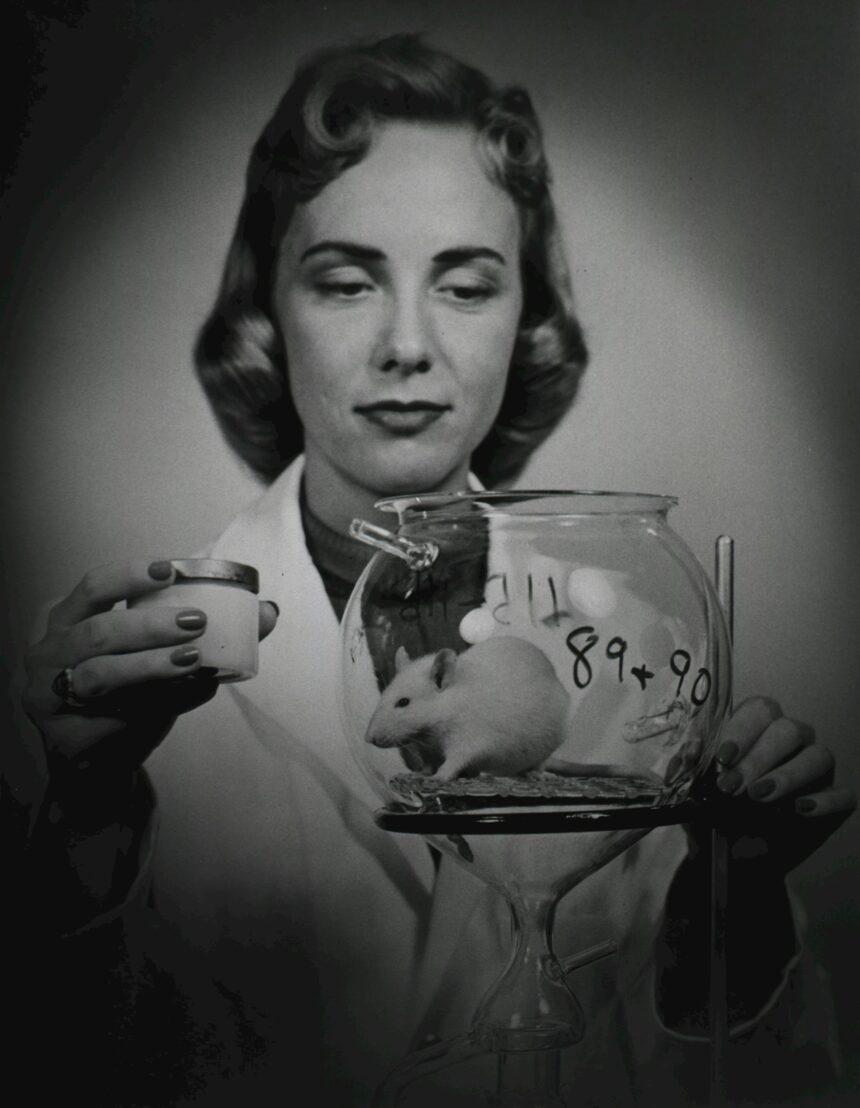
In April 2026, researchers at Texas A&M University published results that stopped a lot of people in their field mid-sentence. A nasal spray two doses, administered to aging mice reversed measurable brain inflammation and restored memory function. The effects lasted for months. Texas A&M has already filed a U.S. patent.
That’s the kind of sentence that usually comes with caveats buried three paragraphs deep. Here, the caveats are real and worth knowing. But so is the science behind why this matters more than most aging-brain headlines do.
What They Were Actually Treating

The spray doesn’t target memory loss directly. It targets something called neuroinflammaging (also sometimes written as “neuro-inflammaging”), a slow, chronic inflammation inside the brain that researchers now believe is one of the primary drivers of age-related cognitive decline. Not a symptom. A cause.
That distinction matters. For decades, the working assumption in aging research was that some degree of brain deterioration was simply inevitable, biology winding down, neurons wearing out. What the Texas A&M team is arguing, based on this study published in a peer-reviewed journal, is that the inflammation itself is an active process. And active processes, unlike entropy, can sometimes be interrupted.
The spray delivers microscopic particles derived from neural stem cells directly into the brain via the nasal passage. Lead researcher Ashok Shetty, a researcher at Texas A&M’s College of Medicine, described the mechanism as essentially delivering a message, signaling molecules that tell the brain’s immune cells to stand down from a chronic inflammatory state they’ve been locked in for years.
The Mice, and What They Showed
The test subjects were mice described in the study as aged. In mouse biology, that’s roughly equivalent to a 60-year-old human. These were not young animals with minor inflammation. They were, by rodent standards, middle-aged and declining.
After two doses, the treated mice showed measurably reduced brain inflammation markers and outperformed untreated controls on memory tests. The benefits appeared within weeks. They persisted for months, which, in a study of this kind, is the number that made people pay attention. A short-lived effect would suggest the spray was suppressing symptoms. An effect that holds for months suggests something closer to a reset.
And here’s the part most coverage glossed over: the researchers weren’t looking at one or two inflammation markers. They tracked multiple biological indicators of neuroinflammaging across the treated and untreated groups. The pattern held.
Why the Numbers Behind This Are Hard to Ignore

Studies estimate that roughly 1 in 3 Americans over 85 will develop some form of dementia, with overall lifetime risk for those over 55 estimated at around 10, 15% depending on methodology. Annual new cases in the United States number in the hundreds of thousands and are projected to rise substantially in coming decades as the population ages. Those are not abstract statistics. That’s the trajectory of a condition that is already stretching families, caregivers, and health systems well past their limits.
The economic cost is enormous. The human cost is harder to quantify and worse. Anyone who has watched a parent or grandparent lose the thread of a conversation they were having five minutes ago knows what’s at stake in a way no projection figure captures.
The neuroinflammaging hypothesis is not new, researchers have been building the case for the past decade that chronic, low-grade brain inflammation is a key mechanism behind cognitive aging. What’s new is a delivery method that might actually reach the brain efficiently enough to do something about it. The nasal passage provides relatively direct access to brain tissue compared to oral medications or injections, which often struggle to cross the blood-brain barrier.
What Comes Next, and What Doesn’t

Texas A&M reportedly filing a U.S. patent for the therapy is meaningful in a specific, limited way. It means the institution believes the mechanism is real and potentially commercializable. It does not mean a nasal spray is arriving at a pharmacy near you in the next few years.
The path from a successful mouse study to human clinical trials is long. Most candidates fail somewhere in that journey. The biology of human aging is more complex, more variable, and far less controlled than a laboratory mouse population. Shetty and his team have not published human trial results because there are none yet.
What they have done is demonstrate, in a peer-reviewed study, that neuroinflammaging in aging brains can be interrupted by an externally delivered agent, and that the interruption produces measurable cognitive benefits that don’t immediately reverse. That’s a meaningful step, not a finish line.
The research community’s next question is whether the same signaling molecules that worked in mice will behave similarly in the more complex environment of a human brain. Dose, delivery timing, long-term safety, and the enormous variation between individual human patients all have to be worked through before anyone can claim a treatment.
The Honest Frame
There is a well-established pattern in science coverage where a promising animal study becomes, by the time it hits general news, a cure that’s practically available. This is not that. But dismissing it as “just a mouse study” misses the point too.
What the Texas A&M findings contribute is evidence for a mechanism, a specific, targetable biological process, that may underlie much of what we’ve accepted as the inevitable cost of growing older. If neuroinflammaging is genuinely interruptible, and if the nasal delivery route proves viable in humans, the implications extend well beyond dementia. Brain fog, slower processing speed, the creeping difficulty with recall that most people notice somewhere in their fifties, these may all trace back to the same slow inflammatory process.
The math on dementia alone is stark enough. Projections suggest new American dementia cases could rise dramatically by mid-century, against a care infrastructure that is already strained. Any intervention that meaningfully delays onset, not necessarily cures, just delays, would have an outsized effect on that curve.
That’s the conversation the Texas A&M research is entering. Not a cure announced. A target identified, and a first method of reaching it that actually worked in a living system.
The patent is filed. The next step is a human trial. Whether the brain’s inflammatory machinery responds the same way in people as it does in aging mice is the question that will take years, not months, to answer.
<h3>Sources</h3>
<ul class=”article-sources”>
<li><a href=”https://stories.tamu.edu/news/2026/04/14/scientists-reverse-brain-aging-with-a-nasal-spray/” rel=”noopener noreferrer”>Texas A&M University. Scientists Reverse Brain Aging With a Nasal Spray</a>, Primary institutional source; April 2026 announcement of the study and patent filing</li>
</ul>
This article was researched, written, and edited by our human editorial team. AI tools were used in a limited research-assistant capacity. All claims were independently verified.