


Here’s what you’ll learn when you read this story:
- Cygnus X-1 was the first black hole ever confirmed by science, and for 60 years, no one could measure its jets
- A Curtin University-led team published findings in Nature Astronomy in April 2026, finally calculating the jets’ energy and speed.d
- Those jets blast outward at a significant fraction of the speed of light, half the speed of light, carrying an enormous amount of energy, equivalent to many thousands of Suns firing simultaneously.
- The measurement relied on a planet-sized network of radio telescopes and a trick involving a companion star’s stellar wind
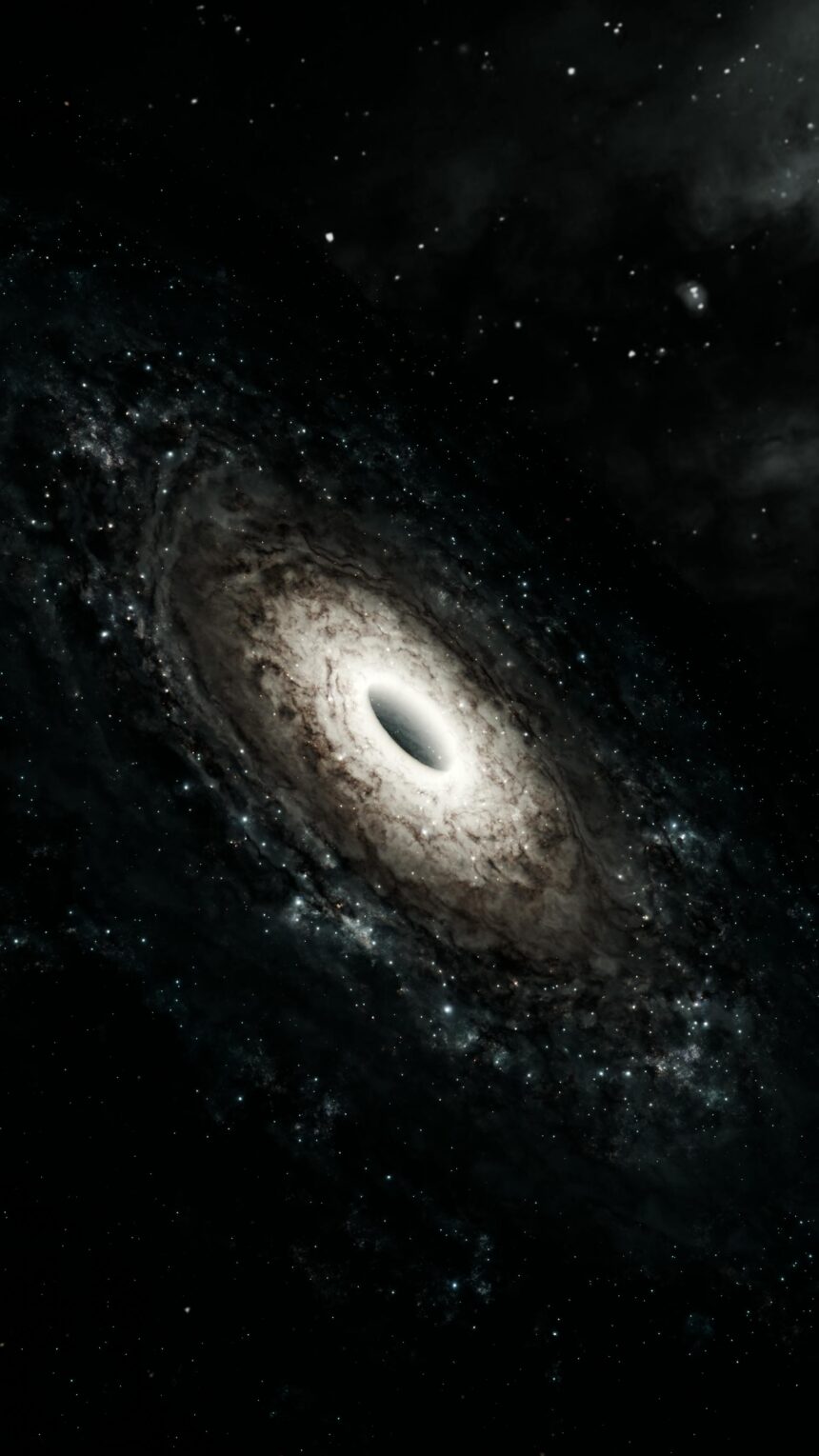
In 1964, a rocket-mounted X-ray detector swept across the sky above New Mexico and picked up a signal that didn’t fit anything astronomers expected. The source sat in the constellation Cygnus, 7,200 light-years from Earth. Researchers named it Cygnus X-1. It would take another decade of argument before the scientific community agreed it was almost certainly a black hole, and decades more before anyone could explain, with real precision, what it was actually doing.
That sentence got finished on April 16, 2026.
A team of researchers published findings in Nature Astronomy published findings in Nature Astronomy that did something no prior study had managed: they measured the instantaneous power output of the jets Cygnus X-1 fires into space. Not estimated. Not modeled from theory. Measured using real-time observational data gathered by a coordinated network of radio telescopes spread across the entire surface of the planet.
The numbers are the kind that make the units feel wrong. Those jets travel at a significant fraction of the speed of light, roughly half..That’s approximately half the speed of light. And the energy they carry? an energy output equivalent to many thousands of Suns firing simultaneously. Cygnus X-1 sits 7,200 light-years away, in the graceful arc of the Cygnus constellation, the Swan, and it has been quietly doing this the entire time.
What the Companion Star Made Possible
The reason this measurement took 60 years is partly a tool problem and partly a geometry problem. To calculate the true power of a jet, you need to observe it being deflected, bent off its original path, so you can measure the force required to move it. Out in open space, nothing bends a jet. But Cygnus X-1 doesn’t sit alone.
Its partner is HDE 226868, a blue supergiant nearly 40 times the mass of the Sun. Stars that large shed enormous amounts of material in what astronomers call a stellar wind, a continuous outflow of gas and plasma streaming away from the surface. The jets from Cygnus X-1 pass through that wind. And when they do, they bend.
The research team watched this bending with extraordinary precision. They used Very Long Baseline Interferometry, or VLBI, a method that links radio telescopes spread across continents into a single effective instrument roughly the size of Earth. What that planet-sized array saw were the jets dancing: deflecting, curving, moving in real time through the companion star’s outflow. The deflection data gave them the force. The force gave them the power. After six decades, the equation had all its variables.
And here’s the strange part: the black hole at the center of all this is among the more massive stellar-mass black holes known, estimated at around 21 times the mass of the Sun according to the study. That’s large by stellar-mass black hole standards, but it’s not cosmic.
It’s not a supermassive black hole anchoring a galaxy. It’s a relatively local object, tucked inside our own Milky Way, shooting energy at half the speed of light from a mass that would fit comfortably inside the solar system. The scale mismatch between what Cygnus X-1 is and what it does is, by any honest accounting, absurd.
Why ‘Dancing Jets’ Required a Planet-Sized Ear
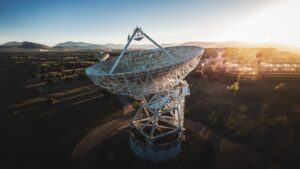
The VLBI technique is worth pausing on, because it’s not intuitive. A single radio telescope, even a large one, lacks the angular resolution to see fine structural detail in something 7,200 light-years away. But when you link multiple telescopes across thousands of miles and precisely synchronize their observations, the effective aperture of the combined instrument scales to the distance between the telescopes. Link stations across multiple continents and you effectively build a telescope as wide as Earth itself.
That’s what the team did. They pointed this globe-spanning array at Cygnus X-1 and captured the jets at a level of detail fine enough to watch them move, to track the bending caused by stellar wind in real time, rather than inferring it from averaged data. It’s the kind of observation that requires both the technology and the orbital geometry of the companion system to cooperate simultaneously. For 60 years, neither quite lined up well enough to make this measurement possible.
The Sentence We Started in 1964
Science moves in half-finished thoughts. A signal gets picked up. A classification follows. A theoretical framework gets built around the object. And then, decades later, someone finally asks: but how powerful is it, exactly? And the answer turns out to require a planet-sized instrument, a companion star shedding material at prodigious rates, and a team willing to watch jets bend in real time.
Cygnus X-1 was the first black hole ever confirmed. It has been out there for longer than anyone reading this has been alive, firing jets at half the speed of light with the energy of 10,000 Suns, through a stellar wind it shares with a blue supergiant that dwarfs our own Sun by a factor of 40. We knew it was there. We just didn’t know what it was doing.
Now we do. The measurement, published in Nature Astronomy in April 2026, closes a loop that opened the year the Beatles released A Hard Day’s Night. Whether there are other loops like it, other objects we named and filed and never fully measured, is the question that should probably keep someone awake at night.
This article was researched, written, and edited by our human editorial team. AI tools were used in a limited research-assistant capacity. All claims were independently verified.