

On May 15, 2026, a spacecraft the size of a tennis court passed within a few thousand miles above the surface of Mars, a spacecraft the size of a tennis court passed 2,800 miles above the surface of Mars closer than either of the planet’s two moons, Phobos and Deimos Phobos orbits at roughly 5,800 miles and Deimos at roughly 14,580 miles from Mars’s surface. It wasn’t there to study Mars. It was stealing from it.
NASA’s Psyche spacecraft used the planet’s gravity to whip itself onto a new trajectory, picking up speed it could never have generated on its own engines. The technique is called a gravity assist. Engineers have used it since the Voyager era. But the target this time is unlike anything a spacecraft has visited before.
The Metal World at the End of the Journey
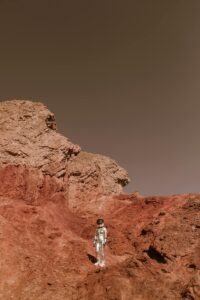
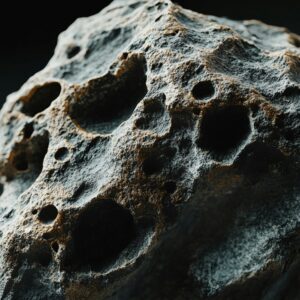
Asteroid 16 Psyche sits in the main asteroid belt between Mars and Jupiter. It is approximately 140 miles (226 km) across at its widest dimension, roughly the footprint of Massachusetts, and it is almost certainly made of iron and nickel. Not on the outside. All the way through.
The leading theory, according to NASA JPL, is that 16 Psyche is not a typical asteroid. It is a planetesimal: a body that was forming into a planet billions of years ago, building layers the way Earth did, accumulating a rocky crust and mantle over a dense metallic core. Then something hit it. Repeatedly. The collisions stripped away those outer layers over billions of years, leaving the core exposed like a bone after the flesh is gone.
Which sounds like a grim image until you realize it’s exactly what scientists have been trying to see for decades.
The Core Problem Literally
Here is the thing about Earth’s core: we have never seen it. We never will. It sits roughly 1,800 miles below your feet, protected by thousands of miles of mantle rock and lower crust that no drill, no matter how advanced, has come close to reaching. Everything we know about it comes from seismic waves, density calculations, and educated inference.
Asteroid 16 Psyche, if the theory holds, is the real thing sitting in space waiting to be examined. A planetary core without the planet. Scientists can orbit it, photograph it, map its magnetic field, and measure its composition from a few hundred miles up, the equivalent of hovering just above the surface of what Earth’s own center might look like.
The scientific stakes are not small. Understanding how planetary cores form, how they generate magnetic fields, and what they’re actually made of shapes how we understand Earth’s interior, how we understand Mars, and how we understand what makes a rocky planet habitable in the first place.
How You Get to a Metal Asteroid

The Psyche spacecraft launched from Kennedy Space Center on October 13, 2023. It is not powered by traditional chemical rockets. It uses solar-electric propulsion, which means sunlight hits the solar panels, generates electricity, and that electricity ionizes xenon gas, firing it out the back as thrust. The force is gentle, nothing like a rocket burn, but it is continuous. Over months and years, it adds up.
The Mars flyby on May 15 was a navigational pivot. Mars’s gravity grabbed the spacecraft and accelerated it, bending its path toward the asteroid belt without burning a drop of additional fuel. The spacecraft is in a cruise phase following its Mars gravity assist, a multi-year transit before arrival at 16 Psyche expected in 2029.
Twenty-nine months of quiet sailing through the inner solar system, then at least two years in orbit around a world made of metal.
The xenon propulsion technology is also being evaluated for future deep-space missions. If it performs well at Psyche, the same approach could carry spacecraft farther, for longer, with less weight. The mission is doing double duty: science at the destination, engineering data the whole way there.
What August 2029 Might Tell Us
When Psyche reaches the asteroid, it will enter a series of orbital phases at decreasing altitudes, mapping the surface and measuring the gravitational field, the magnetic field, and the elemental composition using a suite of onboard instruments. The data won’t come back as a single revelation. It will take months of analysis.
But the questions it’s trying to answer are ones that have no other good path to an answer. Is 16 Psyche truly a planetary core, or something more complicated? Does it still carry a remnant magnetic field from its ancient molten state? What does an iron-nickel surface look like up close, cratered like the Moon, or something stranger?
Nobody knows. That’s the point.
For now, the spacecraft is on course. It flew inside the orbit of Phobos on a Tuesday afternoon in May, borrowed a planet’s momentum, and kept going. In August 2029, if the math holds, it will pull into orbit around something that may be the closest view we ever get of what is sitting beneath our feet.
The Earth’s core is not going anywhere. Neither, apparently, is our curiosity about it.
This article was researched, written, and edited by our human editorial team. AI tools were used in a limited research-assistant capacity. All claims were independently verified.