


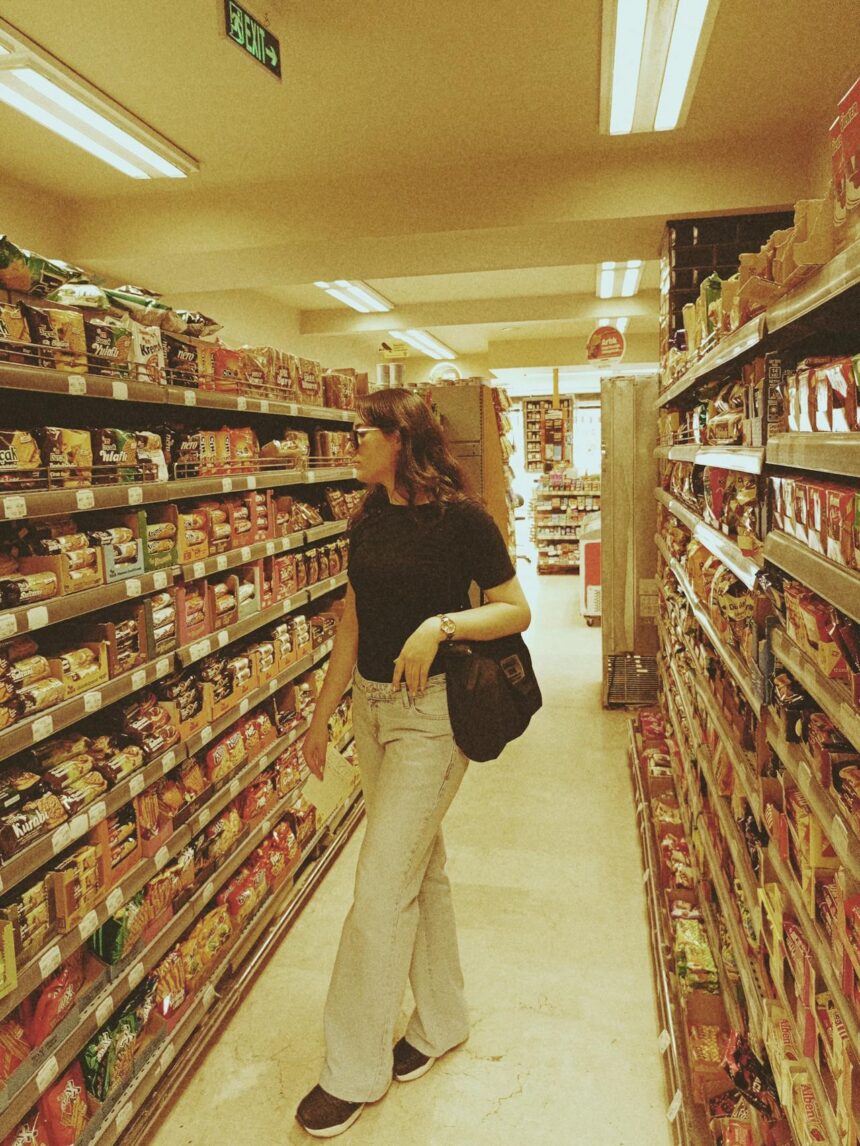
Of the roughly 35,000 to 40,000 grocery stores operating across the United States today, almost all of them share the same floor plan. Produce near the entrance. Dairy along the back wall. Bread somewhere in the middle. The freezer aisle runs parallel to nothing you actually need.
Walk into a store in Boise, and then one in Baltimore,e and the experience is, in every meaningful way, the same. That didn’t happen by accident. And the year it started to solidify was sometime in the early 1960s.
The story of how that happened is really a story about money, ey specifically, about who was making it, who was losing it, and one structural shift in American retail that most people alive today have simply never noticed because they grew up inside it.
The Corner Store and Its Slow Disappearance
Before the supermarket became dominant, American families did their shopping in layers. The butcher. The baker. The small grocer on the corner who knew your name and your mother’s preference for a particular cut of beef. These weren’t quaint,t they were functional. They reflected how food moved through communities when refrigeration was limited, transportation was local, and trust between seller and buyer was personal.
By the late 1950s, that system was already under pressure. Cars had become common enough that families could drive somewhere farther than the corner. Refrigerators had gotten large enough that weekly shopping replaced daily shopping. And a generation of returning veterans and their young families had moved into suburbs where no corner store yet existed.
The supermarket filled that gap. But it did something else too. It turned the act of buying food into an experience that could be engineered.
This is where the early 1960s matter. It wasn’t the birth of the supermarket; those dates back to the 1930s. What 1962 marked, roughly, was the moment when the science of store layout began to be treated as a serious commercial discipline. Studies into customer movement patterns, eye-level product placement, and the deliberate positioning of staple goods at the back of the store, all of this was being formalized in the postwar decades by trade associations and retail consultants whose names most shoppers have never heard.
The dairy goes in the back because you’ll pass everything else to get to it. That’s not a coincidence. It’s a decision someone made in a conference room, probably with a diagram.
The Economics Behind the Floor Plan
Here’s the strange part: the layout wasn’t designed primarily to sell you more food. It was designed to sell you more of certain food, specifically, higher-margin processed and packaged goods that manufacturers paid, in various forms, to have placed prominently.
Slotting fees. That’s the term for it. Grocery chains started charging manufacturers for shelf position, and by the late 1970s and into the 1980s, it wasn’t a side arrangement. It was the business model. A national brand like Nabisco could buy eye level in the snack aisle. A regional cracker company couldn’t. So the regional cracker moved to the bottom shelf, or off the shelf entirely, and you never noticed because you never knew it existed.
This is why, if you think about it, the least-processed foods in any grocery store tend to cluster at the perimeter. The fresh produce, the meat counter, the dairy. All of it along the walls. All of it requires you to walk through an interior field of packaged goods to get there. That perimeter-versus-interior geography wasn’t in the original supermarket concept. It developed as the packaged food industry grew large enough to pay for a position.
We learned to shop in stores designed for someone else’s margin.
What Changed for Families at the Register
The practical effect on household budgets was real, even if it was invisible. By the 1970s, the average American family was spending a larger share of its grocery budget on packaged and processed goods than previous generations, a shift documented in food expenditure research, even if the precise magnitude varied by household. Some of that was preference. Much of it was architecture.
Walk far enough into a grocery store before you reach anything fresh, and the packaged goods along the way do their work. This is not a conspiracy, it’s retail physics. Put something in front of someone long enough,a nd they’ll buy it. The stores knew this. The manufacturers knew this. The families pushing carts largely didn’t.
You probably didn’t choose the TV dinner and the canned soup so much as the store steered you toward them. The boxed cereal at eye level wasn’t there because it was the best cereal. It was there because someone paid to put it there. The physical layout of every store you’ve ever shopped in was quietly built around that deal, and the deal was never posted on any sign.
The Floor Plan That Outlasted Everything

Supermarkets have changed in obvious ways. They’re larger. They carry far more items. Many now sell wine, prepared meals, and pharmacy prescriptions. Some have been hollowed out by discount chains and online delivery. And yet the basic layout, produce at the front, dairy at the back, staples scattered to maximize the path you walk, remains almost unchanged from the design principles that hardened in the postwar decades.
A few retailers have tried something different. Trader Joe’s built something closer to a curated shop than a traditional supermarket, and its devoted following is at least partly a response to the fatigue people feel in conventional stores. Some European grocery formats organize differently, with less emphasis on the long interior aisle.
But those are exceptions. The standard American supermarket is the standard American supermarket because the economic infrastructure that created it, slotting fees, manufacturer relationships, store brand strategy, has never been dismantled. It just got bigger.
The next time you find yourself walking the long way around to reach the bread, you’re not being inefficient. You’re doing exactly what someone planned for you to do in 1962. How strange it is to remember, now, that there was ever any other way to buy a week’s worth of food.
The dairy counter is still back there. It has been for sixty years. And most of us have never once wondered why.
This article was researched, written, and edited by our human editorial team. AI tools were used in a limited research-assistant capacity. All claims were independently verified.