


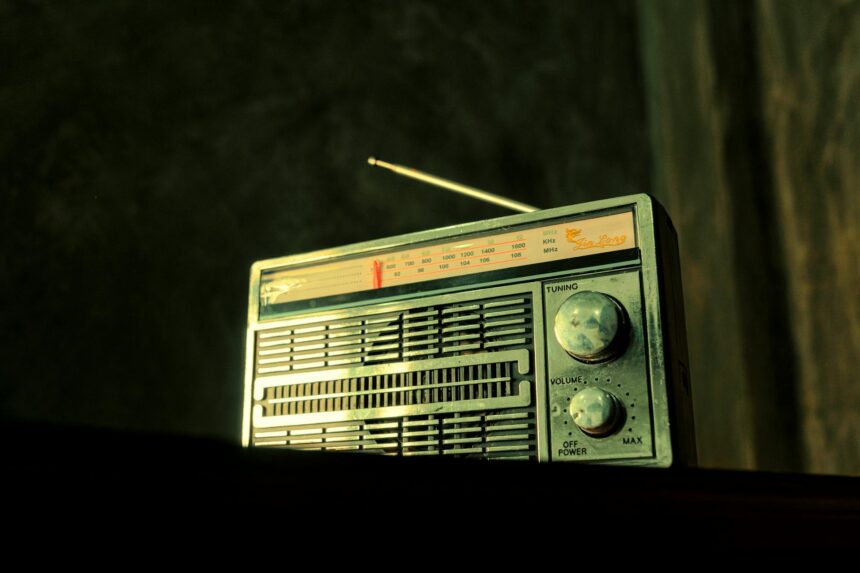
In the mid-1970s, the Federal Communications Commission was drowning in paperwork. Americans were filing for Citizens Band radio licenses at a rate the agency had never anticipated, at a rate far exceeding anything the agency had anticipated. The FCC had designed the Citizens Band for farmers checking the weather, truckers coordinating routes, and the occasional small business. What it got instead was the first mass-participation communication network in American history. Nobody planned it. Nobody owned it. And within a decade, it was essentially gone.
That arc explosive adoption, cultural saturation, and collapse, is the defining pattern of every social platform since. The CB radio didn’t just anticipate social media. It wrote the playbook.
How a Trucker Tool Became a National Obsession
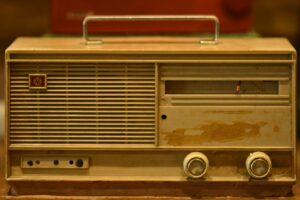
The Citizens Band radio had existed in some form since the late 1940s, but it spent most of its early life as a practical tool with a practical audience. Long-haul truckers used it to flag speed traps, share road conditions, and stay awake on overnight runs. The culture that developed around it was real and specific, a shorthand vocabulary, a set of social norms, a sense of community among people who spent most of their working hours alone.
Then came the oil embargo of 1973. The federal government imposed a 55 mph speed limit, and truckers used CB radio to coordinate around enforcement. Word spread. Civilians noticed. And something clicked: here was a technology that let strangers talk to each other, anonymously, in real time, without any institutional gatekeeping.
The CB radio went from working tool to cultural phenomenon in roughly eighteen months. By the mid-1970s, manufacturers were selling units at a pace that dwarfed anything the industry had previously seen. Celebrities adopted handle names. A film got made around it, Smokey and the Bandit, released in 1977. Country songs charted about it. A United States president was reportedly given a CB radio as a gift during the craze.
That last detail is worth sitting with. A president with a CB handle. That’s not a communication technology story. That’s a social network story.
The Same Three Phases, Every Single Time
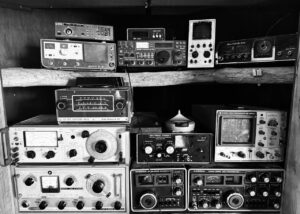
Here’s the strange part: the CB boom didn’t fail because the technology stopped working. It failed because it succeeded too completely.
Phase one is always the same. A communication tool finds a niche community, truckers, graduate students on ARPANET, cand ollege students on early Facebook. That community develops a culture: its own language, its own norms, a sense of shared identity. The technology works because the community is coherent.
Phase two: the flood. The thing escapes its original audience. Outsiders rush in, pulled by novelty or by some cultural moment that makes the technology feel urgent. CB radio had the oil crisis. Facebook had the iPhone. The original community doesn’t vanish overnight, but it gets thinner. You could feel it happening in real time if you were on those channels by the late 1970s. The ratio of people with something to say versus people just keying up to hear themselves talk started shifting fast.
Phase three is the one nobody has solved. When everyone talks, nobody hears anything. By the late 1970s, the CB bands were so jammed that a coherent conversation required the kind of patience most casual users didn’t have. The FCC bumped the channel count from 23 to 40. It helped for about a year. Then it didn’t.
The truckers who built the culture in the first place drifted to other frequencies. The civilians who’d picked up radios for the novelty went looking for the next novelty. The hardware stayed. The community left.
By 1980, CB radio sales had fallen back toward pre-boom levels. The license applications dried up. The handles went silent.
What the Silence Actually Means
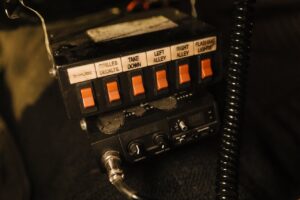
The CB radio collapse gets filed away as a quirky footnote. A fad, people say. Like pet rocks. Here’s the thing: that framing is wrong. CB radio wasn’t meaningless. It met a real need, the desire to talk to strangers, to belong to something that didn’t require living near it, to have an identity your zip code didn’t hand you. Those needs didn’t disappear when the bands went quiet. They just went somewhere else.
Which is exactly what they’ve done, in sequence, ever since. The math here is unforgiving. Every platform that solves the problem of anonymous, low-friction connections eventually produces the same outcome: congestion, noise, declining signal quality, community fragmentation, and a migration toward whatever comes next. The mechanism isn’t unique to CB radio. It’s the mechanism.
The FCC, for its part, eventually dropped the licensing requirement for CB radio entirely. No license needed. No paperwork. Just a radio and a channel. The infrastructure is still there, technically available to anyone who wants it.
Truckers still use it.
The rest of us are on to something newer, running the same three phases, waiting for phase three.
This article was researched, written, and edited by our human editorial team. AI tools were used in a limited research-assistant capacity. All claims were independently verified.