

There are rules in biology. The textbook rules. The peer-reviewed rules. The biological rules which many generations of students learned and studied for their exams. And then there are the animals who seem to know nothing about those rules.
When you read this story, you will be introduced to:
• eight living species that have been reclassified or have their biology adjusted in some form for having done something considered impossible by science
• several examples in which these behaviors have been observed in nature, as opposed to in laboratories where animals performed actions that they were not supposed to
• and in one or two instances where this particular species of animal has been doing what they weren’t supposed to do for millions of years now
The Lungfish That Rewrote Vertebrate Breathing
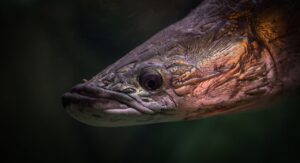
The African lungfish is an animal that, for decades, seemed to perform a simple biological peculiarity, a detail. It breathes air. Not merely withstands its presence for a few seconds, the way some fish can survive when their waterhole dries out. The African lungfish goes above the water surface, inhales air through a swim bladder that has evolved to serve as a crude lung, and stays alive in hypoxic water where no other fish could survive in the same river. For many years, this characteristic remained a biological oddity, an anomaly that scientists found interesting but otherwise insignificant. However, genomic studies that compared lungfish genetics to tetrapod genetics, the four-legged creatures that made their way out of water at a later stage, proved that the African lungfish is not a simple exception to the rule; it belongs to the nearest branch to all land vertebrates, including humans.
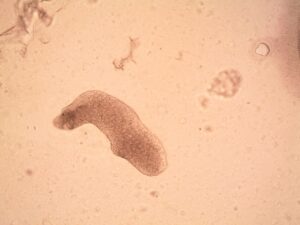
The Tardigrade That Survived What Nothing Should Survive
Tardigrades, microscopic animals sometimes called water bears, were already considered strange before researchers started subjecting them to conditions that would destroy virtually all other biological material. Vacuum exposure. Radiation doses that would kill a human many times over. Temperatures approaching absolute zero. Temperatures approaching boiling. Dehydration so complete the animal essentially stops being biologically active and enters a state called cryptobiosis. When researchers first documented cryptobiosis, the scientific debate was fierce. Was this actually “life” suspended? Was it death? The rules of metabolism, as understood at the time, had no category for it. Tardigrades forced the creation of one. They’ve since been sent to space, not in a capsule, but exposed directly to the vacuum and radiation of low Earth orbit, and survived. The category “extremophile” exists partly because of what tardigrades forced biologists to acknowledge.
The Mantis Shrimp Whose Eyes Broke Color Theory
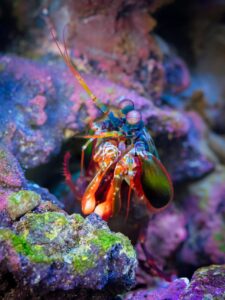
Here’s the strange part. For most of vertebrate biology, more types of color-detecting cells in the eye means better color vision. Humans have three types of cone cells. Many birds have four. The mantis shrimp has sixteen. When researchers first measured this, the assumption was obvious: the mantis shrimp must perceive color with extraordinary richness and discrimination. The actual finding was the opposite. Behavioral research showed mantis shrimp are relatively poor at distinguishing between similar colors. Sixteen photoreceptor types, and they use them not for subtle color discrimination but for rapid, low-computation color identification, essentially a biological color-code system that processes information faster than the primate visual system. The animal isn’t seeing more. It’s seeing differently, in a way that has no real analog in vertebrate neuroscience. Researchers had to build a new framework to describe what the mantis shrimp eye actually does.
The Crow That Used Tools Nobody Predicted
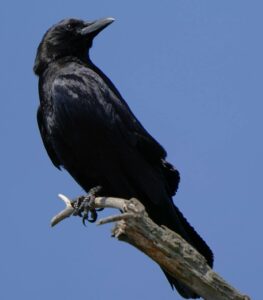
Tool use was, for decades, considered a marker of higher cognition reserved for primates and perhaps a few other mammals. Then New Caledonian crows started showing up in the research literature doing things that strained the definition. Not just using sticks to probe for insects, manufacturing tools. Selecting specific plant material. Modifying it. Carrying preferred tools from site to site. Returning to retrieve a tool after using it elsewhere. One documented behavior involved a crow fashioning a hook from a wire to retrieve food from a container it couldn’t reach directly. This wasn’t trained behavior. It happened spontaneously. The cognitive reclassification that followed wasn’t just about crows, it forced a broader revision of how researchers define and measure animal intelligence, and whether brain size and structure are the right metrics at all.
The Octopus That Shouldn’t Dream. But Apparently Does
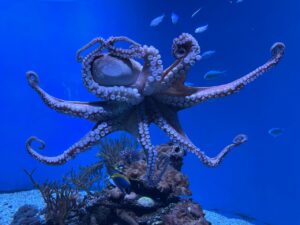
Octopuses sleep. That much was known. But researchers observing octopuses during sleep documented something that looked, unmistakably, like REM-style sleep states, rapid color and texture changes across the skin, flickering movement, visible shifts that suggested active neural processing. REM sleep, and the dreaming associated with it, had been considered a vertebrate feature. Possibly a mammalian one. The octopus last shared a common ancestor with vertebrates over 500 million years ago. If the color changes during octopus sleep represent something functionally similar to dreaming, it means complex sleep architecture either evolved twice, independently, or goes back further in animal history than anyone had modeled. Neither answer was comfortable for existing theory.
The Jumping Spider That Navigates Without a Map
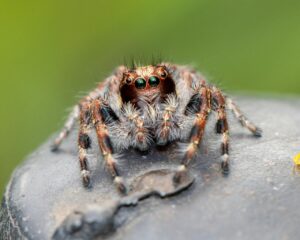
Portia spiders plan detours. Not in a reflexive, stimulus-response way. They identify prey across a complex environment, then take routes that require moving away from the prey, temporarily losing visual contact, to reach a position from which an attack is possible. They solve this problem before moving. The planning happens first. For an animal with a brain roughly the size of a poppy seed, this requires spatial modeling that researchers had assumed was impossible at that neural scale. The reclassification here wasn’t taxonomic, it was cognitive. Portia forced a revision of the minimum neural architecture required for what scientists call “prospective cognition.”
The Electric Eel That Hunts in a Way Physics Said Was Impractical
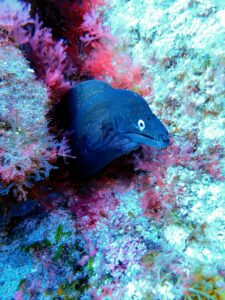
Electric eels were already well understood as animals that stun prey with high-voltage discharges. The reclassification came when researchers discovered that electric eels also use remote electrosensing to locate prey hidden in murky water, and, this is the part that surprised people, can emit rapid high-frequency pulses that cause involuntary muscle contractions in hidden prey, forcing movement that reveals location. The eel isn’t just stunning. It’s remotely controlling the muscular systems of other animals to find them. The physics of how the pulses interact with the prey’s nervous system required new modeling. The behavior itself had no prior description in the literature.
The Immortal Jellyfish That Kept Living
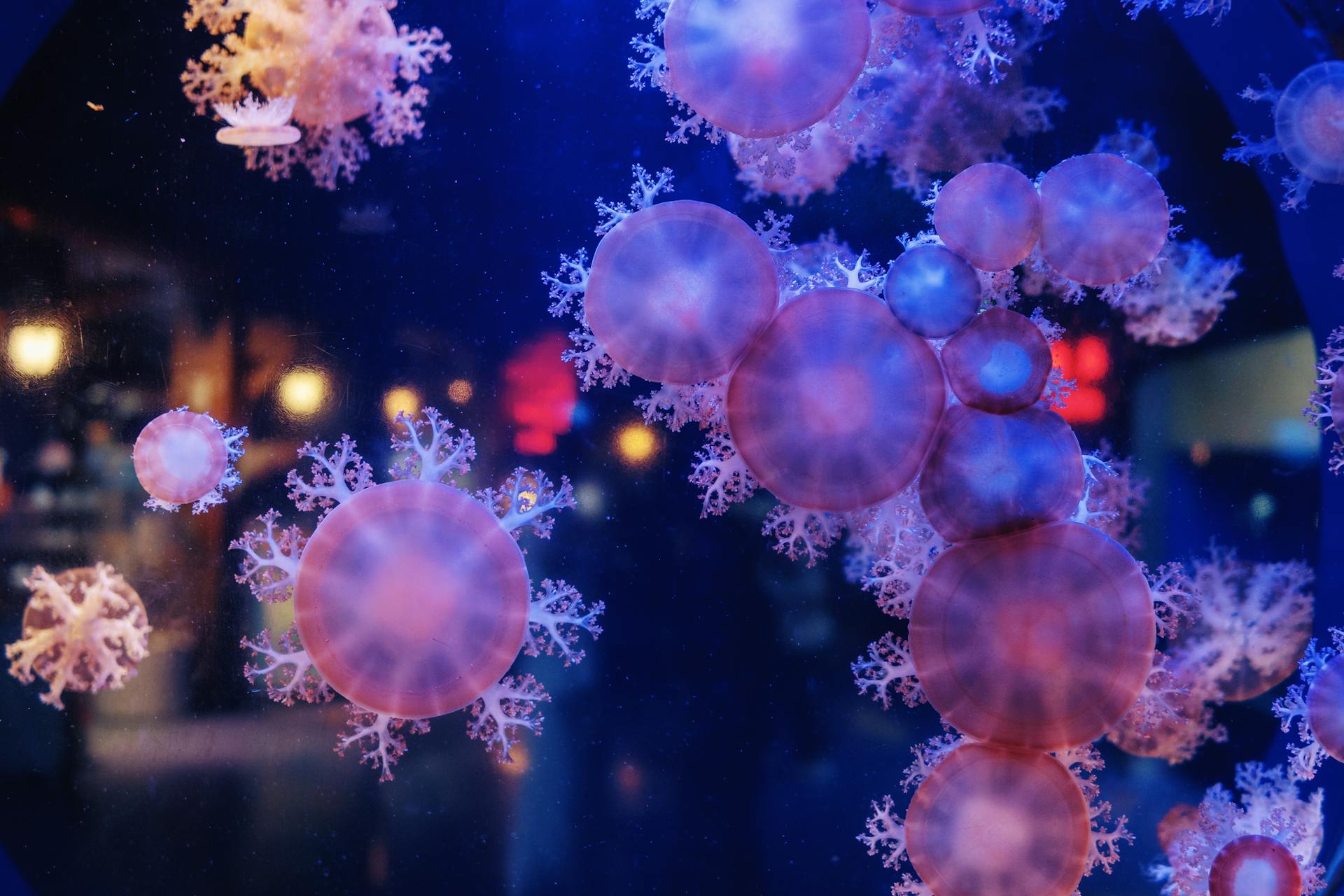
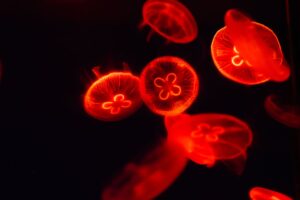
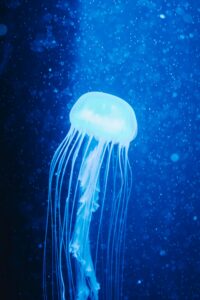
Turritopsis dohrnii is a small jellyfish with a documented ability to revert from its adult, sexually mature form back to its juvenile polyp state when stressed or injured. Then it matures again. The cycle can repeat. Biologists use the word “biologically immortal” carefully, it doesn’t mean the animal can’t be eaten or killed by disease. It means the normal cellular aging process, the senescence that drives aging in virtually all multicellular life, appears to be reversible in this species. When the research was first published, the response in parts of the scientific community was skepticism bordering on dismissal. The animal was reclassified. The research was replicated. The mechanism is still not fully understood, which may be the most honest statement in this entire article. We know it happens. We don’t yet know exactly how.
Biology builds rules from observation. The problem is, observation takes time, and some animals have been quietly breaking the rules for longer than we’ve been watching.
This article was created with AI assistance and reviewed by Charlotte Dayes, author at NewsDailys. The review included fact-checking, clarity edits, and sourcing of images.