

The stone was already old when Rome was young. That’s the part that keeps stopping researchers in their tracks as excavations beneath Jerusalem’s City of David continue to pull the ancient world into view, layer by layer, cut by careful cut. What they’ve uncovered in recent seasons isn’t just old. It’s older than the city’s most celebrated chapters, and it’s reshaping the sequence of events that archaeologists thought they had figured out.
The City of David sits just south of the Old City walls, on a narrow ridge above the Kidron Valley. It’s been an active excavation zone for decades. But the deeper teams from the Israel Antiquities Authority dig, the more the bedrock itself becomes the story.
The Cut That Wasn’t Supposed to Be There
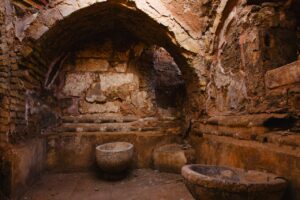
Carved directly into the limestone beneath layers of later occupation, researchers have identified infrastructure channels, cisterns, and foundation cuttings that predate the period most visitors associate with the site. The Iron Age occupation, the era of the biblical monarchy, the Davidic and Solomonic layers that draw historians and pilgrims alike:
Those aren’t what’s surprising here. What’s surprising is the evidence of organized, deliberate construction activity below those layers. Systematic. Planned. Executed by people who clearly understood the ridge’s hydrology and intended to use it.
And here’s the thing, the sophistication of what’s been found doesn’t match the assumed developmental timeline. Early Bronze Age settlements in the region were often characterized as modest. What the bedrock cuttings suggest is something with more organizational complexity than that framing allowed for.
Water Before Walls
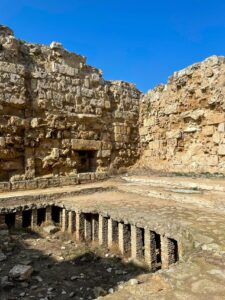
Some of the most significant features involve water management. The ridge above the Gihon Spring, the freshwater source that made permanent settlement on this particular piece of ground viable in the first place, shows evidence of engineered access routes and collection systems going back further than the city’s famous later waterworks.
Hezekiah’s Tunnel, carved in the 8th century BCE and one of the most celebrated feats of ancient engineering in the region, now looks less like an origin point and more like an upgrade. Someone was managing that spring long before Hezekiah’s engineers ever picked up a chisel.
The spring itself has been central to every major period of occupation on the ridge. That much was already known. What’s newer is the clearer picture of how early the intentional shaping of the landscape around it began, not just habitation near the water, but engineering in response to it.
What The Layers Keep Saying
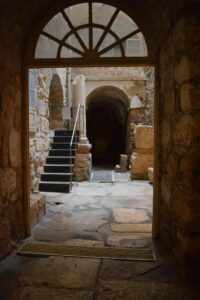
Archaeologists working the site have been careful in their public statements, and that caution is worth noting. The findings are significant. The interpretation is still being worked out. Pottery sequences, radiocarbon dates on organic material found in sealed contexts, and comparative analysis with other Levantine Bronze Age sites all take time to process and publish.
What has been confirmed is that the occupational sequence at the City of David extends further back and with greater material complexity than older excavation reports captured.
Which sounds like standard archaeological hedging until you sit with what it actually means. Jerusalem wasn’t a village that grew into a city. It was a strategically chosen, repeatedly improved, continuously inhabited site whose full depth is only now becoming legible. The bedrock itself was being shaped by people who understood what they were doing. That’s not an accident of geography. That’s decision-making.
What Remains Unresolved
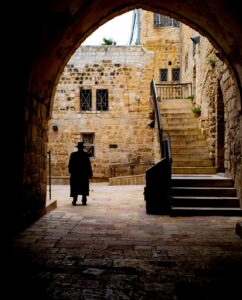
The officials pausing over their notes aren’t doing so because the findings are controversial in a political sense. They’re pausing because the evidence requires updating frameworks that have been in place for generations. Academic consensus on the size and nature of Middle Bronze Age Jerusalem, on when and how the ridge became a true urban center rather than a fortified village, and on the relationship between the Gihon Spring’s early management and the later, better-documented phases of the city, all of it is now in active revision.
Not overturned. Revised. There’s a difference, and it matters.
What the bedrock beneath the City of David is slowly making clear is that the people who chose this ridge did so with purpose, sustained that purpose across centuries, and left their intentions carved into the stone itself. The city above changed hands and changed names. The cuts in the limestone didn’t go anywhere.
If the real story of Jerusalem starts further back than the textbooks have shown, and the evidence is increasingly pointing that direction, then the question worth sitting with is this: what else have we been dating too late?
This article was researched, written, and edited by our human editorial team. AI tools were used in a limited research-assistant capacity. All claims were independently verified.